Dog Calming Sprays: Pheromone vs Scented Products
Know the difference between pheromone and scented calming sprays for dogs, handling precautions and limits of current evidence.
Dog Calming Sprays: Pheromone vs Scented Products
A “dog calming spray” may mean a dog-appeasing pheromone spray or an ordinary scented product marketed for relaxation. Those are not equivalent, and neither should be applied to a dog without checking the actual label. Pheromone sprays are typically intended for specific objects such as bedding, carriers or car areas rather than for direct application to skin or fur. This article focuses on selecting and using that targeted format safely—not on diffuser placement or collar fitting.
First, understand what is in the bottle
A pheromone spray is designed to leave a synthetic canine comfort signal in an environment after the application conditions have been met. A scented spray is primarily an odor product and may contain perfume or essential-oil ingredients. “Calming” in the listing title does not prove that the formula is appropriate for dogs, that it has been evaluated for anxiety, or that it belongs on the animal's body.
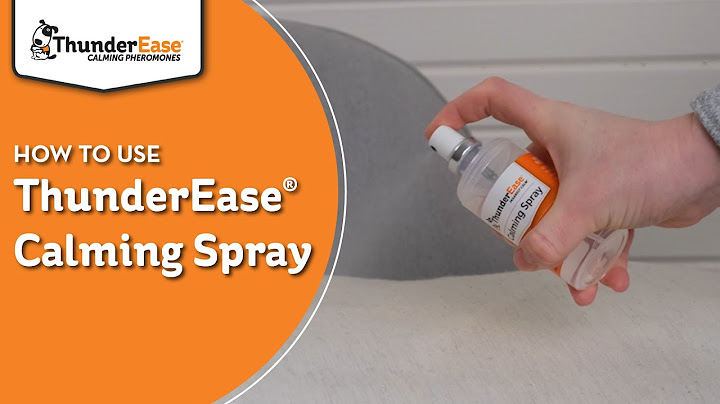
Look for a species-specific claim, clear active ingredient description, labeled application surfaces, drying or waiting instructions, and warnings. If the label is unclear or appears to recommend application around a dog with breathing problems or skin disease, ask a veterinarian rather than improvising.
Spray versus diffuser versus collar
| Format | Where used | Main thing to verify |
| Pheromone spray | Approved bedding, carrier or travel surface | Application and waiting instructions |
| Pheromone diffuser | One fixed indoor area | Outlet and airflow requirements |
| Pheromone collar | Worn by dog | Fit, skin comfort and snag safety |
| Scented spray | Varies by ingredient and product | Pet-safe exposure and exact label directions |
This table describes product logistics, not comparative efficacy. A spray does not become a medication because it is portable, and a diffuser is not inherently effective for an out-of-home journey. It is often reasonable to choose no product while focusing on a safe environment and training plan.
A careful application workflow
Begin with the manufacturer's current instructions, not a social-media trick. Confirm the target surface is allowed and that the animal is not present during application if directed. Never spray directly onto the dog unless a specific veterinary product is explicitly labeled for that use and your veterinarian recommends it. For established dog-appeasing pheromone spray examples, manufacturer directions commonly require application to an object and a waiting period before allowing the dog back; the exact number of sprays and interval are product-specific.
Test for surface compatibility in accordance with the maker's guidance. Wash or change items if the dog develops discomfort. Keep bottles closed and out of reach. Do not aim aerosol or mist toward a dog's face, food, water or skin. Avoid mixing products with cleaners, fragrance boosters or homemade oils.
Common situations and reasonable expectations
An owner preparing for a car trip may consider a labeled carrier or bedding application as one small step alongside gradual travel training and secure restraint. A dog uneasy in a new room may benefit more from familiar bedding and predictable access to water and a safe resting place than from a new scent. During fireworks, plan a quiet retreat and reduce noise exposure where possible. A spray cannot prevent fear when the trigger is overwhelming.
If the dog becomes distressed only in the car, determine whether nausea or motion sickness contributes before assuming anxiety. A pheromone spray does not treat motion sickness. Likewise, if a dog is agitated because of pain, heat, an unsafe environment or separation-related distress, the primary cause requires attention.
Why essential-oil DIY sprays are a bad shortcut
Essential oils differ greatly in composition and concentration, and products considered pleasant for people are not automatically safe for animal exposure. Dogs can lick residues from bedding or contact treated surfaces with their skin. Do not formulate homemade calming sprays with concentrated oils or use products intended for human aromatherapy on a dog. Ask the veterinarian about a species-appropriate option with clear labeling.
The absence of a strong smell does not prove a pheromone spray failed; conversely, a pleasant smell to the owner does not demonstrate a behavioral benefit. Use actual dog behavior and welfare to judge a label-directed trial.
How to monitor a trial without forcing fear
Choose an observable, modest goal such as a dog entering a familiar carrier more comfortably after incremental training or resting on its usual mat. Note the baseline, the product and timing, and whether an event was different from normal. Avoid setting up distress deliberately to test the spray. Stop the product and ask for professional advice if the dog coughs, develops irritation, becomes unusually lethargic or shows worsening fear.
A dog panicking in storms, injuring itself or showing aggression should be assessed by a veterinarian. Professional support may include behavioral guidance and medication when needed; a surface spray is not an alternative to this care.
Smart purchase questions
Does the listing clearly identify a dog-specific pheromone or just fragrance? Are use instructions visible? Is the bottle meant for the environment, not the pet? Is the refill or container from a reputable distributor? Is the product marketed with guarantees unsupported by data? The best choice is a product whose instructions are precise and appropriate for your household, not the strongest-sounding claim.
Related guides
For whole-room use, read Dog Calming Diffusers. For a wearable approach, see Calming Collars for Dogs. For the full decision tree, visit Dog Calming Products.
Frequently asked questions
Can I spray a dog calming pheromone spray directly on my dog?
Generally no for environmental pheromone sprays. Follow the exact manufacturer's labeled surfaces and never apply directly to the animal unless explicitly authorized for that product and advised by a veterinarian.
How long should I wait after spraying a carrier?
Follow the specific label. Different products may require different waiting or drying intervals; do not assume the same period applies to every spray.
Do calming sprays work for motion sickness?
Pheromone sprays are not treatment for motion sickness. A veterinarian can help distinguish nausea from travel-related fear.
Is a lavender spray equivalent to a pheromone spray?
No. A fragrance is not automatically a dog-appeasing pheromone product, and scented products require their own safety assessment.
What if my dog still panics despite the spray?
Do not increase application beyond directions. Arrange veterinary advice and consider an individualized behavior and safety plan.