Florida’s Daylight Saving Time Rules Explained
Florida still follows federal daylight saving time dates. Learn how Eastern and Central areas differ and what permanent DST would require.
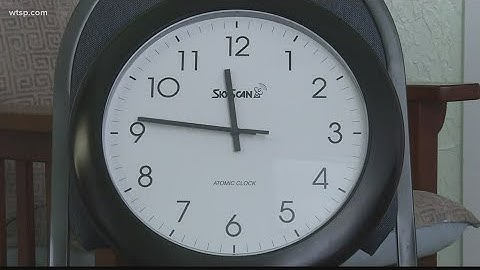
Florida still observes the federal daylight‑saving schedule, shifting clocks forward one hour in the spring and back in the fall. The state’s unique geography means that while most of Florida follows Eastern Time, the western panhandle observes Central Time. This split, combined with the lack of a state‑wide permanent‑DST law, keeps the state’s observance tied to federal mandates rather than local preference.
Whether Florida changes clocks under current law
Florida’s observance of daylight saving time is governed by federal law, not by any state statute. The Uniform Time Act of 1966, amended in 1986, requires all states to observe daylight saving unless they opt out. Florida has not enacted an exemption, so it follows the federal schedule: clocks move forward on the second Sunday in March and back on the first Sunday in November. The state legislature has considered bills to adopt permanent daylight saving time, but none have passed, leaving the current system unchanged. Consequently, residents and businesses in Florida must adjust their clocks twice a year in accordance with the federal timetable.
Where Florida uses Eastern versus Central time
Florida’s time‑zone boundary follows the western edge of the panhandle. Counties west of the Apalachicola River—such as Bay, Calhoun, Gadsden, Gulf, Holmes, Jackson, and Washington—observe Central Time. The rest of the state, including major cities like Miami, Orlando, Tampa, and Jacksonville, observes Eastern Time. This division means that a single state can have two different daylight‑saving schedules if a federal change were made, but currently both zones shift simultaneously because the federal law applies uniformly. The time‑zone split is historically rooted in the state’s alignment with neighboring Alabama and Mississippi, which use Central Time. Understanding this geographic split helps residents coordinate across the state, especially for travel, business, and broadcast schedules.
How the 2026 clock changes work across Florida
Florida is split between the Eastern and Central time zones. The majority of the state, including the populous Miami‑Fort Lauderdale and Orlando areas, observes Eastern Standard Time (EST) in the winter and switches to Eastern Daylight Time (EDT) in the summer. The Panhandle, which includes cities such as Pensacola and the Florida Panhandle, follows Central Standard Time (CST) and shifts to Central Daylight Time (CDT) at the same federal dates. The federal rule for daylight saving begins on the second Sunday in March and ends on the first Sunday in November. On the second Sunday in March, clocks in both zones move forward one hour at 2:00 a.m. local standard time; on the first Sunday in November, clocks move back one hour at 2:00 a.m. local daylight time. Because the two zones are one hour apart, the same calendar dates apply, but the actual local times differ by an hour. For example, on March 12, 2026, the Panhandle will set clocks forward at 2:00 a.m. CST (which becomes 3:00 a.m. CDT), while the rest of Florida will set clocks forward at 2:00 a.m. EST (becoming 3:00 a.m. EDT). The November change follows the same pattern, with the Panhandle setting clocks back at 2:00 a.m. CDT (to 1:00 a.m. CST) and the rest of the state at 2:00 a.m. EDT (to 1:00 a.m. EST).
What Florida lawmakers proposed about permanent DST
In recent years, Florida legislators have repeatedly introduced bills to adopt permanent daylight saving time, eliminating the biannual clock changes. The most recent proposal, introduced in the 2025 legislative session, would have amended the state constitution to allow the governor to declare the entire state to remain on daylight time year‑round. The bill was supported by business groups citing potential energy savings and alignment with neighboring states that already observe permanent DST. However, the proposal faced opposition from residents in the Panhandle who argue that permanent DST would push sunrise too late in winter, affecting school schedules and outdoor activities. The Florida Legislature ultimately did not advance the bill to a vote, and the governor did not sign any related executive order. Because federal law still governs the observance of daylight saving time, Florida remains bound to the federal schedule unless Congress passes a nationwide change or the state legislature successfully amends the constitution and Congress approves the change. As of 2026, Florida continues to follow the federal DST dates, with the Panhandle and the rest of the state observing their respective time zones.
Why state legislation cannot by itself create permanent DST
State laws can only adopt or reject the federal Daylight Saving Time (DST) schedule; they cannot unilaterally establish a permanent DST regime. The Uniform Time Act of 1966, amended in 2005, gives the federal government the authority to set DST dates and allows states to opt out of DST entirely. A state may choose to remain on standard time, but it cannot extend DST beyond the federally mandated period without federal approval. In Florida, the state legislature has passed bills proposing permanent DST, but these proposals remain unenacted because the federal government has not amended the Uniform Time Act to permit a permanent DST schedule. Until Congress passes legislation to modify the federal DST framework, Florida’s observance will continue to follow the federal schedule, with the state’s split between Eastern and Central time zones remaining unchanged.
How to verify Florida time for travel or events
When planning travel or scheduling events in Florida, the most reliable method to confirm the current local time is to consult the U.S. Department of Commerce’s National Institute of Standards and Technology (NIST) time service or the official U.S. Naval Observatory website. Both sources provide real‑time UTC offsets for each U.S. time zone, including Florida’s Eastern (UTC‑5/UTC‑4) and Central (UTC‑6/UTC‑5) regions. For everyday use, reputable world‑clock applications such as the built‑in Clock app on iOS or Android, or online services like timeanddate.com, automatically adjust for DST transitions based on the federal schedule. When booking flights or hotel reservations, most travel platforms display the local time of the destination city and automatically account for DST changes. Finally, for critical events such as business meetings or broadcasts, it is prudent to double‑check the local time a day before the event, especially during the transition weeks in March and November, to avoid any confusion caused by the state’s split time zones.
