How Daylight Saving Time Began in the US
Explore how daylight saving time developed, from early proposals to US wartime practices and federal scheduling changes.
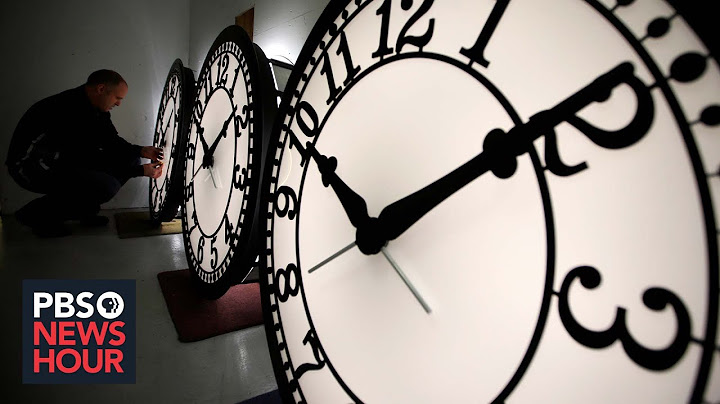
Daylight Saving Time (DST) traces its roots to early 19th‑century proposals that sought to better align human activity with natural light. The idea first surfaced in Europe, where inventors and reformers argued that shifting clocks could save coal and improve productivity. In the United States, the concept entered public discourse in the 1890s, gaining traction during the Progressive Era as a potential tool for economic efficiency and public safety. The following sections outline the earliest ideas that shaped the debate and the pivotal moment when the United States adopted DST during World War I, setting the stage for future federal regulation.
Early ideas about changing clocks and daylight
The notion of adjusting clocks to make better use of daylight emerged in the 1800s, largely driven by concerns over energy consumption and industrial productivity. In 1868, English journalist George Hudson proposed a system of daylight saving in a pamphlet titled *"The Proposal for a New System of Timekeeping,"* suggesting that clocks be advanced by an hour during summer months to reduce evening lighting needs. Hudson’s idea was met with skepticism but sparked debate among scientists, politicians, and the public. By the 1890s, the concept had spread to the United States, where reformers such as William Willett, a British builder, published *"The Waste of Daylight"* in 1905, arguing that people wasted hours of daylight after sunset. Willett’s pamphlet influenced American lawmakers, leading to early legislative attempts in states like New York and Massachusetts to adopt daylight‑saving schedules. Although these proposals never passed at the state level, they laid the groundwork for a national conversation about the benefits of shifting clocks.
US adoption during World War I
The United States officially adopted daylight saving time during World War I as part of a broader wartime effort to conserve resources and increase industrial output. On April 30, 1918, President Woodrow Wilson signed the *Standard Time Act*, which mandated that the entire country observe daylight saving time from the last Sunday in April to the last Sunday in October. The legislation was driven by the belief that extending daylight hours would reduce the need for artificial lighting, thereby saving coal for war production. The act also standardized time zones across the nation, eliminating the patchwork of local times that had previously existed. While the initial implementation was met with mixed reactions—some businesses and farmers opposed the change—the federal mandate established a precedent for future adjustments. The act was repealed in 1919, but the experience demonstrated the feasibility of nationwide time changes and set a template for subsequent legislation, including the Uniform Time Act of 1966.
What changed during World War II
During World War II the United States adopted daylight‑saving time as a wartime economy measure to conserve coal and reduce the need for artificial lighting. In 1942 Congress passed the War Time Act, which mandated that all states observe daylight saving time from the first Sunday in April to the last Sunday in October. The change was intended to free up energy for war production, allowing factories to operate longer hours and reducing the overall demand for electricity. The federal government also coordinated the schedule across the country to simplify military logistics and communication. This wartime policy was extended each subsequent year until 1945, after which the practice was left to the discretion of individual states. The experience of the war years demonstrated that daylight saving could be implemented nationwide with minimal disruption, setting the stage for later federal standardization.
How the 1966 Uniform Time Act standardized rules
The Uniform Time Act of 1966 was enacted to eliminate the patchwork of state‑level time‑keeping practices that had persisted after World War II. The Act established a federal framework that required all states to observe daylight saving time on a uniform schedule, unless a state explicitly opted out. It defined the start and end dates as the last Sunday in April and the last Sunday in October, respectively, and mandated a uniform 30‑minute shift forward in the spring and back in the fall. The legislation also introduced the concept of “standard time” zones, aligning state practices with the four U.S. time zones. By codifying these rules, the Act reduced confusion for commerce, travel, and broadcasting, and it created a consistent legal basis for time‑keeping across the nation. The Uniform Time Act remains the cornerstone of U.S. daylight‑saving policy, with subsequent amendments adjusting the dates but preserving the core federal standardization.
Why the federal transition dates changed in 2007
The 2007 change to the federal transition dates was driven by a combination of energy‑savings research, public safety concerns, and the desire for a more consistent national schedule. Prior to 2007, the United States observed daylight‑saving time (DST) from the last Sunday in April to the last Sunday in October, a system that had been in place since the Uniform Time Act of 1966. However, the Energy Policy Act of 2005 amended the Act to extend DST by four weeks, moving the start to the second Sunday in March and the end to the first Sunday in November. The rationale was that longer daylight hours would reduce electricity consumption for lighting and cooling, as well as decrease traffic accidents. Studies from the Department of Energy and the National Highway Traffic Safety Administration indicated modest energy savings and a slight reduction in fatal crashes during the extended DST period. In addition, aligning the U.S. schedule with the European Union’s earlier adoption of DST helped reduce business and travel disruptions across the Atlantic. The 2007 transition was therefore a legislative effort to modernize the time‑keeping system, improve safety, and support energy‑efficiency goals while maintaining international coordination.
Common myths about farmers and the original purpose
A persistent myth holds that farmers were the primary advocates for daylight‑saving time, believing that longer evenings would allow them to finish fieldwork and attend church. Historical records, however, show that the idea originated with Benjamin Franklin’s 1784 satirical essay, and that early proponents were industrialists and city planners seeking to increase productivity and reduce coal consumption. In the early 20th century, the American Association of State Highway Officials and the National Association of Manufacturers lobbied for DST to boost commercial activity, not agricultural efficiency. Farmers’ concerns were largely about the disruption of livestock schedules and market timing, and many rural communities opposed the change. The 1918 War Time Act, which first mandated DST nationwide, was motivated by wartime energy conservation rather than agrarian interests. Subsequent studies of agricultural output during DST periods found no significant advantage for farmers, and in some cases, the shift disrupted planting and harvesting cycles. Thus, the narrative that farmers championed DST for longer evenings is largely a myth, rooted in a simplified interpretation of early advocacy and the cultural emphasis on rural life.”]
bullets
:null
