Earth’s Atmosphere Composition: Formation, Natural Characteristics and Science Facts
Understand earth’s atmosphere composition with clear definitions, examples, scientific context, and notes on common misunderstandings.
Earth’s Atmosphere Composition: Formation, Natural Characteristics and Science Facts
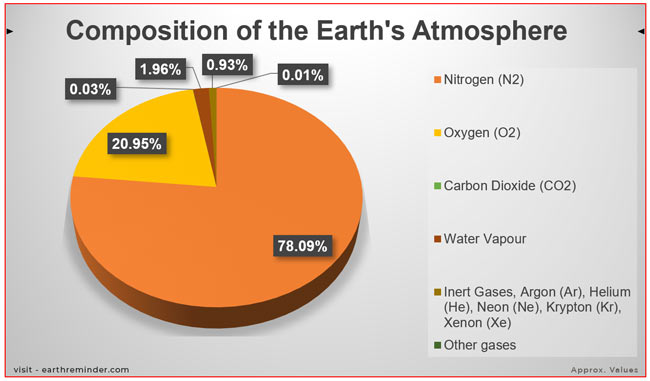
Earth's dry air near the surface is composed mainly of nitrogen and oxygen, with argon and carbon dioxide present in much smaller amounts.
A useful way to understand this topic is to separate the underlying idea from a worked example and from the limits of the explanation. Earth scientists reconstruct events from material evidence and observe processes that continue today. A feature can reflect several episodes instead of one cause.
How it works
Water vapor varies substantially with place and weather, while trace gases affect radiative balance, atmospheric chemistry, and air quality.
The mechanism matters because it explains the observation rather than just naming it. Different conditions can change the outcome, so a good explanation states which variables or assumptions matter.
An example in context
A typical introductory approximation for dry air is about 78% nitrogen and 21% oxygen; these values exclude variable water vapor.
This example is best treated as a specific case, not an all-purpose rule. Consider which details of the example would need to remain the same for the comparison to be sound.
What the term should not be confused with
Atmospheric composition is not identical at every altitude or over geological time, and 'dry air' is not the same as humid air.
These boundaries help keep this page focused. Related subjects may overlap, but a shared word or superficially similar appearance is not sufficient evidence that two concepts are equivalent.
Why the distinction matters
Field mapping, rock analysis, dating methods, satellite measurements, and atmospheric observations can test different parts of an Earth-system explanation.
For readers, the practical lesson is to ask what is directly observable, what is inferred from a model, and which further evidence would help separate competing explanations. In this topic, the example above illustrates why that difference can matter.
Common mistakes and limitations
Carbon dioxide levels change over time, so any exact concentration should be dated and sourced rather than treated as permanent.
Geological and atmospheric processes vary with location and timescale. A named landform or weather pattern cannot be identified from one clue in isolation.
Frequently asked questions
What is Composition of the atmosphere of earth? Earth's dry air near the surface is composed mainly of nitrogen and oxygen, with argon and carbon dioxide present in much smaller amounts.
What is a clear example? A typical introductory approximation for dry air is about 78% nitrogen and 21% oxygen; these values exclude variable water vapor.
What is a common misconception? Atmospheric composition is not identical at every altitude or over geological time, and 'dry air' is not the same as humid air.
Continue exploring
How Earth Works — a broader topic overview.
Hadley Cells — a focused explanation of a related concept.
