What Is an Electromagnetic Field?
Understand electric and magnetic fields, how they interact, and how fields differ from traveling electromagnetic waves.
What Is an Electromagnetic Field?
SCIENCE EXPLAINED • US ENGLISH • EDITORIAL SNAPSHOT: NOVEMBER 1, 2026
An electromagnetic field describes the electric and magnetic influences present at points in space and time. Electric fields are related to electric charges and voltage differences, while magnetic fields are associated with electric currents and magnetic materials. The two fields are connected by Maxwell's equations, but a field near a stationary magnet is not the same thing as an electromagnetic wave traveling away from an antenna.
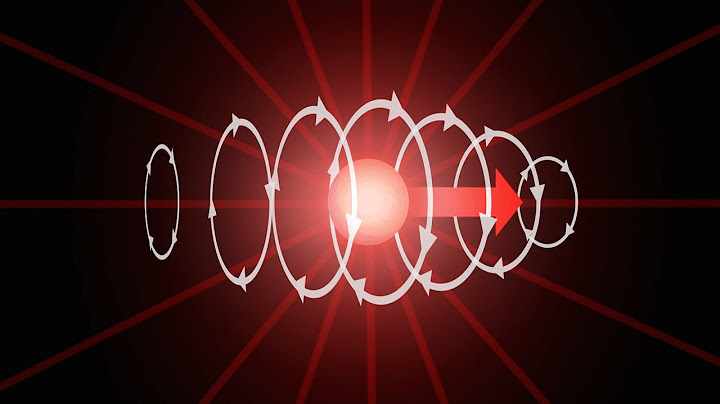
Electric fields: forces on charge
Place a small test charge in an electric field and it experiences an electric force. Field strength is often expressed in volts per meter (V/m) or newtons per coulomb (N/C). Charges create electric fields, and a changing magnetic field can also produce one. The field exists whether or not the test charge is present to reveal it.
A familiar example is a voltage difference between two conductors. The electrical conditions can create a field in the space around them. The exact field depends on their geometry, materials, and surrounding environment. That is why field strength cannot reliably be estimated from the voltage number alone.
Magnetic fields: currents and magnets
Magnetic fields exert forces on moving charges and act on magnetic dipoles. Their strength is commonly specified by magnetic flux density B in tesla (T), although other quantities such as magnetic field strength H may appear in engineering work. Permanent magnets have fields even when there is no powered cable nearby, while current-carrying wires create magnetic fields when charge flows.
Earth's magnetic field helps guide energetic charged particles in space and is central to the formation of the Van Allen belts. That fact should not be mistaken for a claim that a household magnet will reproduce a planetary radiation environment.
Static and changing fields
A static electric field does not automatically launch a radio wave. Likewise, a steady magnetic field has a spatial influence but is not, by itself, a stream of electromagnetic photons. When electric charges accelerate, changing fields can propagate outward as electromagnetic radiation. This is the link between fields and radio antennas.
In a practical circuit, a mixture of near-field and propagating-field behavior may exist, depending on frequency and distance. Engineers distinguish them because the rules for measurement, coupling, and shielding can differ. 'Electromagnetic field' is a broad description, not one uniform exposure category.
Units and everyday measurements
Electric-field measurements may use V/m; magnetic flux density may use microtesla (µT) for weak fields or tesla for stronger ones. Radio-frequency measurement sometimes reports power density instead. A measurement is meaningful only with its frequency, averaging method, instrument, location, and purpose understood.
Simple comparisons such as 'a magnet produces more radiation than a phone' are often misleading because they mix static fields with radio-frequency radiation. The quantity and physical mechanism must be identified before making a comparison.
What the field is not
It is not necessarily ionizing radiation, not always a traveling wave, and not evidence that an object is radioactive. Gamma rays are high-energy electromagnetic photons; a static magnetic field is a different configuration of the electromagnetic field. Shielding questions depend on which field is present, its frequency, and the geometry involved.
When comparisons of field strength go wrong
A measurement from a compass, phone, or sensor may refer to very different physical quantities. A refrigerator magnet, a power-line field, and a Wi-Fi signal should not be compared as if they were one scalar “EMF exposure.” Even a correctly reported value needs frequency and measurement conditions. If a claim about health or equipment interference relies only on an unlabeled number, it is missing essential context.
Frequently asked questions
Are electric and magnetic fields identical? No. They are related components of electromagnetism with different effects and measurement units.
Can a field exist without an electromagnetic wave? Yes. A steady magnet has a magnetic field without constantly broadcasting a wave.
Why are field measurements complicated? Frequency, distance, orientation, instrument response, and surroundings can all change a reading.
Explore related science topics
For a closer look at connected concepts, read electromagnetic-wave guide; mu-metal shielding, and Earth’s Van Allen belts.