Florida Lizards: A Guide to Common Native and Introduced Species
Explore common Florida lizards, including anoles, geckos, iguanas and agamas. Compare visible traits, habitats and native or introduced status.
Florida Lizards: A Guide to Common Native and Introduced Species
FLORIDA WILDLIFE GUIDE • Editorial review: November 2, 2026 • US English
Florida's lizards range from tiny garden anoles to striking introduced iguanas, tegus and monitors. Identifying one correctly is more useful than assuming every brown lizard is the same species or every large reptile is a hazard. Color changes, age, sex and lighting make quick visual guesses unreliable. Start with size, body shape, toe pads, crest, tail pattern and where the animal was seen. This overview separates familiar native lizards from introduced species and points readers toward verified identification resources.
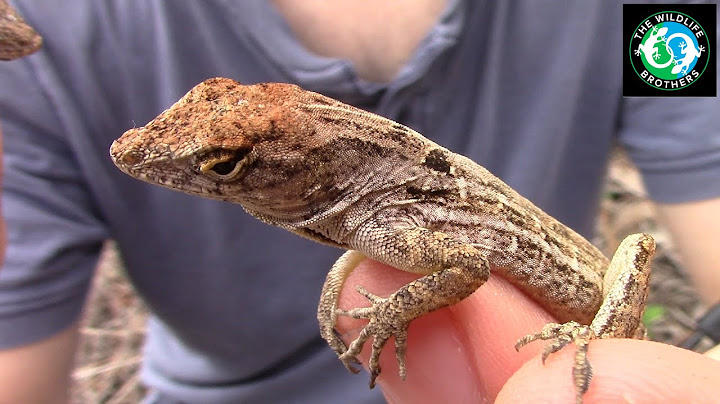
The native green anole
The green anole is Florida's familiar native climbing lizard, often seen on branches, fences and ornamental shrubs. It can change between bright green and brownish tones, so a brown individual is not automatically a brown anole. Many adult males display a pink throat fan called a dewlap. UF/IFAS notes that the green anole is not a true chameleon, despite that popular nickname. Compare head shape, perch position and dewlap rather than making a decision from body color alone.
Brown anoles in yards and parking lots
The introduced Cuban brown anole is abundant in many Florida urban landscapes. It is often brown or grayish with mottled markings, has expanded toe pads and may display an orange or reddish dewlap with a contrasting border. UF/IFAS identifies differences in snout shape and color behavior that help separate it from the native green anole. Brown anoles frequently occupy lower vegetation and paved edges, while green anoles may shift to higher perches where both occur. Neither should be handled simply to take a better photo.
Other native small lizards
Florida's native lizard fauna is more varied than its two best-known anoles. The six-lined racerunner is slender and fast, with pale longitudinal stripes that are easier to notice in a sunlit open area. Eastern fence lizards have rougher, bark-colored scales and often stay close to logs or tree trunks. Florida scrub lizards occur in specialized sandy scrub habitats and can be more difficult to spot. Habitat can narrow the possibilities, but it should supplement—not replace—distinctive physical characteristics and reliable range information.
Large introduced lizards: iguanas, tegus and monitors
Green iguanas typically have a crest down the back, a prominent throat dewlap and a very long tail. Argentine black-and-white tegus are heavier-bodied ground lizards with distinctive dark and pale patterning. Nile monitors are long-bodied predators with strong limbs and often banded markings. These are not interchangeable names for the same animal. FWC and UF/IFAS identification guides include comparison images and measurements. Stay back from large reptiles; claws, teeth and tails can injure people even when the animal is not venomous.
Agamas, geckos and other neighborhood species
Peter's rock agamas have established populations in parts of Florida, and adult males can display vivid colors. House geckos are often noticed near exterior lights, where insects gather. Northern curly-tailed lizards are recognized by the way the tail is held or curled, although one field mark is never enough for certainty. An animal's behavior can help identify it: some geckos are most active after dark, while many anoles and agamas bask openly. Pair behavioral clues with photographs and a credible local checklist.
How location changes the identification
A large iguana along a South Florida canal is a different observation from a small fence lizard in inland scrub habitat. Some introduced species are concentrated in warmer counties, although escaped pets may appear elsewhere. A single northern sighting is not proof of a reproducing population. Record the county and approximate habitat rather than publishing an exact private address. Weather, season, perch height and vegetation type can help an expert narrow an identification, especially when a photograph shows only one side of the animal.
A responsible identification workflow
Take a clear photograph from a distance with the whole animal visible, including tail and head. If possible, note scale using a nearby object already in the scene; do not place objects near the animal. Compare several independent traits with the Florida Museum's lizard checklist or UF/IFAS illustrations. If the identification remains uncertain, say so in a report. Do not release captive reptiles outdoors, touch unfamiliar wildlife or attempt to move a native species based on an online nickname.
Why classification matters
Some readers want an identification; others want to know whether a lizard can harm a child or whether an invasive iguana can be removed from a property. Those questions require separate risk and legal checks. Use the companion Poisonous Lizards in Florida guide for venom versus injury, and Invasive Lizards in Florida for ecological impacts. Rules for green iguana removal apply to that species in certain circumstances, not to every small lizard seen on a wall.
Frequently Asked Questions
Are Florida green lizards always green anoles?
No. Several species may look green, and native green anoles can turn brown. Use physical markers and trusted identification guides.
What is the little brown lizard in my yard?
It may be a brown anole, but other native and introduced lizards also appear brown. Location and multiple features are needed.
What is the big lizard near a canal?
Green iguanas are common in some South Florida canal areas, but tegus and monitors can also occur. Avoid close contact.
Are all lizards in Florida invasive?
No. Florida has native lizards, including green anoles, six-lined racerunners and fence lizards.
Should I move a lizard to a park?
No. Moving wildlife can harm animals, spread nonnative species and violate regulations. Seek local guidance instead.
Related Reading
Invasive Lizards in Florida: Which Species Matter?