Galaxy vs. Universe: What Is the Difference?
A galaxy is a gravitationally bound collection of stars; the universe includes all galaxies and more. See clear definitions and scale examples.
Galaxy vs. Universe: What Is the Difference?
A galaxy is a gravitationally bound system containing stars, gas, dust, dark matter, and often a central black hole. The universe is the much larger whole: spacetime and everything within it, including all galaxies. The Milky Way is one galaxy inside the observable universe, not an alternative name for the universe.
Galaxy: one enormous bound system
Gravity holds the stars and other matter of a galaxy in a common structure. Galaxies can be spiral, elliptical, irregular, or transitional. Some are small dwarf systems; others have stellar populations far larger than the Milky Way's.
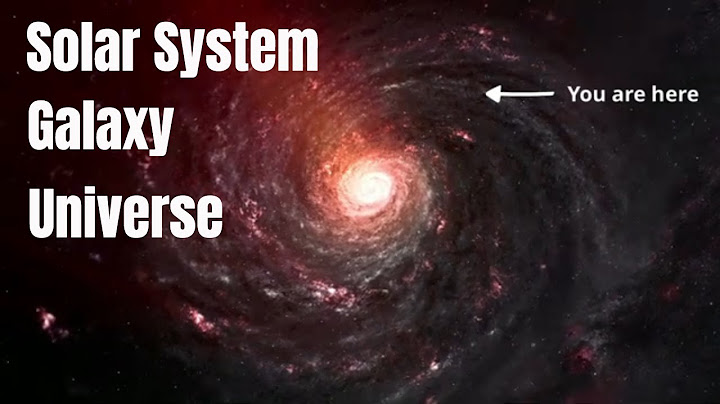
Individual star systems are much smaller building blocks. Earth belongs to the solar system, which belongs to the Milky Way; a solar system cannot be used interchangeably with an entire galaxy.
| Term | What it includes |
| Solar system | A star and objects gravitationally linked to it |
| Galaxy | Stars, gas, dust and other bound matter |
| Universe | Space, time and everything within them |
Universe: the larger cosmic setting
The universe includes galaxies, intergalactic space, radiation, dark matter, and dark energy. Astronomers observe a finite region because light travels at a finite speed and the universe has a history. That region is called the observable universe.
The entire universe could be much larger than the observable region, possibly without a known edge. Its full extent is not settled by the number of galaxies a particular telescope happens to detect.
What is a galaxy group or cluster?
Galaxies themselves assemble into groups and clusters. The Milky Way and Andromeda are large members of the Local Group. Rich galaxy clusters contain hundreds or thousands of galaxies bound in a common gravitational environment.
A galaxy cluster is not a galaxy. Nor is it the same as a star cluster, which is a collection of stars inside a galaxy. Knowing which scale a label describes prevents frequent diagram and classroom mix-ups.
Scale without misleading exact numbers
A useful way to visualize the hierarchy is Earth → solar system → Milky Way → Local Group → observable universe. Each step expands the type of structure, though not necessarily by a uniform factor.
Statements such as 'the universe has exactly two trillion galaxies' should be treated cautiously. Very faint galaxies are not directly counted, and surveys plus models produce estimates rather than a final inventory.
Frequently asked questions
Is the Milky Way the whole universe?
No. The Milky Way is one galaxy among many.
Is a galaxy bigger than a solar system?
Yes, by an immense factor in scale and number of stars.
Does a universe contain galaxies?
Yes. Galaxies are among its many constituent structures.
Related reading
How Many Galaxies Are in the Observable Universe?