How Many Stars Are in the Observable Universe?
Astronomers infer the star population of the observable universe using galaxy surveys and stellar estimates. See why counts are approximate.
How Many Stars Are in the Observable Universe?
The observable universe likely contains an astonishing number of stars, often described in the range of around 10²² to 10²⁴ depending on the adopted galaxy populations and faint-star assumptions. That is an estimate, not a direct count. The number for the entire universe is unknown because we cannot observe everything beyond our cosmic horizon.
An estimate, not a star-by-star inventory
NASA has described a straightforward lower-end calculation: at least 100 billion galaxies with an average of at least 100 billion stars would imply roughly 10 sextillion stars (10²²). More expansive estimates reach much higher numbers, including a possible septillion stars (10²⁴) in NASA's educational material.
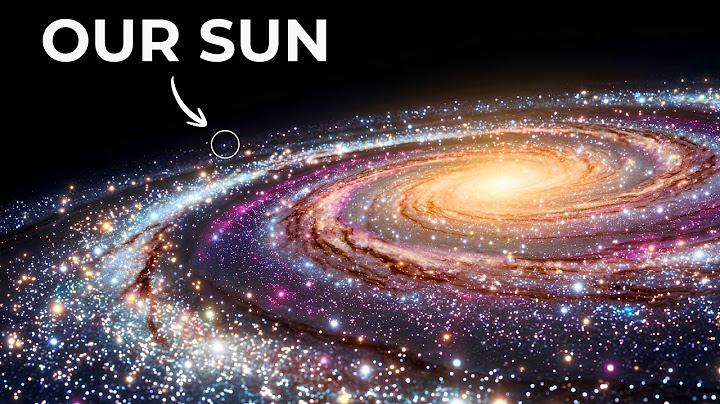
Those illustrative totals should not be interpreted as a published final census. Many galaxies are small and faint, stellar populations vary widely, and we do not know the exact number of individual stars even inside the Milky Way.
Why multiplying two estimates is tricky
The simplest formula is galaxy count × average stars per galaxy. Unfortunately, a universe containing many dwarf galaxies and fewer giant galaxies cannot be represented perfectly by multiplying one typical galaxy by one guessed population. The average itself depends on which galaxies are included.
Faint low-mass stars contribute little light, making them hard to count directly. Older galaxies and young star-forming galaxies also have different compositions. Astronomers therefore work with luminosity functions, galaxy mass estimates, and stellar population models.
Observable universe versus everything beyond it
A cosmic horizon limits how far light can have traveled to us given the age and expansion history of the universe. Any calculated stellar total applies to the observable region and its modeled populations, not automatically to all space that might exist beyond it.
Even the observable universe's apparent size evolves with time as light from more distant regions reaches us. The 'number of stars right now' is a more complicated quantity than summing all objects in images taken at different lookback times.
How Webb and future surveys can improve answers
Infrared observations from the James Webb Space Telescope probe faint and distant galaxies, while surveys of nearby galaxies help constrain lower-mass stars and dust-obscured regions. The aim is to improve estimates of galaxy abundance and stellar populations across cosmic time.
A strong scientific answer should show the order of magnitude, say why there is uncertainty, and distinguish the Milky Way's hundreds of billions of stars from estimates across the entire observable universe. A naked large number invites confusion rather than understanding.
Frequently asked questions
Are there exactly one septillion stars?
No. NASA has used that as a possible order-of-magnitude estimate, not a final exact tally.
How many stars are in our own galaxy?
The Milky Way is commonly estimated to have hundreds of billions.
Can we count all stars in the universe?
No. We infer totals statistically and cannot observe the entire universe.
Related reading
How Many Galaxies Are in the Observable Universe?