Halloween Jokes for Parties, Classrooms and Trick-or-Treating
Get Halloween jokes for parties and trick-or-treating, including quick one-liners and easy questions to share with friends.
Halloween Jokes for Parties, Classrooms and Trick-or-Treating
A quick Halloween joke works when the setup is easy to hear and the punchline arrives before the room loses attention. This collection is for mixed groups: a few friendly one-liners, some question-and-answer jokes, and suggestions for delivering them at a party or doorstep.
Quick Halloween Jokes
For a fast laugh, use a short visual idea: “Our skeleton canceled the dance party—he said the music went straight through him.” Or try, “The jack-o-lantern joined the book club because it wanted a brighter ending.” Short jokes are easier to repeat while passing out candy than stories that require background knowledge.
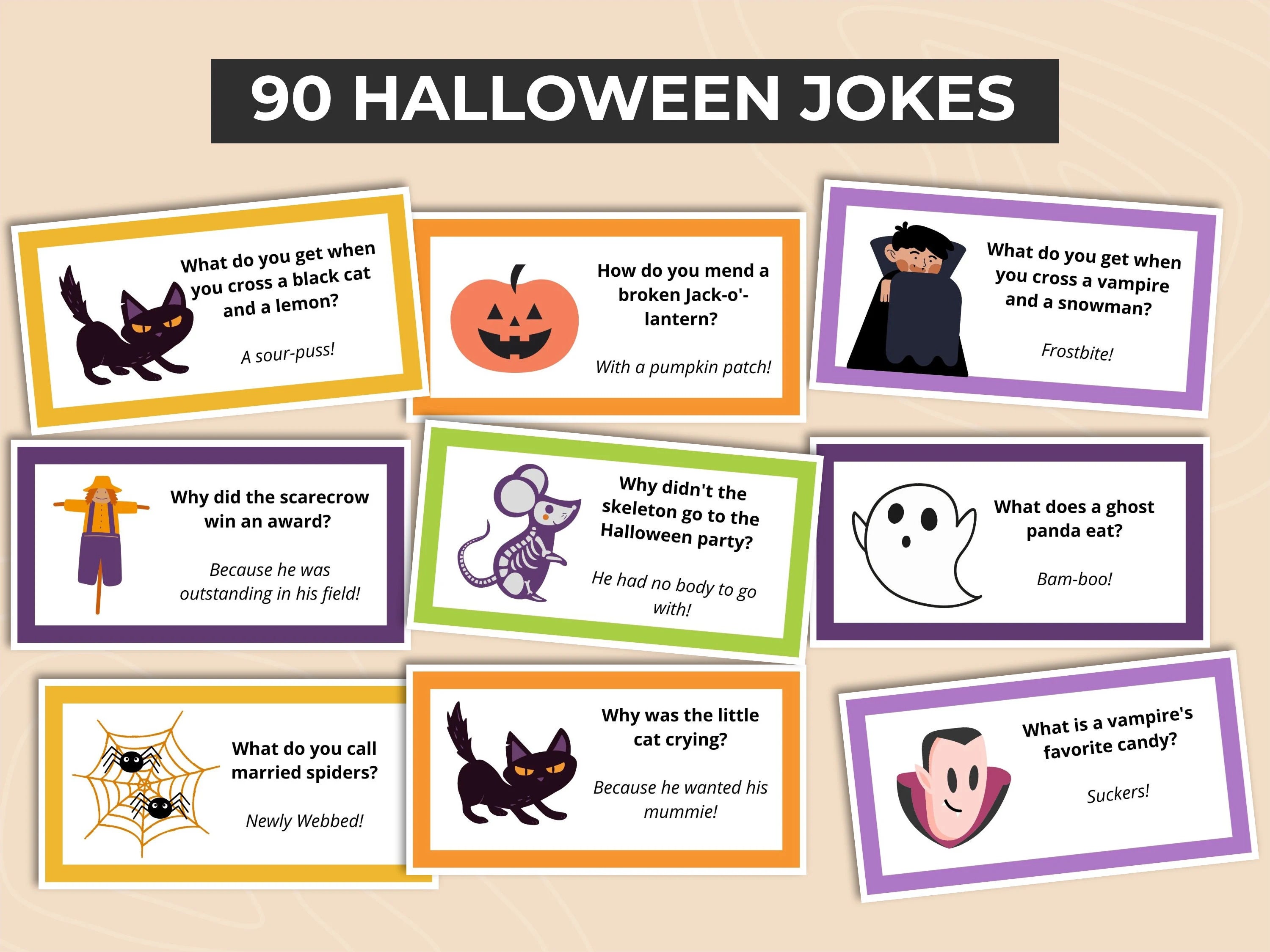
A party host can preserve the energy by limiting jokes to short interruptions between events. Start with two cards while guests arrive, place three near a refreshment table and save a few for the final group activity. If a child creates a new punchline, celebrate the creativity without insisting it follow the original card. Use a large, accessible font and avoid printed jokes on surfaces where food spills will make the text unreadable. Do not pad a page with twenty identical “boo” jokes simply to increase the count; a smaller set with genuinely different situations gives visitors better material to share.
Question-and-Answer Jokes
A question makes listeners participate. “Why did the ghost take the elevator? The stairs were too spirited.” “What did the pumpkin put on its resume? Strong carving skills.” “Why was the bat hired as a night watchman? He already worked the late shift.” These lines are deliberately gentle enough to use with an unfamiliar crowd.
Jokes for Sharing Aloud
At an outdoor treat station, print one joke on a small sign and change it every hour. At a classroom party, invite volunteers to choose a numbered joke card rather than forcing everyone to speak. For mixed-age groups, keep jokes about costumes and playful characters rather than frightening injuries or personal traits.
You can turn a bowl of jokes into an activity without creating a full contest. Put the setup on the front of each folded card and the answer inside, then let guests pick one between other activities. Mix short questions with one-liners so the rhythm changes. Keep a few cards without text for people who want to draw a pumpkin joke instead of speaking in front of others.
How to Pick Age-Appropriate Humor
Know your audience. A short pun on a lunchbox note can work for a seven-year-old; an office social may prefer a dry remark about Halloween meeting schedules. For longer themed collections, the kid jokes, adult jokes, dad jokes and caption puns each have a separate guide so the same punchlines do not flood every page.
Stretch the mixed-audience collection with three more examples: “The ghost became a gardener because it had a talent for haunting houses and houseplants.” “Why did the scarecrow avoid the haunted maze? It was outstanding in the wrong field.” “The skeleton opened a coffee shop; the drinks were surprisingly full-bodied.” Keep these separate from the kid-only and groan-heavy dad-joke collections to reduce repeated punchlines across the cluster.
A useful way to apply these ideas
Make one small version first, then adjust it for your audience, space and resources. The following checks are specific to this topic; use them as a short planning pass instead of assuming every example fits every situation.
Practical takeaways
Test jokes aloud; shorten anything that takes more than one breath.
Keep punchlines welcoming and free from personal insults.
Print a few cards for people who dislike performing.
Use specialized joke pages when an audience needs a different tone.
What makes a Halloween joke good for a party? An instantly recognizable setup, a brief punchline and a tone that suits the whole group.
Related Halloween guides