Halloween Party Games for Small Groups and Big Crowds
Choose Halloween party games by group size, available space and preparation time, with easy setups for a fun night.
Halloween Party Games for Small Groups and Big Crowds
The best Halloween party games fit the available room, time and age range. A host needs a reliable rotation more than a long list of elaborate activities. These options use ordinary supplies and can be scaled down for a living room or up for a school hall.
No-Prep Halloween Party Games
For a quick opening game, write mysterious but harmless objects on cards and let guests guess by touch through a cloth bag. A second option is “monster charades”: each player acts out a friendly spooky character for thirty seconds. Both need little setup and are easy to stop when the party shifts to food or conversation.
If a guest list changes at the last minute, favor games that expand or shrink without rewriting the rules. Paper charades works with six guests or twenty. A silhouette hunt can be converted into a seated matching activity. For a group of mixed mobility levels, ask each participant whether they prefer solving, drawing or acting. Keep materials organized by station in separate labeled containers and assign one person to reset them. If a game has too many steps to describe in thirty seconds, simplify it. A party host will be busy; low-maintenance activities are usually more dependable than intricate competition brackets.
Team Games
Try teams of three to five for a paper-pumpkin design challenge. Give each group paper, markers and a five-minute timer, then ask them to invent a mascot and its backstory. Score creativity and cooperation rather than speed alone. Another team activity is a scavenger hunt with picture clues placed at reachable heights.
Low-Mess Indoor Games
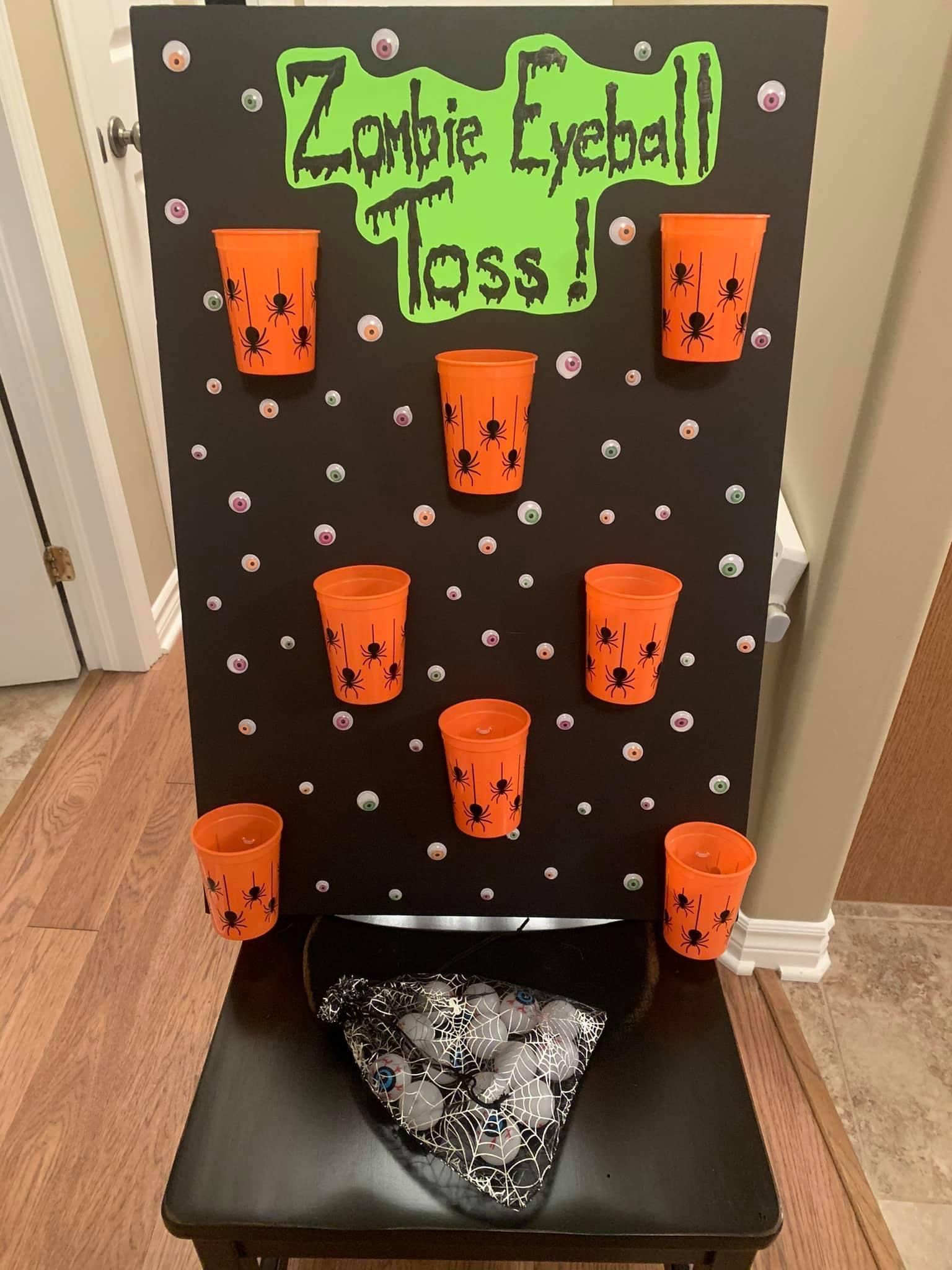
A low-mess indoor option is a tabletop “pumpkin landing zone”: toss rolled-up paper balls into a decorated box. Keep the distance flexible so wheelchair users and younger guests can play. Alternatively, ask participants to match a silhouette card to a creature name; it creates a quieter station for people who need a break.
Set Up a Game Rotation
Build a simple game rotation: welcome guessing game, food pause, team challenge, then one calm optional activity. Label stations clearly and do not force an elimination format. Ten to fifteen minutes per game is usually enough for a casual group; stop earlier if the room is losing interest.
Imagine sixteen guests divided into four mixed-age teams. Start with three minutes of charades so everyone learns the format, then offer two stations: a paper pumpkin challenge at one table and a silhouette matching game at another. Halfway through, swap the teams. End with a group vote for the most creative design rather than keeping a competitive leaderboard throughout the evening.
Prize and Accessibility Tips
Select prizes that do not create pressure or exclude participants: funny paper awards, stickers or a group photo spot often beat expensive gifts. Avoid prop weapons, blocked exits or activities requiring running through tight spaces. Use the children’s guide when guests are mostly elementary age.
Accessibility can be built into game rules instead of treated as an afterthought. Offer verbal clues to guests who cannot see small cards, allow seated throwing from an adjusted distance and replace elimination with rotating turns. Avoid putting mystery items into food containers, which can create hygiene problems. Prepare a clear “stop” signal before any activity with movement or noise.
A useful way to apply these ideas
Make one small version first, then adjust it for your audience, space and resources. The following checks are specific to this topic; use them as a short planning pass instead of assuming every example fits every situation.
Practical takeaways
Set a maximum of three activities for a short party.
Have a seated alternative for movement-based games.
Separate games from food and crowded exits.
Explain scoring in one sentence before the round.
What Halloween game needs almost no supplies? Monster charades works with only a list of character prompts and a timer.
Related Halloween guides