Hamster Running Wheels
Learn about hamster running wheel, including practical setup, safety considerations, common mistakes, and related hamster-care decisions for US pet owners.
Hamster Running Wheels
A safe hamster running wheel is upright, stable and large enough for the hamster to run with a straight back. Choose a continuous, solid running track rather than mesh, wire bars or open spokes. Watch the animal use the wheel: it should move comfortably without bending its spine into a pronounced arch, lifting its head to compensate or stumbling as the wheel rotates. A quiet bearing is useful, but safe fit matters more than a product's "silent" marketing label.
A wheel is everyday enrichment, not a substitute for a roomy enclosure, deep bedding, places to hide and opportunities to forage. This guide focuses on wheel construction, placement, maintenance and safe use. For diameter recommendations for each species, use the hamster wheel size guide. For a larger hamster, the Syrian hamster wheel guide addresses practical buying and clearance decisions.
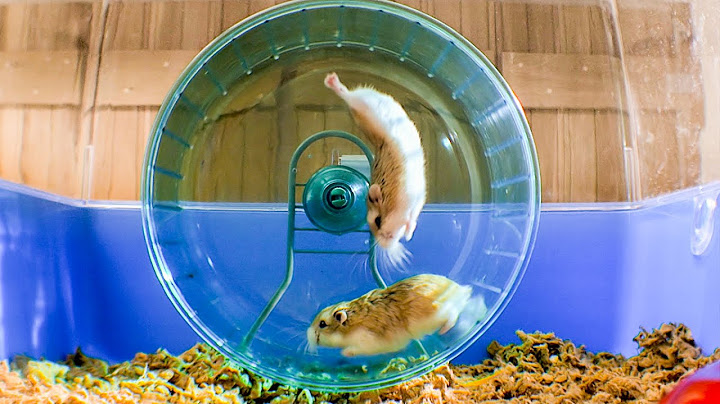
What makes a hamster running wheel safe?
A good wheel provides a smooth, uninterrupted surface underfoot, a rigid track that does not flex or wobble, and a base or mounting arrangement that cannot tip when an active hamster accelerates. The entrance should be open enough to step onto without squeezing. Check for sharp molding seams, exposed fixings, splinters and awkward central hardware. A rear-mounted, axle-free running area avoids an obstruction across the center where the hamster moves.
The wheel should turn with moderate effort, rather than feeling jammed or spinning so freely that the hamster loses control. Do not assume a manufacturer's species photo proves a model fits every hamster of that type. Observe the actual pet using it during its normal evening activity, without waking it during the day just to perform a test.
Solid tread versus mesh, rungs and spokes
Solid-track wheels help keep little feet supported throughout each stride. Wire mesh and widely spaced bars can trap toes and create repeated pressure points. Open spokes and exposed crosspieces add catching and impact hazards. Welfare guidance from PDSA and Blue Cross advises solid surfaces, while RSPCA also recommends an upright wheel with good traction and a safe structure.
A textured running surface may help grip, but avoid deep gaps or aggressive ridges that can snag nails. If a wheel has a removable lining, make sure it stays firmly attached, dries thoroughly after cleaning and cannot be chewed into hazardous pieces. A smooth track that becomes slippery when damp needs attention, too. Always inspect the wheel itself rather than relying on a listing that says "pet safe."
The one-minute fit and posture check
Start by checking the wheel size comparison for your hamster's species. Set the wheel on a stable surface and observe a few normal running strides. Look for a back that stays approximately straight, a natural head position and full steps without the hamster bunching up. The animal should be able to enter, turn and leave easily.
A rounded or forced running posture suggests that the wheel may be too small. But a large nominal diameter is not enough by itself: a track that is too narrow, a high entry lip or an unstable stand can still make a model unsuitable. A hamster that cannot rotate an oversized, heavy wheel comfortably may need a different design. Fit is a practical combination of diameter, usable tread width, weight and safe placement.
Placement in a real hamster enclosure
Position the wheel on firm, level support so it cannot lean or topple. A solid platform or secure flat area can help prevent legs and stands from sinking into deep bedding. Leave space above and beside the wheel for free rotation. Keep the moving edge away from climbing objects, enclosure walls and loose accessories where bedding or paws could catch.
Deep, diggable bedding remains important; do not eliminate a hamster's burrowing area just to fit a wheel. Instead, reorganize the enclosure or upgrade to one with enough height and floor space to provide both. Check the wheel after cleaning and after a hamster has rearranged bedding, because an apparently stable setup can shift overnight.
Silent hamster wheels: noise versus safe performance
"Silent" usually describes bearings or a manufacturer's intended noise level, not a universal safety certification. Most recurring noise comes from wobbling stands, vibration against enclosure walls, an uneven base, loose parts or bedding rubbing against the track. First locate the sound; a rattle from an unstable stand requires a stability fix, not an improvised lubricant near the hamster's feet.
If the mechanism grinds, catches or develops a sharp edge, remove the wheel while you assess or replace it. Follow the manufacturer's cleaning and maintenance instructions. Avoid unverified oils, household grease and ad hoc modifications that could introduce toxins or make the surface slippery. Recheck stability after every adjustment.
Cleaning, inspections and replacement
Spot-check the wheel daily for droppings, damp patches, chewed plastic, cracks and loose fasteners. Wipe away mess with an animal-appropriate cleaning approach and rinse and dry completely before returning it. An absorbent lining may need more frequent attention than a washable solid track. Do not leave water pooling inside a bearing housing or a wooden wheel that cannot dry properly.
Once a week, turn the wheel by hand to check smoothness, noise and alignment. Replace a cracked track, exposed wire, damaged mounting or persistent wobble rather than trying to make a compromised wheel last. A visible nail snag or foot irritation is a reason to stop use and seek veterinary advice about sore feet.
Warning signs that a wheel or setup needs changing
Watch for a sharply curved back, persistent slipping, reluctance to enter, feet catching at a seam, repeated tumbles or rubbing against a sidewall. A hamster may still run on a poor wheel, so use does not prove safety. If your hamster develops sores, limping or unusual movement, remove the suspect equipment and contact an exotics veterinarian. Do not attempt to diagnose discomfort from wheel behavior alone.
For a safer setup, use this quick decision checklist:
Confirm the species-specific diameter and a straight-back running posture.
Choose a broad, solid, unobstructed track with secure traction.
Place the wheel upright on a stable support, clear of moving obstructions.
Preserve deep bedding, hides and room to forage elsewhere in the enclosure.
Check rotation, fasteners, soiling and wear routinely.
Frequently asked questions
Do hamsters need a running wheel?
A suitably sized wheel is an important exercise and enrichment item for most pet hamsters. It should be available alongside, not instead of, adequate floor space, deep bedding, hiding areas and foraging activities.
Are wire hamster wheels safe?
Avoid wire mesh, spaced bars and spoke designs that can trap feet or create impact hazards. A stable, upright wheel with a continuous solid surface is the safer default advocated by welfare organizations.
Can a hamster wheel be too big?
A wheel can be impractical if it is too heavy to start or unstable in the enclosure. The goal is comfortable control, a straight running posture and a secure fit, not the largest possible number on the packaging.
Why does my hamster wheel squeak at night?
Vibration, a wobbling stand, bedding contact or deteriorating bearings may be responsible. Inspect the mechanism and placement before making changes, and avoid improvised lubricants or unsafe repairs.
Should I take the wheel away when my hamster runs a lot?
Normal nighttime running is not, by itself, evidence of a problem. Assess the enclosure and wheel safety first. If the hamster shows injury, abrupt behavior changes or other concerning signs, consult an exotics veterinarian rather than using arbitrary running-time limits.