Syrian Hamster Wheel
Learn about hamster wheel for syrian, including practical setup, safety considerations, common mistakes, and related hamster-care decisions for US pet owne
Syrian Hamster Wheel
For a Syrian hamster, start your shopping search with an upright, solid-surface wheel at least 30 cm (12 inches) in diameter, following PDSA guidance. Blue Cross lists a 27–32 cm Syrian range, so published advice differs slightly at the lower end. What settles the choice for an individual hamster is whether its back stays straight, the head remains comfortably positioned and the wheel rotates without slipping or tipping.
This guide is a Syrian-specific buyer and setup checklist, not a brand ranking or a report of hands-on product tests. For side-by-side sizes across all hamster species, see our hamster wheel size chart. For materials, cleaning and general wheel safety, use our hamster running wheel guide.
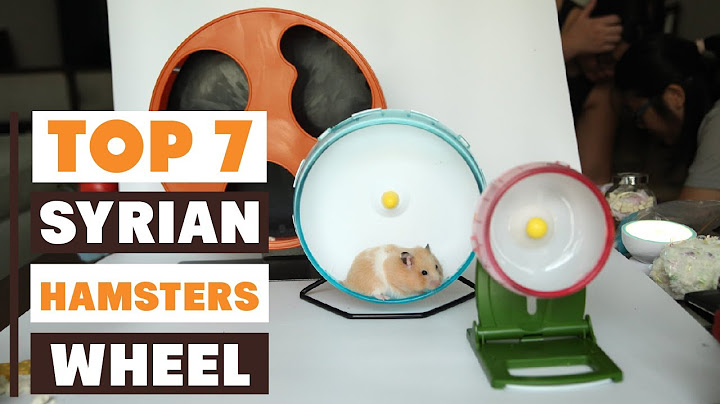
Why Syrian hamsters need a larger wheel
Syrian hamsters have longer bodies than many dwarf hamster species. A small wheel may force the animal into a rounded running posture or make it raise its head unnaturally. A hamster may still choose to run on that wheel; the behavior does not prove the shape is appropriate. Welfare organizations emphasize a large enough circle to allow a relatively straight posture.
In practice, many cage starter kits include a wheel that is too small for an adult Syrian. Rather than treating the supplied wheel as a free bonus, regard it as something to evaluate immediately. If the enclosure cannot accommodate a suitable wheel without crowding the hamster or eliminating deep bedding, the housing itself may need upgrading.
Is a 12-inch wheel enough for a Syrian?
Twelve inches equals approximately 30.5 cm, making it a practical starting size against PDSA's minimum. However, check whether the quoted dimension describes the usable running track or the outside of the shell. A model advertised as 12 inches across its entire housing may offer less room inside. Ask for internal measurements or verify the manufacturer diagram before paying.
Some Syrians may benefit from a larger track if their back still curves on a nominal 12-inch model. Bigger is not always better regardless of engineering: the animal must be able to start and stop the wheel easily, maintain stable footing and enter without struggling. The aim is comfortable movement, not a particular premium price or maximum diameter.
Key buying features beyond diameter
Continuous solid running track
Choose a track without wire bars, wide gaps or open spokes. A solid, gently grippy surface supports feet consistently. Inspect edges and seams for rough plastic, exposed fasteners or damage. Avoid lining materials that become loose, trap nails or stay damp after cleaning.
Stable stand or secure mounting
Larger wheels create more leverage when a Syrian accelerates. The stand should stay flat without rocking, and any mounting should be firmly attached to an appropriate enclosure surface. Place the wheel on solid support rather than balancing narrow legs directly on loose deep bedding.
Adequate width and accessible entrance
A Syrian needs enough usable track width to run without rubbing against sidewalls. Examine the inside of the product: a generous advertised outer width may conceal an oddly narrow running lane. The entry should not force the animal to squeeze around a central obstruction.
Smooth turning and manageable noise
A well-aligned wheel should rotate smoothly and not grind, jerk or scrape the enclosure. "Silent" claims are not the same as proof of safety. Stability and traction are more important than a bearing brand, and noisy hardware may indicate an assembly or wear problem rather than simply a poor household sound rating.
How to fit a Syrian wheel into a deep-bedded enclosure
Choose the wheel position before adding accessories. Measure the total assembled height, including stand or mounting hardware, and keep clearance above the rotating edge. A firm platform can help anchor the wheel while leaving deep bedding for burrowing in another part of the enclosure. Do not reduce the entire habitat to a thin substrate layer just to accommodate the wheel.
Keep food and water areas, hides and tunnels out of the moving track. Confirm that the wheel does not rub against glass, mesh or a lid. After the hamster has spent a night rearranging bedding, check again for obstruction or tilt. If the wheel remains unstable, do not improvise with loose weights or makeshift sharp fasteners near the animal.
Three checks to make after you buy
First, confirm the wheel is physically suitable: inspect the track for cracks, burrs and gaps and verify that the usable interior diameter matches the product description. Second, turn it by hand to see that it moves freely without rubbing the stand, then fit it securely in the enclosure. Third, observe the hamster using it during normal evening waking hours, without forcing a run for the camera.
Look for a relatively straight back, natural head carriage, no regular sideways slips and an easy exit. A wheel that tips or makes the hamster stumble needs immediate attention. If a Syrian refuses a newly installed wheel, check how it starts and whether entry height and placement make access uncomfortable before assuming the hamster dislikes exercise.
Common mistakes when choosing a Syrian hamster wheel
One common mistake is buying the smallest wheel a retailer labels "for Syrians" without confirming measurements. Another is treating a mesh wheel as safe because it feels ventilated. Wire and rung surfaces carry foot-catching risks, and a well-made solid wheel is preferable. A third is prioritizing noise ratings above posture and stability.
Avoid choosing a wheel based only on a photo of a young Syrian; an adult is larger. Do not copy an online recommendation without knowing whether it measured external housing diameter. Finally, do not think a properly sized wheel makes up for a cramped living area. Syrians also need deep bedding, hiding places and varied enrichment.
When to adjust or replace a wheel
Inspect the wheel for soiling and cracks as part of regular enclosure maintenance. Remove and clean it according to the manufacturer's instructions, allowing all surfaces to dry. If the wheel begins to wobble, scrape or seize, stop using it until the cause is safely resolved. Replace any wheel with a damaged track or unstable mounting rather than relying on quick fixes that might expose the hamster to hazards.
Contact an exotics veterinarian if you notice limping, sores, reluctance to move, unusual gait or other signs of pain. If the hamster has a persistently arched back while running, revisit the wheel-size guide and choose a roomier appropriate model. Do not use wheel behavior alone to diagnose a spinal or foot condition.
Syrian hamster wheel shopping checklist
Prefer a usable running diameter of at least 30 cm as a starting point.
Observe straight-back posture rather than relying solely on a size label.
Reject mesh, rungs, open spokes, sharp seams and unstable stands.
Confirm track width, entrance clearance and ability to rotate smoothly.
Reserve adequate enclosure height while keeping a deep bedding area.
Verify exact model dimensions and return policy before purchase.
Frequently asked questions
What size wheel does a Syrian hamster need?
PDSA recommends at least 30 cm (about 12 inches). Blue Cross gives a 27–32 cm range. Starting at 30 cm and confirming a straight back is a practical approach for a new purchase.
Is an 11-inch wheel safe for a Syrian hamster?
Eleven inches is about 28 cm and below PDSA's 30 cm threshold. While it overlaps part of Blue Cross's range, a 30 cm or larger model is the more conservative starting choice for an adult Syrian.
Can I use a flying-saucer wheel instead?
An upright, solid wheel with appropriate diameter offers a clearer posture-based fit check. Disc-style runners should not be presumed an equivalent primary replacement merely because a hamster can move on them.
Should a Syrian hamster wheel be silent?
Quiet operation is convenient but secondary to size, solid traction and stability. Inspect any wheel that starts grinding, wobbling or scraping rather than continuing to use damaged equipment.
What if the correct wheel will not fit in my enclosure?
Upgrade or reorganize the habitat so the Syrian can have both a suitable wheel and sufficient bedding and enrichment. Do not choose an undersized wheel just to preserve a cramped cage layout.