How Fast Does Earth Move Through Space? The Frames of Reference
Earth moves at different speeds as it rotates, orbits the Sun, and travels with the Milky Way. Learn why there is no single universal number.
How Fast Does Earth Move Through Space? The Frames of Reference
Earth has no single, universal 'speed through space.' The answer depends on what you measure it against. At the equator, Earth's surface rotates at about 1,670 kilometers per hour; Earth travels around the Sun at roughly 107,000 kilometers per hour; the Sun also moves around the center of the Milky Way.
Earth's daily rotation
The planet spins once relative to the distant stars in approximately 23 hours and 56 minutes. A point on the equator travels through a bigger circle in one rotation than a point near the poles, so surface speed is highest at the equator and approaches zero at the geographic poles.
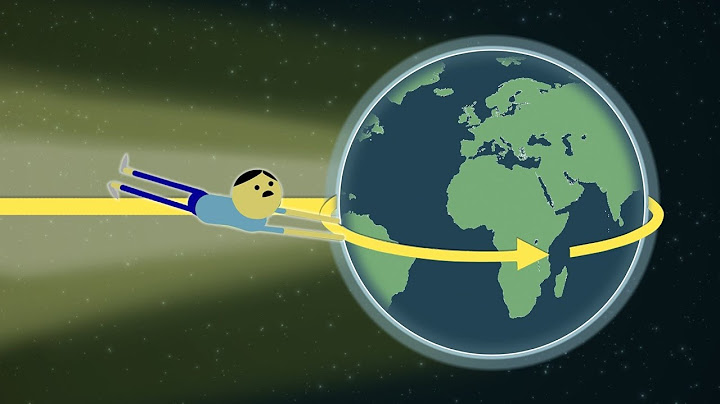
The familiar 24-hour solar day differs slightly from the sidereal rotation period because Earth advances along its orbit while turning. Rotation speed therefore requires a location on Earth and a reference frame.
| Motion | Approximate speed | Relative to |
| Surface rotation at equator | 1,670 km/h | Earth axis |
| Orbit around Sun | 107,000 km/h | Sun |
| Solar orbit of galaxy | ~220–240 km/s | Galactic center |
Earth's orbital speed around the Sun
Earth's average orbital speed is about 29.8 kilometers per second, or about 107,000 kilometers per hour (approximately 67,000 mph). Its orbit is slightly elliptical, so its instantaneous speed changes modestly across the year.
This velocity is relative to the Sun. Adding it to a speed measured relative to Earth's surface or to the galaxy without keeping track of direction would be misleading: velocity has direction as well as magnitude.
The solar system's motion around the galaxy
The Sun carries Earth around the Milky Way's center at a speed of a few hundred kilometers per second, often approximated at around 220–240 kilometers per second. Values depend on the adopted galactic model and the precise reference frame.
The galaxy itself moves relative to nearby galaxies and to the cosmic microwave background. Each motion is scientifically measurable, but none is a privileged 'absolute speed' valid in every frame.
Why we do not feel thousands of miles per hour
People primarily feel acceleration and relative forces, not steady motion in a smooth vehicle or on a smoothly rotating and orbiting planet. Gravity keeps the atmosphere and ocean largely moving with Earth. Ordinary wind and aircraft motion are measured relative to this already moving environment.
The simple calculation is circumference divided by time for rotation, or approximate orbital distance per year for revolution. Always label the measured quantity and reference before comparing headline speeds.
Frequently asked questions
How fast is Earth orbiting the Sun?
About 107,000 km/h or 67,000 mph on average.
How fast is Earth spinning?
About 1,670 km/h at the equator; less at higher latitudes.
Is Earth moving at one fixed absolute speed?
No. Speed and velocity depend on the observer and reference frame.
Related reading
What Galaxy Do We Live In? Earth in the Milky Way