Choosing Korean Skin Care Products for Your Skin Type
Learn how Korean skin care product categories fit into a practical routine, with ingredient and skin-type considerations before you shop.
Choosing Korean Skin Care Products for Your Skin Type
Korean skin care products are often associated with layered routines, novel textures, and a long shelf of toners, essences, and serums. None of those extras is essential for healthy skin. The useful starting question is simpler: which products meet your skin's actual needs without creating a routine you cannot maintain?
What counts as a Korean skin care product?
K-beauty describes a market and product-development tradition rather than a single ingredient standard. A gel cleanser from one Korean brand and a rich cream from another may be designed for completely different skin types. Country of origin does not prove that a formula is gentler, more effective, or suitable for everyone. Read the actual ingredient list, purpose, and directions rather than treating the label as a performance guarantee.
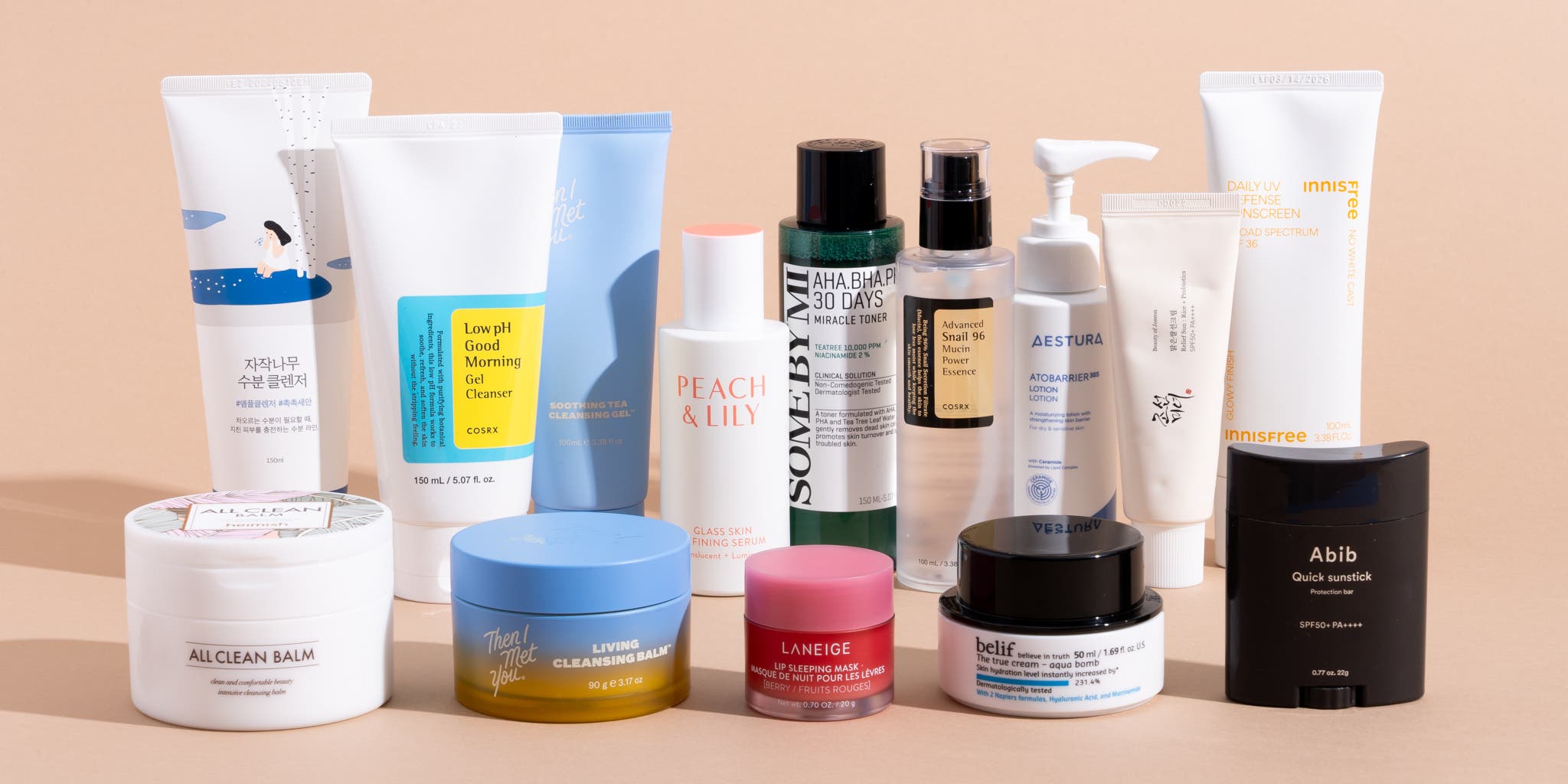
Common categories include cleansing oils, water-based cleansers, watery toners, essences, moisturizers, sunscreens, and targeted treatments. You can pick one useful item from these categories without buying a coordinated ten-step set. Imported packaging may vary by market, so check the U.S. label and current product details before use.
Start with cleanser and moisturizer
For dry or tight-feeling skin, a mild cleanser followed by a creamier moisturizer can be enough to establish a dependable foundation. If your face becomes shiny during the day, a gentle foaming cleanser and a lighter, non-comedogenic moisturizer may feel more comfortable. Combination skin may require different quantities on the cheeks and T-zone, rather than entirely different products.
Essences and hydrating toners are optional layers. Look for what they add beyond your moisturizer: a humectant-rich formula may make skin feel temporarily more hydrated, but it does not replace a moisturizer when your barrier is dry. Introduce new formulas one at a time to recognize irritation.
Where sunscreen belongs
In the morning, a practical sequence is cleanser if needed, optional treatment, moisturizer as needed, and broad-spectrum SPF 30 or higher. Reapply sunscreen while outdoors according to the product directions, especially after swimming or sweating. In the evening, cleanse off sunscreen and makeup, apply any appropriate treatment, and moisturize. There is no skin-care benefit in adding layers purely to reach a particular step count.
Sunscreen sold in the United States is regulated differently from an ordinary cosmetic. If you purchase sunscreen through an international marketplace, confirm that the product is appropriately labeled and marketed for your location rather than relying solely on a viral review.
Match products to skin type and tolerance
Dry skin often benefits from fragrance-free creams and moisturizing ingredients such as glycerin or ceramides. Oily skin may prefer lightweight lotions, but it still needs hydration. If you experience frequent stinging, burning, or redness, start with the least complicated routine and patch-test new products. An exfoliating pad may feel satisfying, yet frequent acid use can worsen irritation.
Avoid choosing products because they promise a particular ethnicity's skin texture or an unrealistic 'glass skin' result. Individual skin condition, climate, medication use, and consistency matter more than the marketing aesthetic.
A practical label checklist
Before buying, ask five questions: What problem does this product solve? Is it a cleanser, moisturizer, sunscreen, or treatment? Do the directions suit my routine? Are there potential irritants or ingredients I already react to? Can I replace it easily when the bottle runs out?
If an item cannot pass this checklist, skip it for now. Explore individual formats only when you have a clear reason to add them.
Common questions
Do I need a toner and an essence? No. They are optional; a cleanser, moisturizer, and daily sun protection form a workable baseline for many people.
Is Korean skin care automatically safer for sensitive skin? No. Sensitivity depends on the formula and the individual. Test new products carefully and ask a dermatologist about persistent reactions.