Nurse Shark Teeth: Feeding and Mouth Anatomy
Nurse Shark Teeth: Feeding and Mouth Anatomy Explore evidence-based facts, context and common misconceptions.
Nurse Shark Teeth: Feeding and Mouth Anatomy
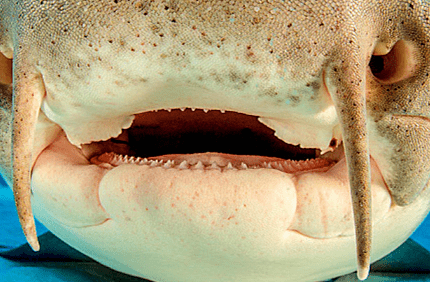
Nurse sharks have many relatively small teeth suited to gripping food as they use powerful suction to capture prey from crevices and the seafloor. Their teeth are unlike the large triangular cutting teeth commonly associated with great whites.
The essentials
Their feeding strategy works well for crustaceans, mollusks, and bottom-living fish. The mouth position and suction ability matter as much as tooth shape for understanding how prey is captured.
What makes this subject distinctive
A nurse shark is not toothless or automatically harmless because its teeth look small. It can bite defensively if grabbed, stepped on, or harassed, and a bite can be serious.
Extreme size, speed, and age figures are especially prone to exaggeration. The strongest comparisons identify the species, measurement method, and whether the claim concerns an average animal or an exceptional record. Scientific uncertainty is part of a useful answer, not a weakness.
Common misconceptions and limits
Teeth are regularly replaced in sharks, but an isolated tooth can be hard to identify confidently. Shape, size, and verified origin are essential clues.
An observation of one individual does not define a species. Ocean temperature, depth, prey abundance, migration, and age shape marine behavior. Even size and speed claims need a measured scale, a clearly named species, and the circumstances of observation.
Responsible interpretation
Marine animals are not performing for observers. Feeding, touching, pursuing, or crowding them can change their behavior and raise safety concerns. Natural-history explanations should make room for habitat conservation rather than turning wild encounters into instructions for close contact.
Key points at a glance
Nurse sharks have many relatively small teeth suited to gripping food as they use powerful suction to capture prey from crevices and the seafloor.
Their feeding strategy works well for crustaceans, mollusks, and bottom-living fish.
A nurse shark is not toothless or automatically harmless because its teeth look small.
Frequently asked questions
What is the main scientific point?
Nurse sharks have many relatively small teeth suited to gripping food as they use powerful suction to capture prey from crevices and the seafloor.
Can this vary among species or individuals?
Their feeding strategy works well for crustaceans, mollusks, and bottom-living fish.
What should readers treat cautiously?
Teeth are regularly replaced in sharks, but an isolated tooth can be hard to identify confidently.
Explore related guides
Ocean Wildlife Guide: Sharks, Whales, Rays and Unusual Sea Creatures
