Tiger Shark Size: Growth, Weight and Identification
Tiger Shark Size: Growth, Weight and Identification Explore evidence-based facts, context and common misconceptions.
Tiger Shark Size: Growth, Weight and Identification
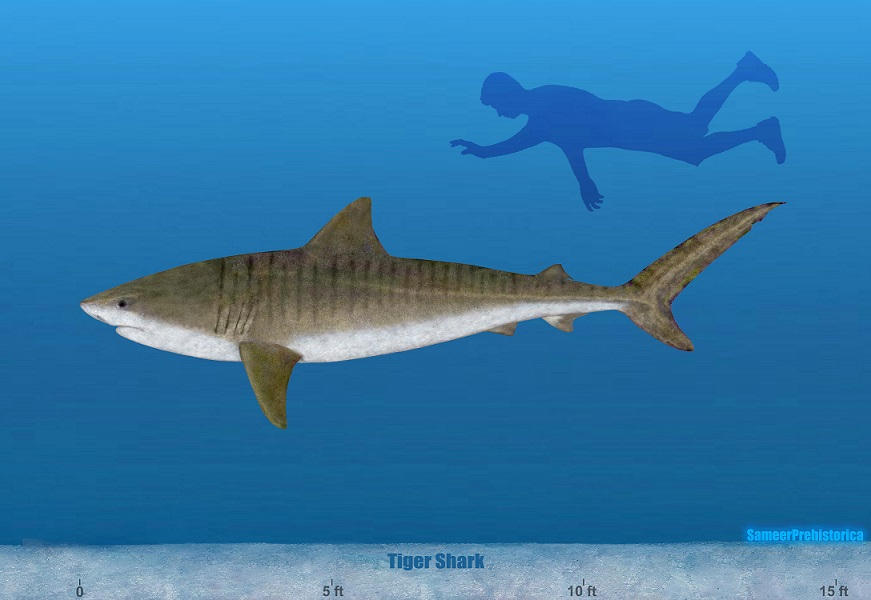
Tiger sharks are large, broad-headed sharks of tropical and warm-temperate waters. Adults can exceed several meters in length, and females tend to reach larger sizes, but maximum-record claims differ by source.
The essentials
Their body changes with growth: the vertical striping that gives the species its name can become less distinct in older individuals. Broad diets and wide movements help explain their role in coastal food webs.
What makes this subject distinctive
A dramatic photograph rarely allows accurate length measurement without known scale and perspective. Published lengths should distinguish verified measurements from estimates or unusually large anecdotes.
Extreme size, speed, and age figures are especially prone to exaggeration. The strongest comparisons identify the species, measurement method, and whether the claim concerns an average animal or an exceptional record. Scientific uncertainty is part of a useful answer, not a weakness.
Common misconceptions and limits
Growth and body condition depend on sex, age, and environment. A single average number cannot describe all populations or every life stage.
An observation of one individual does not define a species. Ocean temperature, depth, prey abundance, migration, and age shape marine behavior. Even size and speed claims need a measured scale, a clearly named species, and the circumstances of observation.
How marine ecology shapes the answer
Depth, temperature, local prey, and life stage influence marine animals. The same species can behave differently on a coastal nursery ground and in the open ocean, so a description based on a single diver encounter is incomplete.
Key points at a glance
Tiger sharks are large, broad-headed sharks of tropical and warm-temperate waters.
Their body changes with growth: the vertical striping that gives the species its name can become less distinct in older individuals.
A dramatic photograph rarely allows accurate length measurement without known scale and perspective.
Frequently asked questions
What is the main scientific point?
Tiger sharks are large, broad-headed sharks of tropical and warm-temperate waters.
Can this vary among species or individuals?
Their body changes with growth: the vertical striping that gives the species its name can become less distinct in older individuals.
What should readers treat cautiously?
Growth and body condition depend on sex, age, and environment.
Explore related guides
Ocean Wildlife Guide: Sharks, Whales, Rays and Unusual Sea Creatures
