How Does a Plasma Globe Work?
Learn how a plasma globe forms glowing filaments in gas, why the patterns follow a hand, and how it differs from space plasma.
How Does a Plasma Globe Work?
SCIENCE EXPLAINED • US ENGLISH • EDITORIAL SNAPSHOT: NOVEMBER 1, 2026
A plasma globe is a sealed glass sphere containing low-pressure gas and a central electrode supplied with alternating high voltage. When the device is switched on, electric fields energize the gas and produce bright, branching discharge filaments. The familiar 'lightning in a ball' appearance is not an actual thunderstorm trapped inside the glass, and it is not the same plasma environment found around Earth in space.
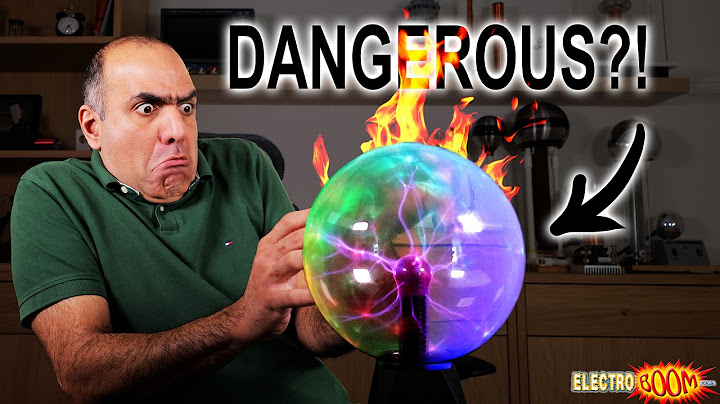
What is inside a plasma globe?
A typical decorative globe includes an electrode in the center and a mixture of gases at reduced pressure inside the outer glass envelope. The electrical system changes the voltage rapidly, creating a strong time-varying electric field. Under suitable conditions, gas particles become ionized and electrons collide with atoms, exciting them. When excited atoms return to lower energy states, they can emit visible light.
The exact colors depend on gas composition, operating conditions, and construction. Purple, pink, or blue-looking filaments are commonly seen, but color alone does not reveal a gas mixture or prove that a globe is operating safely.
Why do the filaments branch?
A gas discharge is not spread evenly throughout the entire sphere. Regions of ionization and electric-field concentration favor bright, channel-like structures that can move, split, and reform. These channels are often called streamers or plasma filaments. Their motion reflects the changing electric field, heating, gas behavior, and nearby objects.
For a beginner, it helps to imagine a glowing pathway that repeatedly appears where electrical conditions make current flow easiest. The real physics is more complicated than a single 'path of least resistance': gas ionization and the electric field influence each other as the discharge evolves.
What happens when you touch the glass?
A hand placed on the outside changes the electrical environment around the globe and often concentrates visible filaments near the contact area. This is partly a capacitive effect: the glass acts as an insulating barrier while a person influences the electric field without directly touching the electrode. It does not mean electricity is safely 'flowing into the body' in the simple way some captions claim.
Manufacturers specify how their devices should be used. Follow those directions, keep the globe intact, and avoid experimenting with metal objects, liquids, damaged glass, or external electrical equipment. People with implanted medical devices should follow their clinician and device maker's guidance rather than relying on a general internet assurance.
Plasma globe versus plasma in space
Plasma is an ionized gas containing free charges, but not every plasma system is created in the same way. In a globe, an enclosed low-pressure gas responds to an artificial high-voltage field. The plasma around Earth exists in a large natural environment controlled by solar particles, magnetic fields, and other processes. A plasma globe is a useful classroom analogy for ionization and discharges—not a miniature reproduction of the Van Allen belts.
Is a plasma globe the same as static electricity?
Static electricity can build up on surfaces, while the globe's glowing patterns result from driven electrical discharges through gas. Both involve electric charge, but the mechanisms are different. A globe usually requires a powered circuit to sustain its display; friction alone cannot account for the continued emission from the center electrode.
What a classroom demonstration can show
A globe can illustrate ionization, electrical discharge, and the effect of a nearby conductor on field patterns. It cannot by itself establish the temperature of space plasma, the shape of Earth’s radiation belts, or the hazard of unrelated electrical equipment. If using it in class, a stronger activity is to describe which visible features have a clear explanation and which require additional measurements.
Frequently asked questions
Why do plasma globes glow? Excited gas atoms and other discharge processes produce visible light.
Why does the light follow a finger? Your hand alters the local electric-field conditions outside the glass, concentrating nearby filaments.
Can I open a plasma globe? No. Treat it as sealed electrical equipment and follow the manufacturer's directions.
Explore related science topics
For a closer look at connected concepts, read electric and magnetic fields, and electromagnetic-wave guide.