Sagittarius A*: The Black Hole at the Milky Way Center
Sagittarius A* is the supermassive black hole at the center of the Milky Way. Learn its scale, evidence, and how astronomers observed it.
Sagittarius A*: The Black Hole at the Milky Way Center
Sagittarius A* (pronounced 'Sagittarius A-star,' abbreviated Sgr A*) is the supermassive black hole at the center of the Milky Way. Its mass is about four million times the mass of our Sun. It is an object within our own galaxy, not the black hole closest to Earth and not the same as the giant black hole imaged in the galaxy M87.
Where Sagittarius A* is located
The galactic center lies roughly 26,000 light-years from the solar system in the direction of the constellation Sagittarius. Dust obscures much of the view in visible light, so astronomers rely on radio, infrared, and X-ray observations to investigate this region.
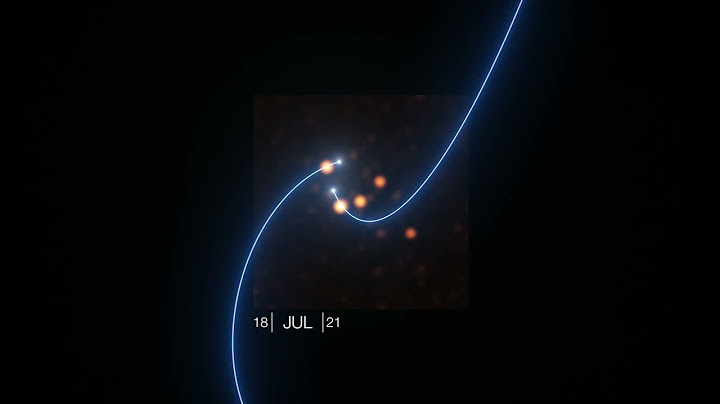
The crowded central star field is useful scientifically. Monitoring stars across years reveals how strongly they accelerate while approaching the unseen central mass.
How scientists know its mass
Individual stars follow fast, elongated orbits around the compact central object. Their motions fit the gravitational influence of an approximately four-million-solar-mass body confined to a small region. This is a powerful line of evidence, independent of artistic depictions of a black disk.
Measurements of the star S2 and neighboring stars also test predictions of general relativity in a strong gravitational field. The research involves precise positions and velocities observed over many years.
What the 2022 image reveals
The Event Horizon Telescope collaboration published the first image of Sagittarius A*'s shadow-like central region in 2022. A network of radio observatories effectively acted as an Earth-sized telescope, resolving hot gas very close to the event horizon.
The bright ring does not mean the black hole itself glows. Radiation comes from surrounding matter. Variability and the complex imaging process are reasons to read the associated scientific notes rather than interpret every bright patch as a permanent surface feature.
Why the black hole does not endanger Earth
Sagittarius A* is immensely massive, but it is also extraordinarily distant. Earth follows the Sun's gravitational system, and the solar system orbits the Milky Way without being on an imminent inward plunge toward the center.
Our galaxy's central black hole is relatively subdued compared with active galactic nuclei whose disks and jets can outshine their host galaxies. This distinction helps explain why 'supermassive' does not automatically mean 'currently swallowing everything nearby.'
Frequently asked questions
Is Sagittarius A* the nearest black hole?
No. Gaia BH1 and other known stellar black holes are much closer to Earth.
What does the asterisk mean?
It is part of the radio source name Sagittarius A*; the object is commonly abbreviated Sgr A*.
Did scientists photograph inside it?
No. The 2022 result shows surrounding emission and a shadow, not the interior.
Related reading
What Is a Black Hole? Space, Gravity, and Common Myths