What Is a Black Hole? Space, Gravity, and Common Myths
Black holes trap light inside an event horizon, but they do not vacuum up the universe. Learn the basics, evidence, and what happens near one.
What Is a Black Hole? Space, Gravity, and Common Myths
A black hole is a region of spacetime bounded by an event horizon, beyond which signals—including light—cannot escape to faraway observers. It is not an empty hole punched through the universe. It is a gravitational object whose surrounding matter, companion stars, and influence on light can be observed.
What the event horizon actually means
The event horizon marks a one-way boundary in the spacetime around a black hole. It is not a solid shell or a photographed surface. A black hole's characteristic size depends on mass and, more precisely, on its spin and the geometry of spacetime.
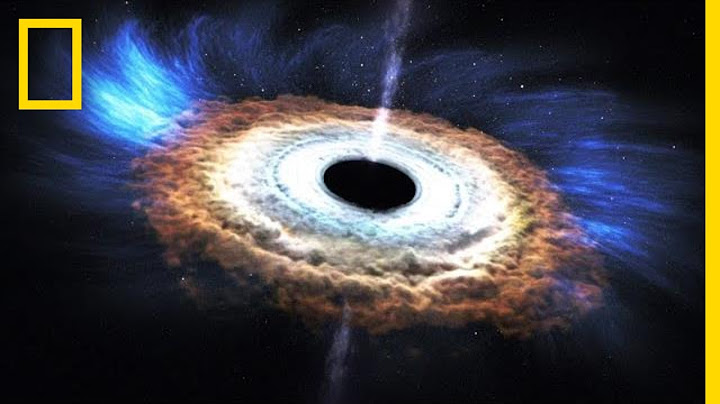
Gravity near the horizon is extreme, yet a black hole does not exert magical suction at unlimited distance. Far away, an object of a given mass influences an orbit in the familiar way. The classic thought experiment replacing the Sun with an equal-mass black hole would preserve Earth's orbit, though Earth would lose its sunlight.
How astronomers detect something dark
Stars can orbit a companion that emits little or no light; orbital speeds reveal the unseen mass. Gas spiraling toward a black hole can become extraordinarily hot, producing X-rays or other radiation. In some systems, magnetic fields help drive energetic jets, although those jets do not emerge from inside the event horizon.
Another technique uses gravitational lensing: a compact massive object warps the apparent position or brightness of more distant background light. Gravitational-wave detectors reveal mergers of compact objects through spacetime vibrations.
What black-hole images really show
The Event Horizon Telescope's images of M87* and Sagittarius A* display bright material close to the black holes surrounding a dark central shadow. They are remarkable direct imaging achievements, but they do not reveal the interior of a black hole.
Black-hole visualizations often exaggerate jets and colorful accretion rings to teach the physics. A caption should distinguish a telescope observation from an artist's rendering or computer simulation.
Common myths worth discarding
Black holes are not proven wormholes, portals, or cosmic drains. They do not threaten the solar system simply because they exist in the Milky Way. The nearest known systems are hundreds to thousands of light-years away, not lurking between Earth and the Moon.
Scientists still investigate the physics of information, singularities, and quantum gravity. Those unsolved questions do not undermine evidence that compact dark objects matching black-hole predictions are widespread.
Frequently asked questions
Can light escape a black hole?
Not from inside its event horizon, according to general relativity.
Do black holes eat whole galaxies?
No. Their gravitational influence does not turn galaxies into funnels.
Has a black hole ever been imaged?
The hot material and shadow around black holes have been imaged, notably M87* in 2019 and Sagittarius A* in 2022.
Related reading
How Do Black Holes Form? Stellar Collapse Explained