What Is the Closest Known Black Hole to Earth?
Gaia BH1 is among the nearest well-established black holes, about 1,500 light-years away. Learn how astronomers detected it and what may change.
What Is the Closest Known Black Hole to Earth?
The closest widely recognized, confirmed black hole to Earth is Gaia BH1, approximately 1,560 light-years away in the constellation Ophiuchus. 'Closest known' is the crucial qualifier: an undiscovered black hole could be nearer, and the record can change with new observations.
Why Gaia BH1 is considered a black hole
The black hole itself contributes little detectable light, but it is part of a binary system containing a Sun-like star. Astronomers tracked the visible star's orbital motion. The orbit implies an unseen companion of roughly ten solar masses, too massive to explain as an ordinary dim star or stellar remnant such as a white dwarf.
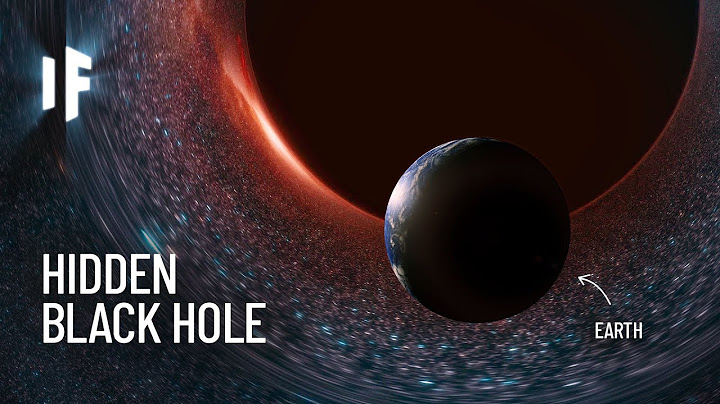
ESA's Gaia spacecraft provided extraordinarily precise measurements of the star's motion, complemented by ground-based spectroscopy. Together those observations constrained the system's orbit and mass. This is a measurement of gravity, not a photograph of a dark sphere in space.
How far away is 1,560 light-years?
A light-year is about 5.88 trillion miles (9.46 trillion kilometers). Gaia BH1 is therefore enormously farther away than the solar system's planets and more than three hundred times farther than Proxima Centauri. Calling that distance 'nearby' only makes sense on the scale of the Milky Way.
Different articles sometimes round the distance to about 1,500 or 1,600 light-years. Those numbers describe the same discovery rather than separate objects, so a careful page should name Gaia BH1 and cite the estimate's approximate nature.
Gaia BH1, BH2, and BH3 are different objects
ESA places Gaia BH2 around 3,800 light-years from Earth, while Gaia BH3 is about 1,926 light-years away. BH3 is remarkable for its high stellar-origin mass, not for being the closest. Headlines about the 'most massive nearby' black hole may be discussing a different ranking from 'closest known.'
The naming sequence reflects discovery reporting, not physical distance. A black hole near the galactic center, Sagittarius A*, is vastly more massive but much farther away.
Does Gaia BH1 pose any danger?
No known evidence suggests Gaia BH1 threatens Earth. At approximately 1,560 light-years, it does not tug on Earth the way the Moon, Sun, or solar system planets do. Its visible stellar companion follows an orbit because it is close to the black hole, but Earth does not share that compact system.
Future surveys may find nearer dark remnants by tracking subtle stellar motions or gravitational microlensing. Any new claim of a record-holder should be checked against the discovery paper and its confirmation status.
Frequently asked questions
Can astronomers see Gaia BH1 itself?
They infer the black hole mainly from the motion of its visible companion star.
Is Gaia BH1 closer than Sagittarius A*?
Yes. Gaia BH1 is about 1,560 light-years away; the galactic center is roughly 26,000 light-years away.
Could there be a closer unknown black hole?
Yes. The record refers to detected, confirmed objects.
Related reading
What Is a Black Hole? Space, Gravity, and Common Myths