When Does It Start Getting Dark Earlier? Seasons and Daylight Saving Time
Find out why evenings grow darker earlier, how the solstices affect daylight, and what daylight saving time changes on the clock.
When Does It Start Getting Dark Earlier? Seasons and Daylight Saving Time
Focus keyword: when does it start getting dark earlier | Editorial gate: READY_EDITORIAL
Across much of the Northern Hemisphere, sunsets begin trending earlier after the summer period as the daylight portion of each day contracts. The exact date on which sunset is latest, however, varies with latitude. The clock change at the end of daylight saving time can also make sunset seem to move earlier by roughly an hour in a single day even though Earth’s seasonal daylight changes smoothly.
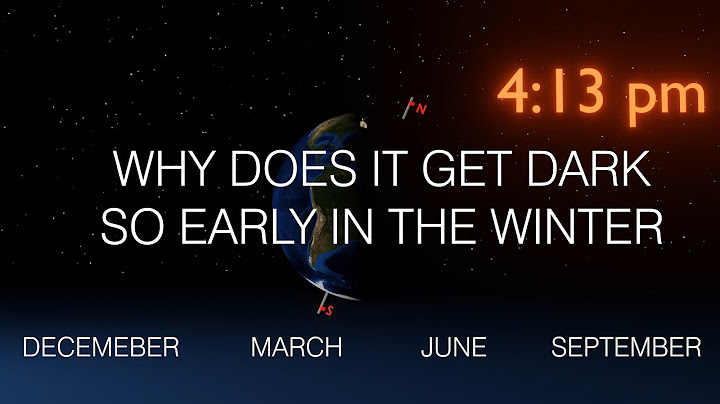
The seasonal pattern is not a straight line
Earth’s axis is tilted relative to its orbit. During Northern Hemisphere summer, the Sun takes a longer daily arc through the sky, so daylight lasts longer. After the summer solstice, the daylight interval generally shortens toward the winter solstice. The rate of change varies through the year and with latitude. Someone in Seattle notices a larger summer-to-winter shift than someone in Honolulu.
Earliest sunset does not always occur on the shortest day
A frequent misconception is that the earliest winter sunset falls exactly on the winter solstice. At mid-northern latitudes, the earliest sunset often happens earlier in December, while the latest sunrise happens after the solstice. This is because the length of the solar day is not exactly constant when measured against a uniform clock; the equation of time and the changing length of daylight combine to shift the clock times.
The U.S. Naval Observatory describes the earliest sunset at about two weeks before the solstice around latitude 40° north, with variation by location. Avoid declaring one date to be the earliest sunset for the whole country. A city-specific sunrise/sunset table provides the exact local pattern.
What the November clock change actually does
Most U.S. locations moved clocks back at 2 a.m. local time on November 1, 2026. That makes the clock display for a given solar event approximately one hour earlier than under daylight time, even though the Sun has not suddenly changed its position by an hour. For example, two consecutive evenings may feel dramatically different by the clock although the natural sunset difference is small. Phoenix and Hawaii do not make this seasonal switch.
Northern and Southern Hemisphere seasons are opposite
While many U.S. locations lose evening daylight in fall, much of the Southern Hemisphere gains it on the approach to its summer. Regions near the equator usually experience much smaller seasonal changes in day length than locations far north or south. That is why “what month does it get dark earlier?” needs at least a hemisphere and preferably a city.
| Question | Better way to answer |
| When do evenings start getting shorter? | Track sunset dates after the local latest-sunset period. |
| When is the shortest day? | Find the local winter-solstice daylight duration. |
| Why did sunset suddenly seem an hour earlier? | Check the daylight-saving clock transition. |
| When does it get dark at my house? | Look up civil twilight by location and date. |
Related: Tonight’s darkness and twilight explained
Related: Find city sunrise and sunset details
How to check a seasonal claim with real dates
For a useful local comparison, choose the same city and compare several dates spread across late summer, fall and early winter. Record the local sunset time and length of daylight for each date. If a one-hour jump appears near the November time change, check the daylight-saving setting first. The physical daylight duration should follow a smooth seasonal trend rather than dropping by sixty minutes overnight.
For an apples-to-apples astronomical comparison across years, distinguish clock time from solar time. Local time zones are political conventions, while the Sun follows geometry. Some towns far to the west of their time-zone meridian routinely see later clock sunsets than towns farther east at the same latitude. That does not mean their winter solstice occurs on a different astronomical schedule. Explain the latitude, longitude and time-zone context when comparing “early darkness” between cities.
Frequently asked questions
Does it start getting dark earlier right after June 21?
In many Northern Hemisphere locations, the latest sunset occurs near, but not necessarily on, the June solstice. The trend then turns gradually earlier.
Is the earliest sunset on December 21?
Often not at mid-northern latitudes. The clock-time minimum usually occurs before the shortest day.
Why does it get dark so early in November?
Seasonally shorter days combine with the autumn clock shift in most of the United States.
Editorial references (not outbound hyperlinks): U.S. Naval Observatory rise/set and twilight data; NOAA solar calculator glossary; NIST U.S. daylight saving rules. Verify any dynamic values again before publishing.