Sunrise and Sunset Times: Finding Accurate Times for Your Date and City
Learn how sunrise and sunset times depend on your date, location and time zone, with city guides and an explanation of twilight.
Sunrise and Sunset Times: Finding Accurate Times for Your Date and City
Focus keyword: sunrise time today | Editorial gate: HOLD_LIVE_CALCULATOR
Sunrise and sunset times are not fixed for a country or even a time zone. A reliable answer for “sunrise time today” requires a location, a calendar date and the correct local-time rules. This guide explains what to check before relying on a daily time, and points to city-specific pages without pretending to display an unverified live clock.
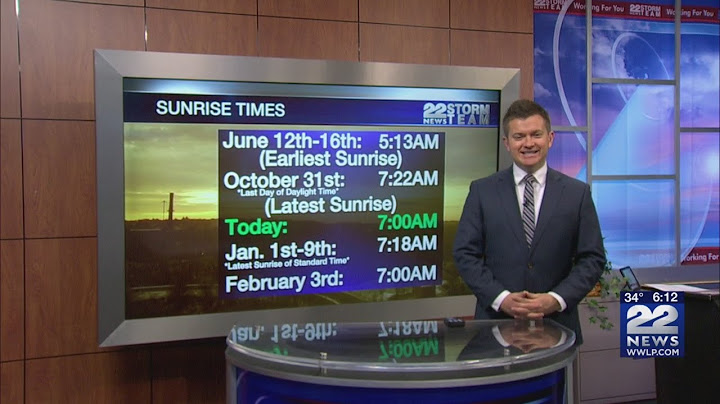
How to find an accurate sunrise or sunset time
| Input | Why it matters |
| Date | The Sun’s declination and the daylight period change from day to day. |
| City or coordinates | Longitude shifts clock times; latitude shapes seasonal daylight length. |
| Time zone and DST | A daylight-saving switch changes the displayed hour without changing the Sun. |
| Event type | Sunrise, sunset, civil dawn and civil dusk are different events. |
Start with the U.S. Naval Observatory’s Complete Sun and Moon Data for One Day service. Specify the date and city or coordinates, select the time-zone offset, and account for daylight saving time where appropriate. NOAA’s solar calculator is another useful cross-check. If you compare two sites, make sure both report the same event type and time zone.
Publication requirement: live results, not a static “today” claim
This editorial draft does not contain a functioning location/date calculator. Before publishing a page that promises today’s times, the CMS needs to resolve the visitor’s selected city, date, time zone and DST rules, then display sourced sunrise, sunset and twilight values with a visible last-updated date. Do not hard-code “today” into a dated article, cache one city’s answer for every visitor, or publish empty time fields as if they were live.
The difference between sunrise, sunset and twilight
Sunrise is the first appearance of the Sun’s upper edge above an unobstructed ideal horizon. Sunset is the disappearance of its upper edge. Atmospheric refraction makes the Sun appear higher than its purely geometric location, so calculations incorporate an approximation. Civil twilight begins before sunrise and ends after sunset while the Sun’s center is less than about six degrees below the horizon. Nautical and astronomical twilight describe successively darker intervals.
“What time does it get dark?” is not answered by sunset alone. A person on a brightly lit street can experience a different practical level of darkness from a person in an open rural area, and clouds or skyline obstructions change what is visible without changing the standard astronomical event.
Local clock time can jump while daylight changes smoothly
In 2026, most of the United States observes daylight saving time from March 8 until November 1. On the November 1 change, the clock shifts back an hour at 2 a.m. local daylight time. This changes the reported clock times of solar events; it does not shorten the physical daylight period by an hour overnight. Phoenix and Honolulu do not make that seasonal clock change.
Choose a city page instead of a generic answer
Use one city page for both sunrise and sunset, rather than two nearly identical pages for the same date and location. The city pages also explain skyline and local-time considerations; their time tables remain a publication hold until calculated data is connected. They are not substitutes for a functioning calculator.
Related: New York City sunrise and sunset
Related: Seattle sunrise and sunset
Related: Phoenix sunrise and sunset
Related: Honolulu sunrise and sunset
What the publishing system must test before showing a live result
The hardest bug in a solar-time widget is often not the Sun calculation; it is the displayed local date. Near midnight, visitors in Honolulu and New York can be on different calendar days at the same instant. The selected city’s own time zone must determine “today,” and an explicit date chosen by the reader must override the browser date. Cache entries should be keyed by location, selected calendar date, event type and correct time zone, rather than a single global “sunset today” label.
A well-designed interface should explain how precise the chosen location is. A named city center is enough for a planning estimate; a specific trailhead or mountain overlook may need more exact coordinates and a note that terrain is not modeled. If the service has no result, display an honest error or a source lookup instruction instead of an old timestamp. Keep “last verified” separate from “calculated for,” because the two dates have different meanings.
Frequently asked questions
Can you give me sunrise time today without a location?
No. The answer depends on the date and the selected city or coordinates, and the displayed hour depends on local time rules.
Is sunrise the same as dawn?
No. Dawn describes morning twilight; civil dawn normally occurs before the Sun’s upper edge rises above the ideal horizon.
Does sunset mean it is completely dark?
No. Civil twilight and sometimes further stages of twilight follow sunset.
Does daylight saving time change daylight duration?
No. Changing a clock label does not change the astronomical length of the day.
Editorial references (not outbound hyperlinks): U.S. Naval Observatory rise/set and twilight data; NOAA solar calculator glossary; NIST U.S. daylight saving rules. Verify any dynamic values again before publishing.