Tortoiseshell vs Calico: How to Tell the Patterns Apart
Compare tortoiseshell and calico cats by white spotting, color patches, genetics, and common lookalikes with a simple identification checklist.
Tortoiseshell vs Calico: How to Tell the Patterns Apart
The quickest way to compare a tortoiseshell cat with a calico cat is to look for the distribution of white fur. Torties usually show dark and orange pigment blended or patched together, often with little white. Calicos typically show dark, orange, and conspicuous white areas, which can separate the colored patches. This is a practical distinction, not a universal rule used identically by every registry. Both descriptions concern coat color, not breed or personality.
Tortoiseshell vs calico: side-by-side differences
A classic tortie is commonly black and orange, often with a marbled appearance; a calico has similar orange and dark pigment plus white spotting. Torties may have small colored flecks and blended boundaries, while calicos often have larger, more clearly separated areas. That appearance is a tendency, not a strict requirement. A calico can be finely patched, and a tortie can display larger distinct areas.
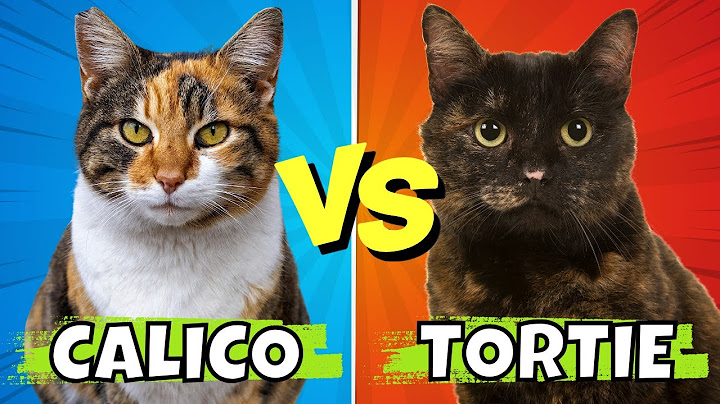
Use four visual questions in order: Is there orange or cream pigment? Is there a dark pigment region? Is white present, and if so how much? Are the colors arranged as a tight mosaic or as large sections? The most helpful description reports what you can actually see.
Why white spotting changes the appearance
Orange-versus-dark patchwork in these cats is related to X-linked pigment genetics. White spotting comes from a separate genetic influence that affects where pigment-producing cells appear in the skin. More extensive white spotting can create large unpigmented sections and change the apparent size and separation of orange and dark patches. That helps explain why some calicos look like three distinct blocks of color.
The precise naming boundary is not identical in every cat association. A cat described as a 'tortie with white' by one registry may receive a calico-related label elsewhere. Avoid making white spotting a quiz with a rigid numerical threshold; neither owners nor rescue volunteers benefit from an invented percentage cutoff.
Can a tortie have white fur?
Yes. Some tortoiseshell-pattern cats have white on their chest, belly, chin, or paws. A few small white hairs do not automatically mean that every observer or registry will reclassify the cat as calico. Conversely, broad white sections across the body make calico a more useful everyday description.
Check both sides of the animal. White may be tucked underneath the body and invisible in a headshot. A full-body photo can settle a disagreement more reliably than a cropped picture. If precise breed-show terminology matters, consult the relevant registration standard rather than assuming casual pet-labeling conventions apply to every competition.
Do dilute torties and dilute calicos follow the same rule?
They follow the same general visual distinction with softened pigments. Replace black with blue-gray and bright orange with cream. A dilute calico shows blue, cream, and white; a dilute tortie primarily shows blue and cream in a mosaic, sometimes with limited white. Lighting and faded-looking photos can make the cream almost invisible.
A gray cat with a white bib is not automatically dilute calico. You must also identify cream pigment. Likewise, a blue-cream cat without white may be dilute tortie regardless of whether its coat has dramatic patches. The article on dilute tortoiseshell colors explains the palette in more detail.
What about torbie, tabby, and tortie-calico?
A torbie is a tortoiseshell-tabby combination. It adds tabby striping, generally visible in dark regions as well as in the orange. A tortie has orange and dark pigment but may still show stripes in the orange portions alone. Terms such as 'tabico' or 'caliby' are informal labels some people use for a calico-tabby blend; they are not universal breed names.
If stripes are central to the question, the tortie-tabby guide is the more useful resource. This article is specifically for telling tortie and calico color-block arrangements apart. Keeping those intents separate also makes side-by-side photos clearer for a reader.
Photo identification checklist and common mistakes
Take a well-lit full-body shot that includes the belly, legs, and tail. Compare the amount of white with the amount of dark and orange fur, and note whether the colors are interwoven or form large islands. Take a second photograph of the dark sections to inspect possible tabby striping. Do not use eye color, nose color alone, or the shape of the face as a tortie-versus-calico rule.
Avoid asserting that all calicos are female or that every tortie is female. Most are female because of the usual X-linked pattern, but uncommon males exist. Above all, do not claim that a calico is friendlier or that a tortie is inherently aggressive; color does not function as a reliable behavioral test.
Frequently asked questions
What is the main difference between tortie and calico?
Calicos generally have more distinct white areas, while torties more often show dark and orange fur blended together.
Can a tortie cat have white paws?
Yes. Limited white spotting can occur, and naming conventions vary across registries.
Are calico and tortoiseshell both breeds?
No. Both refer to coat-color patterns that can appear in different breeds and mixed-breed cats.
Is dilute calico the same as dilute tortoiseshell?
They are related but not identical descriptions; the amount and layout of white fur help distinguish them.
Does calico mean tabby stripes?
No. Calico describes a three-color arrangement; tabby refers to striped or patterned pigment.
Related tortoiseshell cat guides
Continue with these closely related guides, each covering a separate question:
Tortie Cats: What Makes a Tortoiseshell Coat?