Bearded Dragon Substrate: How to Assess Arid Bioactive Options
Understand bearded dragon substrate tradeoffs, organic topsoil screening, drainage and hygiene without relying on unsafe universal soil recipes.
Bearded Dragon Substrate: How to Assess Arid Bioactive Options
The best substrate for a bearded dragon is one that supports secure movement and healthy behavior in a properly heated, ventilated arid enclosure. Both solid and selected loose materials can be considered, but the animal's age, health and environment change the risk. A substrate bag cannot solve poor UVB, low basking temperatures or inaccessible drinking water.
Decide what the floor needs to support Bearded dragons walk, bask, climb and often dig. An enclosure with only smooth tile may be easy to spot-clean but offers limited opportunities for digging unless a separate dig box is provided. An appropriate compactable loose floor can add enrichment, yet it needs careful sourcing and management. Start by checking whether the dragon has secure basking, appropriate UVA/UVB, adequate room and shelter; these are prerequisites for any substrate experiment.
Bearded dragons also need surfaces that do not wobble or collapse. Place heavy basking rocks on stable support rather than simply on deep loose soil. A dragon that digs beneath a stone should not be able to topple it onto itself.
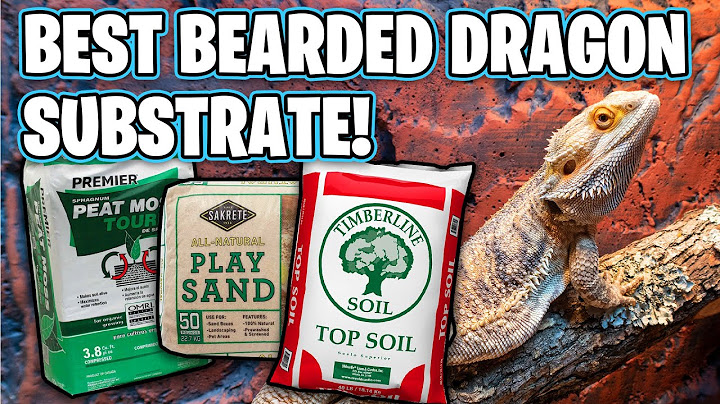
Compare solid options with loose choices Clean, textured slate or other suitable solid surfaces may be practical for cleaning and monitoring, but very smooth tile can reduce traction. Paper may be useful for short-term observation when an animal is ill. Some synthetic mats are difficult to sanitize or catch claws, so investigate the specific material rather than treating all 'reptile carpet' products as interchangeable.
For healthy adults in correctly managed habitats, the RSPCA discusses suitable sand or sand-soil mixtures as one possible choice. This is not approval for every bag of sand. Avoid calcium sand promoted for ingestion, crushed walnut shell, sharp construction sand, corn cob granules and large loose bark chips. Those options can create ingestion or injury risks.
How to screen topsoil and sand Organic topsoil labels vary. Reject mixes containing pesticide, synthetic fertilizer, manure, wetting agents, perlite or uncertain decorative fragments. Ask suppliers about additives and treatment history. The material should be clean and appropriate for a dry, stable surface. Rather than following one universal volume ratio, check how the chosen mixture compacts, drains, collects waste and behaves in your particular enclosure.
Make sure the floor remains compatible with the chosen humidity, ventilation and plant scheme. Do not combine moisture-retentive tropical soil with an arid basking design and assume that more light will dry everything safely.
Bioactive benefits have limits An arid bioactive floor may support carefully selected cleanup organisms in localized protected moisture zones, with some drought-tolerant safe plants. But visible feces, stale vegetables and insect remains should still be removed. A cleanup population does not disinfect the soil or guarantee against parasites. Measure the environment and inspect the substrate for unusually wet patches, odors and pests.
Avoid treating the enclosure as a 'closed ecosystem.' Water and feeding stations require cleaning; the animal must still be observed and fixtures maintained. If the dragon digs out a planted root zone, stabilize the area without blocking normal movement.
Know when to change approach An animal recovering from illness may need simple, easy-to-inspect flooring while its veterinarian evaluates symptoms. If a bearded dragon strains to defecate, loses appetite, becomes weak or repeatedly consumes large amounts of substrate, seek veterinary guidance promptly. Removing a questionable material can reduce one risk, but a medical problem may have several causes. Do not rely on anecdotal guarantees that any specific substrate is '100 percent impaction-proof.'
Explore related terrarium guides
Related reading: Bearded Dragon Terrarium: Safe Arid Habitat.
Related reading: Terrarium Substrate: Bioactive Soil Layers.
Related reading: Bioactive Terrarium Setup: A Species-First Guide.
Frequently asked questions
Is calcium sand recommended for bearded dragons?
Avoid calcium sand marketed as edible; inappropriate loose materials can create ingestion risks.
Can a bearded dragon have a digging area?
Yes, appropriate digging opportunities can support natural behavior when the floor and fixtures are safe.
Is all organic topsoil safe?
No. Ingredients and any chemical treatment must be checked.
Can I keep a bioactive floor without cleaning feces?
No. Visible waste and spoiled food should still be removed promptly.
When should I choose easy-to-clean flooring?
Temporary simple flooring may help when an animal is sick or being monitored under veterinary guidance.
Animal-care note: This is educational husbandry guidance, not a diagnosis or a substitute for species-specific veterinary care.