Bioactive Terrarium Setup: How Living Enclosures Work
Learn what makes a terrarium bioactive, how the soil and cleanup crew work, and why temperature, UVB and humidity depend on your animal.
Bioactive Terrarium Setup: How Living Enclosures Work
A bioactive terrarium is a managed enclosure in which living plants, soil organisms and microorganisms help process organic debris. It is not a sealed, self-sufficient box. The keeper still supplies appropriate temperature, lighting, moisture, water and sanitation. For an animal habitat, the species' welfare needs decide the design; the word 'bioactive' does not make an unsuitable enclosure safe.
Start with the animal, not the soil recipe Before buying drainage balls or isopods, write down the intended species, its adult size, activity pattern, ventilation needs and safe temperature and humidity ranges. An arid leopard gecko and an arboreal crested gecko cannot share a universal build. A decorative, plant-only bottle garden is a third project entirely. Decide whether you need a broad floor for walking, a tall area for climbing, a shallow-water zone or a fully terrestrial layout. Measure the enclosure before drawing planting areas and heating positions.
Many online builds begin by selecting a 'bioactive kit.' Reverse that sequence. Choose an escape-resistant enclosure with safe access, then the animal's climate and behavior, then materials compatible with both. Leave room to observe the animal and retrieve waste. Keep at least one accessible hide rather than packing every inch with decorative plants.
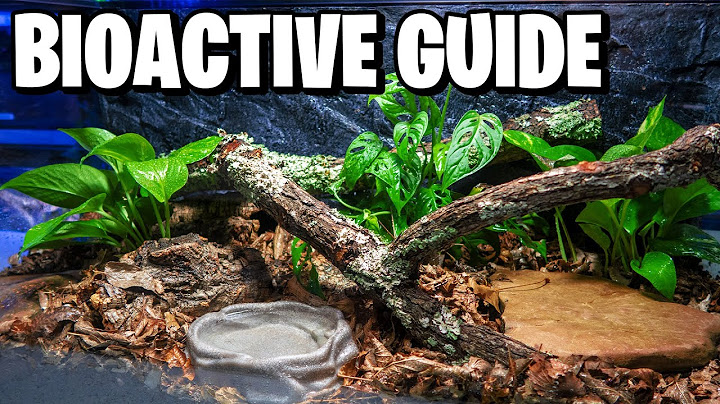
Tropical, arid and plant-only systems do different jobs In a humid planted vivarium, a substrate designed to retain some moisture may be paired with a drainage reservoir and separator where appropriate. The drainage layer is not a substitute for removing accumulated water. Constantly soaked soil can become an oxygen-poor, contaminated zone. In an arid enclosure, the surface should remain appropriately dry; localized moist pockets and a dedicated humid refuge may be useful for the species without turning the floor into a swamp.
Closed plant jars can recycle moisture because they contain no vertebrate animal to breathe, drink and produce significant waste. Their care advice does not transfer to reptile or amphibian enclosures. A living animal requires ventilation, escape prevention and access to fresh water even in a planted display.
Build the layers for function Begin with a secure, clean enclosure and test lighting and heating before adding an animal. In climates where it is appropriate, add a water-management layer and a barrier that prevents the soil from mixing into the reservoir. Next install a species-appropriate substrate that will support roots and allow the necessary moisture zones. Place heavy stones or branches on firm supports rather than loose soil that an animal can dig away. Then add verified safe plants and a modest amount of clean leaf litter.
Avoid yard chemicals, potting mixes containing fertilizers or wetting agents, painted decor and wood of uncertain treatment history. Plants sold as houseplants may carry pesticide residues. Quarantine and clean them according to reliable species-specific advice. Where substrate is very dry, conventional tropical cleanup organisms may not thrive; choose organisms only after researching a compatible arid setup.
What springtails and isopods can—and cannot—do Springtails primarily consume fungi and decaying organic material. Isopods can shred leaves and some other debris; species vary in humidity and temperature tolerance. They are a support crew, not a replacement for the keeper. Remove feces, uneaten feeders and visibly contaminated material promptly. Keep the cleanup population from becoming an unchecked food source or competitor for sensitive animals.
Feed and monitor the microfauna appropriately, and watch for sudden population collapse. If the substrate smells sour or stays flooded, adding more isopods will not fix the environmental problem. Correct the moisture and ventilation fault first.
Establish, measure and maintain Run the finished habitat without its resident until temperatures, safe humidity cycles and drainage behavior are stable. Use digital probes at the places the animal actually occupies. If UVB is appropriate, check exposure at the accessible basking level, not just the bulb label. Note plant growth, condensation and whether shaded retreats remain available. Do not assume a planted floor removes the need for weekly checks or periodic larger cleanouts.
A useful maintenance log lists warm and cool readings, the timing of misting, water changes, visible waste, and any unusual odor or mold. Adjust one variable at a time. A bioactive terrarium works best when it is predictable and inspectable, not when it is left alone indefinitely.
Explore related terrarium guides
Related reading: Leopard Gecko Terrarium: Size, Heat and Setup.
Related reading: Crested Gecko Terrarium: Bioactive Setup Guide.
Related reading: Dart Frog Terrarium: Humidity and Bioactive Setup.
Related reading: Terrarium Substrate: Bioactive Soil Layers.
Frequently asked questions
Does bioactive mean self-cleaning?
No. Microfauna help process some organic matter, but visible waste, uneaten food, water dishes and equipment still need regular attention.
Do all bioactive terrariums need a drainage layer?
Not always. Drainage design depends on climate, substrate and water management; arid habitats may use different approaches from humid planted vivariums.
Can I use outdoor soil?
Untested yard soil can contain pesticides, parasites or other contaminants. Use documented ingredients appropriate to the resident animal.
What is a cleanup crew?
Springtails and selected isopods are small organisms that consume some fungi and decaying debris. They must be matched to the enclosure conditions.
When can an animal move in?
Only after heating, lighting, moisture, security and planting have been tested and remain stable with the finished décor.