Why Birds Flock Together: Benefits, Risks, and Formation Patterns
Why Birds Flock Together. Explain predation, information exchange, energy savings and variation by.
Why Birds Flock Together: Benefits, Risks, and Formation Patterns
Flocking can make it easier to locate food, detect approaching predators, and share information about favorable feeding patches.
Why birds assemble
Grouping also introduces competition and disease-transmission risks. Different birds gain different benefits, so no single explanation accounts for every flock.
The moving geometry
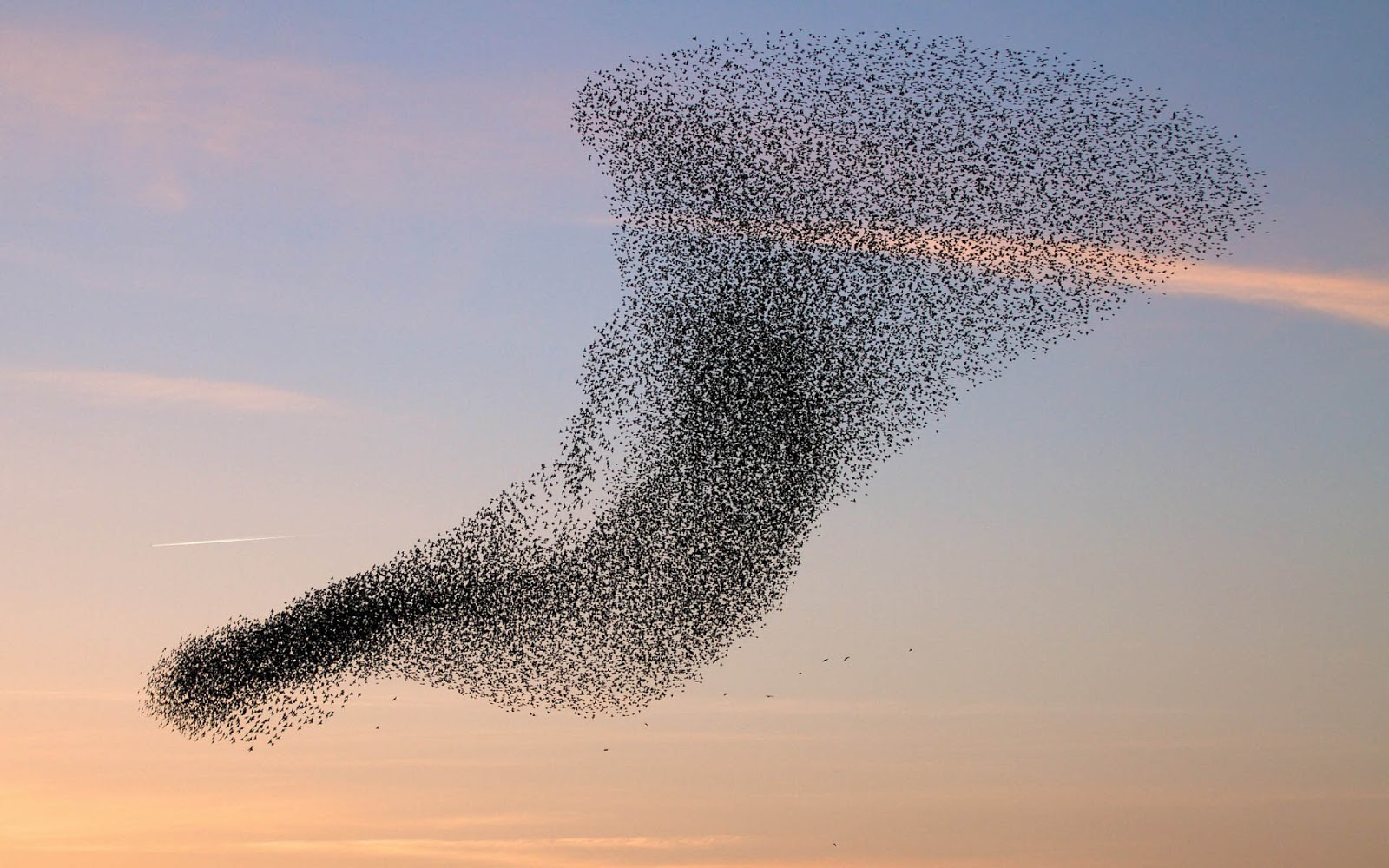
Starling murmurations create shifting patterns as birds respond rapidly to near neighbors. The behavior does not require a leader directing every turn. Separate from dense murmurations, migrating geese may form V-shaped lines that can reduce aerodynamic costs under some conditions.
Seasonal and habitat differences
Some songbirds flock mostly outside the breeding season, when defending a nesting territory matters less. Mixed-species feeding flocks may include birds that search different foliage layers. Seasonal food supply, predator abundance, and species-specific communication shape the flock that observers see.
What to observe
Notice whether birds are feeding, resting, migrating, or avoiding a threat. Record group size, changes in direction, sounds, and whether multiple species are present. A flock dispersing suddenly may have detected a predator, but weather or another disturbance can produce a similar reaction.
How to tell formations apart
A V-shaped migration formation and a tightly turning starling murmuration may both be flocks, but they reflect different aerodynamic and social contexts. In a migration line, birds may position themselves to benefit from air movement around other birds. In a murmuration, rapid responses to nearby individuals create large-scale moving shapes. Observers should not assume the flock is trying to spell a pattern or that every change of direction is caused by a single leader. Asking what the birds are doing is the better first question.
What a useful field note records
When observing birds or insects, write down location, season, appearance, food source, and behavior. Those details often separate similar-looking species and life stages. If an animal is being managed in captivity or on a farm, welfare and hygiene requirements need their own expert guidance; wild behavior is not a ready-made care plan.
From life history to responsible observation
An animal may behave differently as an egg, larva, juvenile, or adult, and seasonal changes may affect how easy it is to see. A species described as beneficial in one setting can be a pest or prey item in another. Use photographs and field notes without disturbing nests, colonies, or habitat. Where keeping or feeding animals is involved, follow the guidance appropriate to that exact species and local rules, not a general wildlife description.
Frequently asked question
Does every flock have one leader?
No. In many formations individuals respond to neighbors, though group roles can differ by species and situation.
