Dark-Eyed Junco: Identification, Song, Habitat, and Seasonal Behavior
Dark-Eyed Junco. Focus Junco hyemalis and plumage variation, feeder ecology and.
Dark-Eyed Junco: Identification, Song, Habitat, and Seasonal Behavior
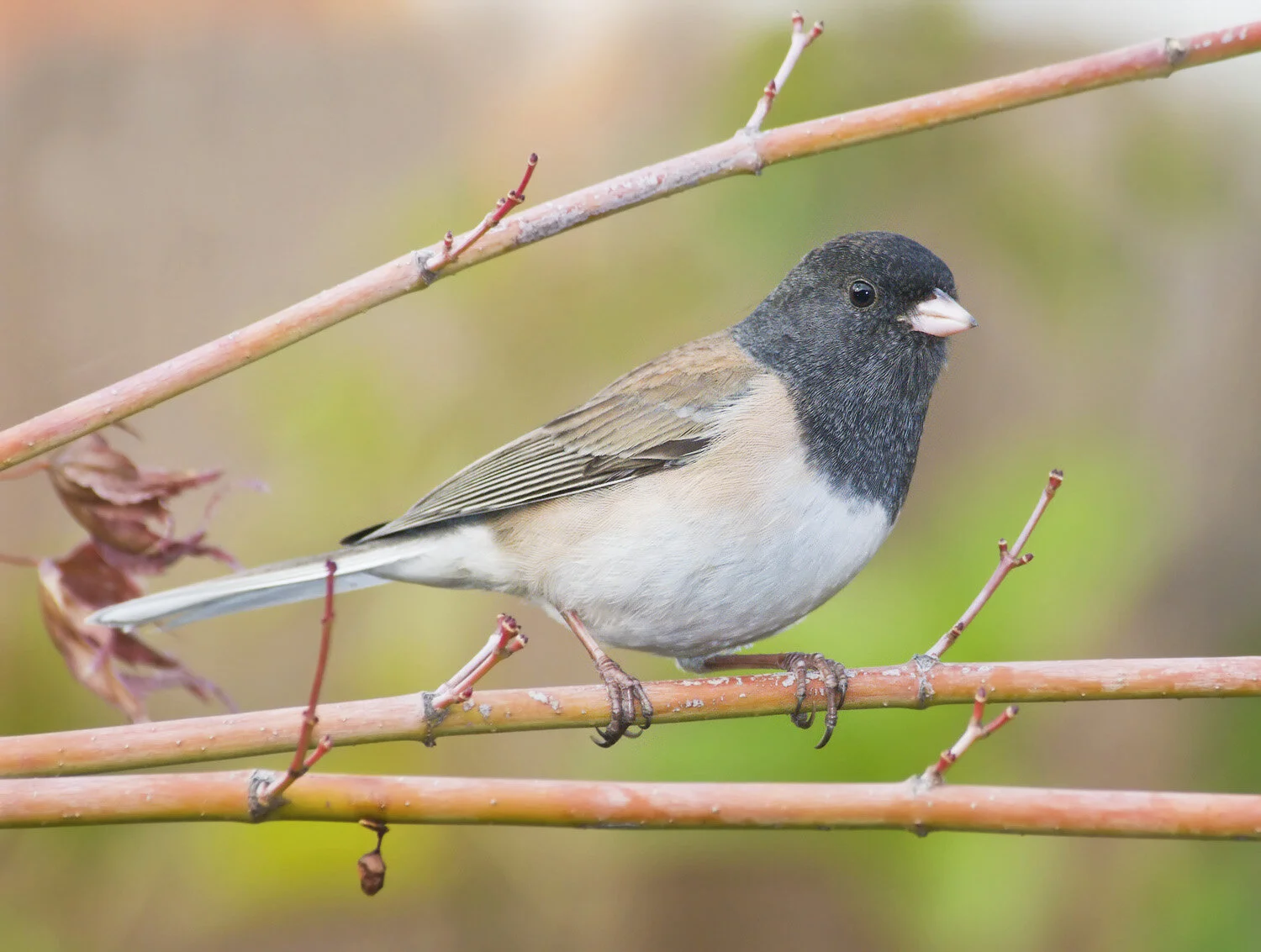
In most US birdwatching contexts “junco bird” refers to the dark-eyed junco, Junco hyemalis, a sparrow with a compact shape and conspicuous white outer tail feathers.
The common dark-eyed junco
Plumage ranges from slate gray in many eastern birds to brown-and-gray patterns in western forms, so a single color description is inadequate.
Where to see one
Dark-eyed juncos often feed on seeds on or near the ground. They breed in forested habitats, including northern and mountain areas, and are common winter visitors in many lower-elevation US neighborhoods. They may visit feeders but often pick up spilled seed below them.
Songs, calls, and movement
A simple musical trill and short sharp calls are characteristic, although sound varies by situation and population. Juncos move in low hops and short flights through cover, often flashing the white corners of their tails. In winter they can form social flocks with recognizable feeding hierarchies.
A practical identification checklist
Look for a small pinkish bill, pale belly, white outer tail feathers, ground-foraging behavior, and appropriate season and region. Female and juvenile plumages may be browner than a field-guide illustration of a male. Cornell Lab’s All About Birds guide is useful for comparing regional forms.
Interpreting seasonal sightings
A backyard flock in winter does not mean the species is absent from the continent in summer. Some populations move latitudinally, while others shift elevation or stay in suitable habitat year-round. Plumage forms also differ across regions, so compare a bird with photographs from its geographic area. The white outer tail feathers are often most visible when the bird takes off. Cornell’s field guide combines morphology, sound, range, and behavior more reliably than a single picture.
What a useful field note records
When observing birds or insects, write down location, season, appearance, food source, and behavior. Those details often separate similar-looking species and life stages. If an animal is being managed in captivity or on a farm, welfare and hygiene requirements need their own expert guidance; wild behavior is not a ready-made care plan.
From life history to responsible observation
An animal may behave differently as an egg, larva, juvenile, or adult, and seasonal changes may affect how easy it is to see. A species described as beneficial in one setting can be a pest or prey item in another. Use photographs and field notes without disturbing nests, colonies, or habitat. Where keeping or feeding animals is involved, follow the guidance appropriate to that exact species and local rules, not a general wildlife description.
Frequently asked question
Why do juncos appear in winter?
Some populations move south or to lower elevations, making them especially noticeable at winter feeders.
Related guides
Emu Bird • What Is a Chicken Gizzard? Anatomy, Function, and Digestion • Chicken Eggs Explained
