Black Spiny-Tailed Iguana: Ctenosaura similis
Identify the black spiny-tailed iguana, Ctenosaura similis, and learn about its habitat, diet and key traits.
Black Spiny-Tailed Iguana: Ctenosaura similis
The black spiny-tailed iguana, Ctenosaura similis, is a large, fast-moving lizard native to Mexico and Central America. Its ringed, sharp-looking tail scales are much more informative than its common-name color, because juveniles may look green and adults can appear gray, tan or dark. This article focuses on identification, habitat and ecology—not a generic green iguana care sheet or wildlife capture advice.
Black spiny-tailed iguana: name and identification
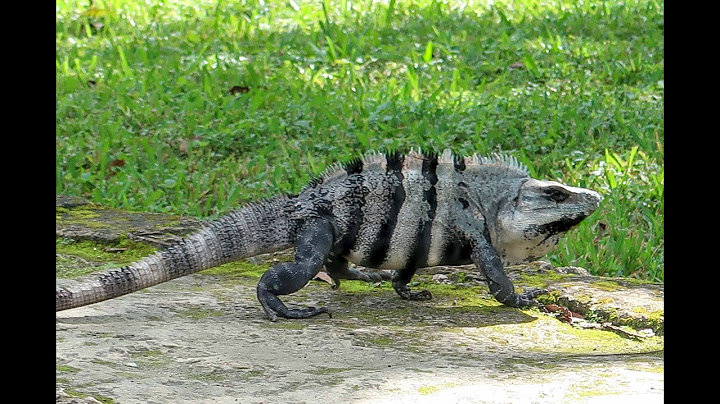
Ctenosaura similis is also called the common spiny-tailed iguana or black iguana. The U.S. Fish and Wildlife Service records these names for the same scientific species. The most useful visible clue is the sequence of enlarged, pointed scales encircling the tail, combined with a robust body and comparatively short dorsal spines. The animal should not be assigned to a species on color alone.
The scientific name matters because other Ctenosaura species also have spiny tails. A clear photograph of the head, body and tail, plus a reliable location, is a better start than a caption that says only 'black iguana'. For field identification, keep your distance; an animal's tail and claws can cause injury if handled.
How its tail differs from a green iguana
Black spiny-tailed iguanas have rings of sharp, projecting tail scales. Green iguanas also have strong tails and dorsal crests, but they do not show the same conspicuous ringed tail spines. Florida's introduced-reptile identification guidance highlights this distinction because the two species can occur in overlapping parts of the state. A young black spiny-tailed iguana may be greenish and therefore easily mislabeled as a juvenile green iguana.
Look for several clues together: tail rings, crest shape, adult proportions and location. A head-only close-up hides one of the most helpful features. Color-focused search results often blur juvenile and adult differences, so label photos with the correct age class where that information is known.
Native range and preferred habitat
Ctenosaura similis is native to Mexico and broad areas of Central America. Published species accounts describe dry or relatively open habitats, including rocky slopes, stone walls, ruins, tree edges and scrub. It uses both ground shelter and elevated positions. This makes the species different from an animal confined to a single rock type or a tropical canopy specialist.
An animal basking on a wall may still depend on nearby cracks, vegetation or burrow sites for shelter. In human-modified landscapes, structures can provide hiding opportunities, and the species' presence may have ecological and infrastructure consequences where it is nonnative. Habitat descriptions are not ready-made captive setup specifications: safe housing needs a professionally verified species identification and specialized advice.
Daytime activity, running and refuge
These iguanas are active during daylight and are known for rapid movement. They may bask in open areas, use walls or rocks as lookouts and retreat into crevices when disturbed. They can also dig or shelter in burrows. Seeing one on a branch does not necessarily make it a green iguana; Ctenosaura similis uses a mixture of structures in its habitat.
Observation is best done without chasing or cornering the animal. Sudden movements can trigger defensive responses or send a lizard across roads and other hazards. For educational photos, a telephoto view showing the tail and the surrounding environment often provides better evidence than an unsafe close encounter.
Food and age-related dietary differences
The species eats a wide range of plant material, and accounts also document animal prey, particularly in younger animals. Field research from Florida has described a dietary shift toward more vegetation as animals mature, although proportions vary with habitat and season. It would be inaccurate to label Ctenosaura similis either an obligate insectivore or a strictly leaf-only lizard at every age.
These are observations of wild feeding ecology, not a complete menu for captivity. An unfamiliar reptile should not be fed based on a guessed common name. The correct species, stage of life and veterinary husbandry advice are essential. Avoid using examples of occasional prey as a reason to recommend random household protein sources.
Native populations versus introductions in Florida
Black spiny-tailed iguanas have been documented outside their native range, including established populations in parts of Florida. Florida wildlife authorities describe them among introduced reptiles. Presence in the United States therefore does not mean they are native to that location. Public resources may discuss population monitoring and ecological impacts, but this article does not provide removal instructions or blanket legal guidance.
Species rules, landowner permissions and handling requirements depend on locality and may change. A person encountering a suspected nonnative reptile should consult current wildlife agency resources rather than relocating it or attempting capture. For biological identification, distinguish the animal from the green iguana before drawing conclusions about its environmental role.
Compared with Cyclura rock iguanas and desert iguanas
Ctenosaura similis belongs to the genus Ctenosaura. Rock iguanas of the Caribbean belong to Cyclura. The desert iguana of the American Southwest is Dipsosaurus dorsalis. All are related iguanid lizards, but geography and ecology differ substantially. A large lizard photographed among stones is not automatically a 'rock iguana' in the taxonomic sense.
The spiny tail is especially useful when comparing Ctenosaura with a green iguana. To compare Cyclura species, island location and genus-specific features become more important. Species-by-species links offer readers a better path than an overly broad care article that treats iguana names as synonyms.
Photography, safety and responsible identification
Record location, habitat and the tail pattern if it can be done safely. Avoid misleading captions such as 'rare black iguana' without evidence, and be cautious when interpreting an image shot through vegetation. The safest photographs preserve distance and do not disturb hiding places. Non-native status, private-property rules and any conservation protections should be verified with local authorities.
This guide intentionally does not cover trapping, relocation, ownership transactions or captive heating targets. The most defensible identification is a combination of scientific name, anatomy and verified geographic evidence, with uncertainty stated when the photo does not show enough detail.
Why introduced populations are an ecological question
A lizard can be native across a large part of Central America and still be nonnative in Florida. That distinction is ecological, not an insult to the animal. Researchers studying introduced Ctenosaura similis populations examine food use, shelter, nesting sites and interactions with local habitats. Reports from South Florida describe impacts and management concerns that should be discussed without implying every single sighting has a proven effect on a particular species.
People should not attempt to resolve those concerns by trapping or moving reptiles themselves after reading an identification guide. A mistaken species ID can create safety or wildlife-law problems. The more useful public role is to share precise, noninvasive observations with relevant wildlife organizations and consult current local guidance when a reptile appears on private property.
Black spiny-tailed iguana identification checklist
| Feature | Ctenosaura similis clue | Common confusion |
| Tail | Rings of enlarged, pointed tail scales | Green iguana tail is not identically spined |
| Color | Juveniles can be greenish; adults often dark or gray | Color alone may mislead |
| Native region | Mexico and Central America | Florida populations are introduced |
| Habitat | Dry open areas, rock crevices, walls and scrub | Not all rock-dwelling iguanas are Cyclura |
Practical checklist
Inspect tail-scale pattern rather than judging only color.
Confirm native versus introduced range.
Keep juvenile and adult appearance differences in mind.
Do not attempt capture or relocation based on a web article.
Use full scientific name when comparing related iguanas.
Frequently asked questions
What is the scientific name of the black spiny-tailed iguana?
Ctenosaura similis. It is also called the common spiny-tailed iguana or black iguana, although its coloration varies with age and individual.
How can I tell it from a green iguana?
Look closely at the pointed rings of scales around the tail, and use body proportions plus locality. A juvenile Ctenosaura may look green, so color alone is unreliable.
Where is this iguana native?
Its native range includes Mexico and parts of Central America. Populations in Florida are introduced, not evidence of native US distribution.
Does it eat insects?
Its diet includes plant matter and can include animal prey, particularly when young. Published observations do not create a universal captive feeding plan.
Is it a Cyclura rock iguana?
No. Black spiny-tailed iguanas are Ctenosaura; Caribbean rock iguanas are Cyclura. They should not be confused because they use rocky habitats.
The bottom line
The key identification of Ctenosaura similis is its ringed spiny tail, supported by geography, body shape and habitat. Using the scientific name helps separate it from green iguanas and Caribbean Cyclura rock iguanas without inventing interchangeable care rules.