Desert Iguana: Habitat, Diet and Identification
Learn where desert iguanas live, what they eat, and how their desert adaptations differ from green iguana care.
Desert Iguana: Habitat, Diet and Identification
The desert iguana (Dipsosaurus dorsalis) is a heat-tolerant lizard of the Sonoran and Mojave deserts. Despite its familiar name, it is not simply a smaller green iguana: its natural range, daily activity, hiding places and feeding ecology are distinct. The useful first step in identifying one is to consider the location and habitat, then examine its pale coloring, long tail and relatively blunt head. This guide is a species profile, not a recipe for capturing wildlife or recreating desert temperatures inside a pet enclosure.
What is a desert iguana?
Dipsosaurus dorsalis is the scientific name for the desert iguana. The species belongs to the iguana family, but it is a different genus from the green iguana, Iguana iguana. Its reputation for tolerating extreme desert heat comes from observations of wild animals in habitats that also provide routes to shelter. It should not be understood as evidence that the lizard can safely remain in an excessively hot enclosure without a thermal gradient.
Desert iguanas are generally active in daylight. They forage across sandy ground and among desert shrubs, retreating quickly when threatened. Rather than making assumptions from one photograph, use an identification process that combines geography, proportions, habitat and observable markings. Young individuals, shadows and camera color balance can all change how the same lizard appears.
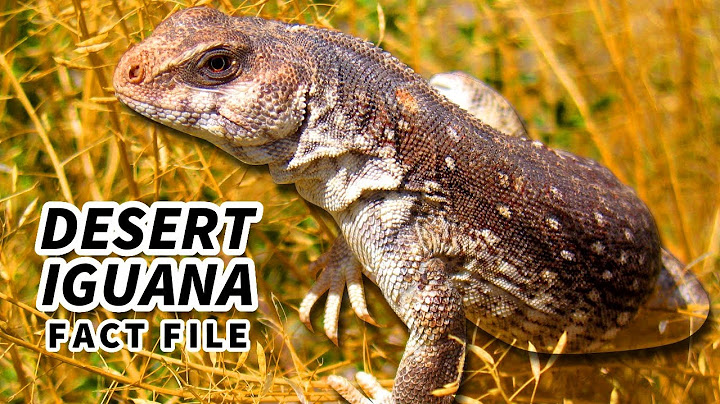
Identification: head, body, tail and markings
A typical desert iguana has a relatively small, blunt head, a rounded torso and a slender tail longer than its body. Its background color is often pale gray, cream or tan with darker patterning along the back and tail. Light coloration can reduce visual contrast against sand and dry vegetation; it is not a guarantee of identity because other desert lizards may show similar shades.
Published natural-history descriptions give a typical total length in the low-to-mid teens of inches, with variation among individuals. The important field distinction is the entire combination of body form and setting, not any single length threshold. Photographs that include side profile, tail pattern and surroundings are more useful than a distant image of an unknown lizard.
Where desert iguanas live
The species inhabits the Sonoran and Mojave deserts of the southwestern United States and northwestern Mexico, including portions of California, Nevada, Arizona and neighboring regions. Its occurrence should not be extended casually to every hot or dry part of the United States. Natural-history sources also describe island populations around the Gulf of California. Checking the observation location against a credible range map is often a stronger clue than counting a few stripes.
Creosote-bush flats and sandy scrub provide food, cover and shelter opportunities. In these habitats the lizard may cross open ground to forage, perch briefly on low shrubs and retreat into the shade or burrows. A photograph taken in a manicured suburban garden could still be real, but identification should account for the possibility of another species or an escaped animal.
Creosote shrubs and the value of burrows
Creosote bush is especially important in published descriptions of desert iguana habitat. The shrub supplies buds and flowers as food while casting shade over soil where small mammals may have excavated burrows. A single patch of vegetation therefore contributes both resources and shelter, making its role more complex than a decorative plant. Habitat is not simply 'hot sand': shelter and temperature choice are inseparable from the desert ecosystem.
Desert iguanas can use existing mammal burrows and other retreats. A wild individual may spend part of a very hot day exposed and a different part hidden below the surface. Reports of exceptional heat tolerance are observations about the species under natural conditions, not permission to keep captive reptiles at the highest recorded field temperature. Responsible identification writing should avoid turning wild physiological measurements into household instructions.
What do desert iguanas eat?
Leaves, buds and flowers form most of the wild diet described by natural-history accounts. Creosote flowers are a notable food item, but desert iguanas use multiple plants as availability changes through the seasons. Occasional insects or other non-plant material have been reported; that does not make the species primarily insect-eating or justify a generic carnivorous pet diet. The word 'mostly herbivorous' captures the evidence more accurately than a rigid single-food rule.
For an observer, feeding behavior can offer useful ecological context. An animal browsing vegetation under a creosote shrub may be more consistent with the species than a photo caption claiming that every iguana eats the same commercial salad. Avoid translating a natural diet list directly into captive feeding prescriptions; veterinary assessment, provenance and species-specific husbandry matter.
Daytime activity and exceptional heat tolerance
Compared with many lizards sharing its desert range, the desert iguana may remain active during notably hot daylight periods. It can run quickly over open ground and shift between sun, shrub cover and retreats. The observed behavior reflects options available in a complete habitat: a lizard is not choosing between one fixed temperature and nothing. Some field accounts describe body temperatures that would be dangerous for other reptiles.
This difference is the key educational point, not a target to reproduce with an unregulated heat lamp. Excess heat, lack of escape routes and poor monitoring can be lethal in artificial housing. A zoological or veterinary husbandry protocol must be species-specific and cannot be inferred from one natural-history measurement. For wildlife viewing, respect distance, avoid blocking burrow entrances and leave plants and animals undisturbed.
Desert iguana versus green iguana
Green iguanas are large, largely arboreal lizards from tropical habitats. Desert iguanas are smaller lizards associated with arid scrub and sandy flats. The two differ in body proportions, climate and habitat use, even though they share a common family name. The green iguana's prominent dewlap and large dorsal crest often stand out in close photos; neither feature should be used alone as a definitive field test.
Online articles sometimes transfer green-iguana enclosure dimensions or tropical humidity targets to any animal whose common name contains 'iguana'. That is poor species identification and potentially dangerous husbandry advice. If a reader has an animal in captivity, the first action is to establish its scientific identification and obtain guidance from a qualified reptile veterinarian or reputable specialist—not to combine two species' care sheets.
Conservation, observation and responsible research
Habitat conversion and collection pressure can affect desert reptiles, even when a particular species is not labeled globally endangered. The best way to use a field guide is to recognize an animal while minimizing disturbance. Do not dig out a burrow, remove a lizard for photographs or pull apart vegetation to find a retreat. Public-land and wildlife rules vary by jurisdiction and can change.
For fact-checking, compare observation location and habitat with an authoritative range account, and avoid claims about an individual animal's health from a picture. This article focuses on natural history and identification. It does not offer wildlife capture advice, pet-trade recommendations, exact captive heating setpoints or medical treatment.
Reading desert observations without false precision
A heat-tolerance observation becomes meaningful only with the surrounding context. Was the lizard in sun or shade? Could it use a creosote shrub or an abandoned mammal burrow? What season and time of day were recorded? Natural-history reports describe combinations of behavior, terrain and temperature. They should not be stripped down to a single maximum number on a pet-care infographic.
For a school report or species profile, separate measurements of free-ranging animals from recommendations for captive care. State whether a source describes air temperature, body temperature or a field observation rather than calling each one a 'basking setting.' If a captive animal is involved, consult species-appropriate veterinary husbandry advice; neither general green-iguana care nor the highest wild measurement is a safe substitute.
Desert iguana identification: evidence worth checking
| Evidence | What supports identification | What it cannot prove |
| Range | Sonoran/Mojave desert setting and credible local records | Location alone cannot exclude an escaped pet |
| Proportions | Blunt head, relatively compact body and long slender tail | No single silhouette is diagnostic |
| Habitat | Sandy scrub, creosote bushes and retreat sites | A desert-looking backdrop may be misleading |
| Behavior | Daytime foraging and quick burrow retreats | One brief observation cannot establish species |
Practical checklist
Confirm the scientific name before using species-specific information.
Compare the sighting area with a documented Sonoran/Mojave range.
Look for multiple visual clues, not color alone.
Treat wild heat-tolerance data as ecology, not husbandry instructions.
Observe without capturing, moving or disturbing burrows.
Frequently asked questions
Is a desert iguana the same as a green iguana?
No. Desert iguanas are Dipsosaurus dorsalis, while green iguanas are Iguana iguana. They occupy different natural habitats and should never have care advice swapped merely because the common names are similar.
Where can desert iguanas be found?
They occur in parts of the Sonoran and Mojave desert regions of the southwestern United States and northwestern Mexico. A local wildlife reference can help confirm records for a specific area.
What do desert iguanas eat in the wild?
They mainly browse leaves, buds and flowers, including creosote vegetation. Some accounts describe occasional insects or other food items, so 'primarily plant-eating' is more accurate than 'never eats insects'.
How big does a desert iguana get?
Natural-history sources describe a moderately sized lizard, commonly around 13–14 inches in total length, including its long tail. Individual size and measuring method vary; size alone cannot confirm identity.
Can desert iguanas tolerate extremely high temperatures?
They are unusually heat tolerant in natural desert habitats, but they also use shade and shelter. A wild temperature observation is not a safe captive thermostat setting or a reason to handle a wild animal.
The bottom line
The most useful description of a desert iguana connects identification to place: a pale, long-tailed Dipsosaurus dorsalis using desert shrubs, sand and retreats in the Sonoran–Mojave region. That is more reliable—and safer—than applying a generic iguana care label to every lizard that looks similar.