Rock Iguanas (Cyclura): A Species and Conservation Guide
Discover Cyclura rock iguanas, Caribbean island species, distinctive habitats and why many face conservation threats.
Rock Iguanas (Cyclura): A Species and Conservation Guide
Rock iguanas are Caribbean lizards in the genus Cyclura, not a single species and not a casual name for every iguana that sits on rocks. Their island distributions, large bodies, plant-rich diets and conservation challenges make them an important group to identify accurately. A useful guide needs to name the genus, show representative island examples and explain why a generic 'rock iguana' label is often insufficient for conservation or pet-care decisions.
What counts as a rock iguana?
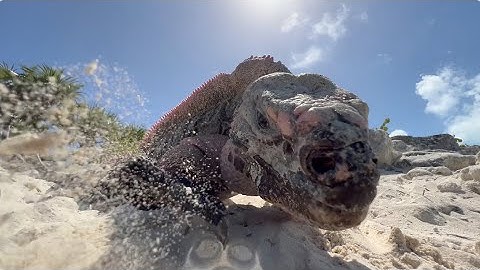
Rock iguanas belong to the genus Cyclura. The name covers multiple closely related species and subspecies rather than one uniform animal. They are largely associated with Caribbean islands, where geographical isolation has shaped distinctive populations. A reader searching 'rock iguana' may see photographs of a Cuban rock iguana, an Andros island animal or a rhinoceros iguana—all part of the same genus but not interchangeable biological units.
Taxonomic distinctions matter because a care recommendation, legal status or conservation assessment for one named species cannot be copied to the others. Start with the Latin genus Cyclura and then narrow to the species or subspecies if the island or specimen is known. This page intentionally offers a genus-level overview rather than competing with a dedicated rhinoceros iguana profile.
Caribbean island distributions
Cyclura populations occur on various islands and island groups in the Caribbean. Examples include Cuban rock iguanas and several Bahamas and Turks and Caicos forms. The exact distribution is not a continuous blanket across the Caribbean; an island record must be checked separately. On some islands, populations occupy sharply limited areas and may be affected by changes that look small on a continental map but are serious for a restricted local population.
Island isolation explains why names are specific. A photograph tagged 'Bahamian rock iguana' may conceal a taxon that has a much narrower range than the Bahamas as a whole. Map captions should name the correct island or cay and avoid implying that all populations share the same habitat conditions or conservation status.
Representative Cyclura species and names
The Cuban rock iguana is Cyclura nubila. The Turks and Caicos rock iguana is Cyclura carinata. Different forms of Cyclura cychlura are associated with the Bahamas, including the Andros group. Rhinoceros iguanas are also Cyclura, although the name covers a separate species-level topic whose details deserve their own profile. Common names are convenient for readers but cannot replace the scientific name when distinguishing animals.
Taxonomy and the status of individual populations may be updated as research progresses. For evergreen content, spell scientific names carefully and avoid presenting a short example table as an exhaustive list of current species. If a conservation page references a subspecies, preserve the full trinomial name rather than silently treating it as the same as every animal under the broader species.
Body form, habitats and shelter
Many rock iguanas are heavy-bodied, strong-legged lizards with pronounced jowls and a robust tail. Their physical traits vary across species, sexes and ages, so the phrase 'rock iguana' cannot be identified from body size alone. In their island habitats, these iguanas often use rocky ground, dry scrub, coastal vegetation and suitable shelters. The label 'rock' should not be read as meaning that they live only on bare stone.
Habitat use reflects available food, basking spots, nest sites and cover. Some individuals move between open basking sites and vegetation, while juveniles may use somewhat different microhabitats. An article that discusses only a basking rock misses the ecological relationships on which these populations depend. When comparing photos, consider locality and the species' documented range before assigning a species name.
Diet and their ecological role
Rock iguanas consume substantial amounts of plant material, including leaves, flowers and fruits according to species and seasonal availability. They can help disperse seeds in island ecosystems. Diet descriptions should be tied to field research and an identified taxon rather than a universal list of permitted household foods. Occasional animal matter has been reported in some iguanas, but that should not be generalized into a meat-based feeding guide.
Seed dispersal matters because island plants and iguanas can be linked. A population decline can therefore have ecological consequences beyond the loss of a charismatic reptile. This is a better answer to 'why protect rock iguanas?' than an unsupported claim that every species has an identical feeding role. Conservation programs consider both the animals and the habitat processes they support.
Why conservation is difficult on small islands
Development, invasive mammals, habitat loss and historical exploitation are among the threats reported for different Cyclura populations. Invasive predators can threaten young iguanas and nesting success; competition and habitat alteration can also matter. Because an island population may be small and geographically constrained, successful conservation can depend on site-specific management rather than one broad action for the entire genus.
The IUCN SSC Iguana Specialist Group lists several Cyclura forms with serious conservation designations, but those labels differ by species and subspecies. It would be misleading to announce that every rock iguana is in the same Red List category. Before adding a status badge or a current population number to a public article, verify the taxon and the date of the assessment.
Rock iguanas, green iguanas and spiny-tailed iguanas
Cyclura rock iguanas are not the same genus as the widespread green iguana, Iguana iguana, or the black spiny-tailed iguana, Ctenosaura similis. All are iguanid lizards, but their natural ranges, body form and ecological histories differ. Green iguanas are frequently associated with tropical tree use; Ctenosaura similis is identified by a notably spiny tail and is native to Mexico and Central America.
Common-name searches can mix these animals in image results, especially where nonnative populations are present. The solution is not to guess from color or a crest alone. Use scientific names and trustworthy locality information. Visitors seeking cage dimensions for a captive individual need a properly identified species and specialist husbandry guidance, not a merged care sheet for all three genera.
Responsible viewing, photos and trade concerns
Rock iguanas can be sensitive to human disturbance, especially in breeding areas. People visiting islands should follow local restrictions and keep a distance that lets the animal move and feed normally. Do not feed wild animals for a photograph or interfere with nesting sites. Local regulations and protections vary widely, and collection or movement can threaten conservation efforts.
Avoid using sales listings as biological evidence. Photos of captive animals may not carry accurate origin records, and mixed common names can confuse taxonomy. The editorial goal of this guide is to help readers recognize Cyclura as a Caribbean genus, appreciate species differences and locate conservation information without promoting acquisition or speculative ownership advice.
How to read a conservation status accurately
Conservation pages often show the name of a rock iguana, a category and a date. All three matter. A subspecies on one Bahamian cay may have different risks and management needs from another form listed under a related species. Before quoting a status, record the full scientific name, the assessment year and the population or taxon actually assessed. A broad statement that all Cyclura are 'critically endangered' would distort those distinctions.
The same discipline applies to population counts and island maps. A count may describe a monitored site, a captive assurance population or a particular survey year rather than every wild animal of that species. Good educational copy explains where the estimate comes from, states its limits and links related species pages without copying a conservation label between them.
Selected rock iguana names and locations
| Example | Scientific name | Identification context |
| Cuban rock iguana | Cyclura nubila | Cuban species; check subspecies and locality |
| Turks and Caicos rock iguana | Cyclura carinata | Island-specific Cyclura, not generic Ctenosaura |
| Andros rock iguana | Cyclura cychlura cychlura | Bahamian form; preserve subspecies name |
| Rhinoceros iguana | Cyclura cornuta and related named taxa | Separate detailed species profile is required |
Practical checklist
Identify the genus and full scientific name before discussing status.
Confirm island distribution for the named population.
Keep conservation status tied to a dated, taxon-specific assessment.
Separate Cyclura from Ctenosaura and Iguana iguana.
Avoid wildlife feeding, disturbance and unverified pet-trade claims.
Frequently asked questions
Are all rock iguanas one species?
No. Rock iguana is a common name for multiple animals in the genus Cyclura. Accurate identification calls for a scientific name and, when possible, the island or locality.
Where do Cyclura rock iguanas live?
They are native to a selection of Caribbean islands. Each species or subspecies has a particular distribution, so 'throughout the Caribbean' would be too vague.
Is a rhinoceros iguana a rock iguana?
Rhinoceros iguanas belong to Cyclura, but the details of their taxonomic identity, natural range and care should be handled separately from a broad genus overview.
Are rock iguanas endangered?
Many Cyclura populations face serious threats, but conservation classifications differ among taxa and change with assessments. Check the current listing for the exact scientific name.
Do rock iguanas eat only plants?
Plant matter forms much of the diet in many Cyclura species, with ecological roles such as seed dispersal. A blanket rule for every species or a captive feeding prescription would be misleading.
The bottom line
'Rock iguana' is the beginning of an identification, not the end. The valuable next detail is which Cyclura species or subspecies—and from which Caribbean island—a reader is studying. That precision makes habitat, conservation and ecological information much more useful.