Canine Ramps: Slope, Traction and Dog Mobility
Learn when a canine ramp makes more sense than steps, including traction, length, slope, weight ratings and fit.
Canine Ramps: Slope, Traction and Dog Mobility
A canine ramp provides a continuous walking surface between two elevations, such as a floor and sofa or the ground and a vehicle entry point. Compared with separate steps, a ramp removes individual risers. But it creates a different design problem: a short ramp reaching a high platform can be steep, and a long ramp can take more room than the home or loading area permits.
The most useful buying checks are the vertical height, the usable ramp length, the surface grip, the secure landing connection and the manufacturer's intended load. No particular incline is universally safe for all dogs. A dog with pain, neurologic weakness or postoperative restrictions needs veterinary guidance before using either ramps or stairs.
Ramp or stairs: which should you consider?
A staircase offers discrete landings separated by rises. A ramp provides one continuous path. Some dogs prefer a gradual incline because they can maintain a walking rhythm without stepping up or down repeated risers. Others find an incline intimidating, especially when its surface is narrow or slick. Practical suitability depends on movement, confidence, approach angle and how much room is available.
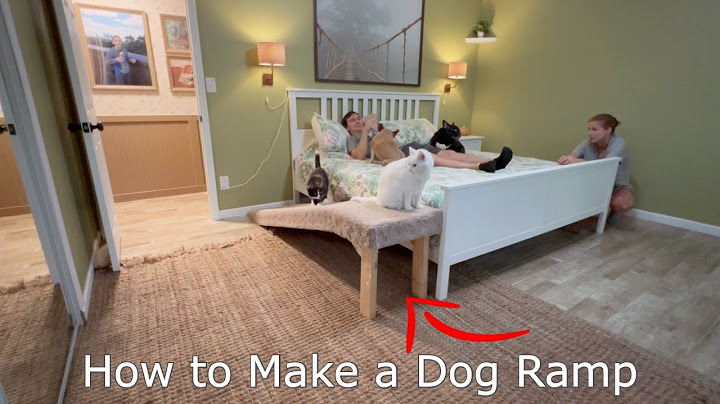
For indoor furniture access where space is limited, a well-fitting pet-steps-for-bed guide may be more relevant. For large dogs that need broad support, compare the structural issues in dog steps for large dogs. Do not decide that a ramp is therapeutic merely because it avoids jumping; walking on an incline still requires effort and balance.
Understand height, length and slope
Measure the vertical difference between the starting ground or floor and the target landing. Then measure the available horizontal distance for the ramp's footprint. In elementary geometry, the slope ratio can be expressed as rise divided by horizontal run. An advertised ramp length may be the slanted board length rather than its horizontal footprint, so check which dimension a seller publishes.
Here is a purely illustrative calculation: if a platform is 20 inches high and there are 60 inches of horizontal run, rise/run equals 20/60, or approximately 0.33. The angle would be about 18 degrees if the ramp formed a simple right triangle. This is not a veterinary slope recommendation; it only shows why height and available floor length belong in the same planning worksheet.
A shorter horizontal run for the same rise produces a steeper incline. The apparent benefit of a compact design may disappear if the resulting slope is difficult for the dog. Conversely, a longer ramp may be unwieldy in a narrow bedroom or when loading at a crowded parking spot. Measure first rather than relying on labels such as "gentle" or "low angle."
Choose a secure, grippy walking surface
Traction must work for paws, not just look textured in a listing photo. Check the surface's intended dry or wet use, whether it uses integrated texture or an attached cover, and whether that layer can shift at the edges. A loose carpet strip may bunch and create an unexpected ridge. A slippery surface can encourage rushing or clawing, which reduces confidence.
Some dogs benefit from raised edges or side guidance, but rails also reduce the usable width. Compare the full walking width to the dog's body and paw placement. A ramp wide enough for a small dog may be uncomfortable for a large one, even when it is rated for the weight. A dog should not need to balance near an edge while turning toward the target platform.
Load capacity, stiffness and support
Look for a published pet weight rating that applies to the full assembled ramp in its intended orientation. Check frame material, leg supports, hinge or telescoping locks, and whether the ramp is designed to span freely between the two landing points or must rest on intermediate support. A heavy dog moving down an incline can create different forces than a stationary test weight; therefore, do not use the rating as a substitute for a real stability inspection.
A ramp that flexes visibly, twists under ordinary use or slides at its upper support should not be used. Avoid improvised boxes or unsecured boards to alter the height. Follow manufacturer restrictions on slope, ground conditions, water exposure and vehicle compatibility. Never ask multiple dogs to crowd onto a narrow ramp simultaneously.
Secure the upper landing and lower feet
The transition onto furniture or a vehicle is often the most important part of the setup. The upper lip should meet an approved support point without a gap that can trap paws or an unsupported edge that can tilt away. Vehicle ramps may require a particular attachment strap, hook or support plate; do not loop a strap over fragile plastic trim unless the manual explicitly allows it.
The lower end must rest flat on firm ground or flooring. Inspect anti-slip feet and avoid loose gravel, mud or slippery mats. On an indoor ramp, clear the approach of cords and furniture so the dog can enter straight. On a car ramp, park safely, secure the vehicle and watch for traffic before deploying. A great ramp is still unsuitable when there is no safe place to set it up.
Indoor ramps and vehicle ramps are not interchangeable by default
An indoor ramp may be shaped for a couch arm or bed edge and assume a flat, dry floor. A vehicle ramp may be longer, foldable and equipped to reach a cargo deck. The relevant heights, attachment points and surface exposure differ. Always follow the manufacturer's declared use; do not assume a household ramp is automatically safe at a hatchback or that a car ramp will fit beside a bed.
For car-specific threshold and door-clearance checks, see dog steps for cars. This broad ramp article owns the overall slope, footing and continuous-surface comparison, not detailed instructions for a particular vehicle. In every setting, check both entry and exit: many dogs hesitate or rush when descending an incline.
Train gradually without forcing movement
Introduce the ramp nearly flat if the model is approved for that setup, then reward the dog for investigating the surface and taking voluntary steps. Gradually progress according to the animal's comfort and the product's instructions. Never pull the dog uphill by the neck or push from behind. A dog that runs, slips, turns around or freezes may need a slower training plan or a different piece of equipment.
Work on descent as a separate skill. Keep sessions short and end before the dog becomes tired. Supervise around elevated edges. If a dog suddenly becomes fearful of a previously familiar ramp, consider whether the surface has changed or whether pain or weakness has developed. A veterinarian should assess new signs of discomfort or loss of coordination.
When a ramp is not an appropriate solution
Ramps are not a substitute for a clinical diagnosis. Dogs with intervertebral disc disease, unstable gait, severe pain or recent surgery may be instructed to avoid climbing and jumping during a defined recovery period. The American Animal Hospital Association discusses ramps and traction as components of individualized home modifications for senior pets; that does not imply every incline is safe for every medical condition.
Sudden weakness, dragging paws, knuckling, persistent yelping or inability to stand requires prompt veterinary assessment. If the available space forces an extremely steep ramp, consider moving the resting surface lower or asking about assisted access. The aim is predictable and comfortable movement, not finding a product that permits every furniture habit regardless of the dog's physical state.
Ramp-shopping worksheet
| Decision | Record or verify | Why it matters |
| Vertical rise | Floor/ground to target landing | Determines required climb |
| Available run | Horizontal space and full footprint | Controls the possible incline |
| Useful width | Clear walkable surface between edges | Supports comfortable paw placement |
| Traction | Surface material and wet/dry limits | Helps reduce slipping |
| Structure | Published pet rating and supports | Checks intended load and assembly |
| Placement | Approved top connection and stable lower feet | Prevents dangerous shifting |
Do not compare two ramps by length alone without knowing whether the quoted figure is slanted length or horizontal run. Ask sellers for a dimensioned diagram and setup instructions. A model with impressive photos but unclear top attachment and load rating is not a strong candidate.
Common mistakes before buying a canine ramp
The first mistake is assuming that a longer board always fits the room. The second is trusting "non-slip" text without checking how the covering is attached. Another is overlooking the exit route: a dog that climbs up can still rush downhill if the surface feels insecure. Finally, a ramp that reaches the right height but cannot be attached safely may create a greater hazard than doing nothing.
Assess the full journey: approach, first step onto the ramp, central section, upper transition and descent. If the route is impractical, a shorter furniture height or controlled lifting may be worth discussing. A product should suit the dog and location together, not just one metric in a seller chart.
Frequently asked questions
Are ramps better than stairs for older dogs?
Some older dogs prefer continuous surfaces, but a ramp must have appropriate slope, traction and stability. Age alone does not determine suitability; ask a veterinarian if mobility or pain is a concern.
What slope should a dog ramp have?
There is no single safe angle for all dogs. Measure the height and available run and follow manufacturer limits and veterinary guidance. Geometry examples help compare products but are not medical prescriptions.
Can I use the same ramp for a bed and an SUV?
Only if the manufacturer explicitly approves both settings and the ramp fits each landing, weight requirement and surface. Vehicle and indoor attachment conditions differ.
Does a ramp prevent IVDD or arthritis?
No ramp can guarantee prevention or treat a disease. Reducing certain jumps may be one part of an individual mobility plan, but symptomatic dogs need veterinary care and sometimes strict activity restriction.
Why does my dog slide or rush down a ramp?
Possible causes include excessive incline, poor grip, narrow width, unstable support or fear. Stop and reassess the setup; seek medical advice if the behavior is new or associated with discomfort.