Pet Steps for Bed: A Practical Dog Stair Buying Guide
Choose pet steps for a bed with the right height, tread grip, stability and weight rating. Compare materials and measure your setup before buying.
Pet Steps for Bed: A Practical Dog Stair Buying Guide
Pet steps for bed access should reach close to the mattress surface, stay steady when your dog changes direction, and offer treads your dog can confidently place its paws on. Start with three measurements: the height from the floor to the top of the mattress, the available floor space beside the bed, and your dog's size and usual movement. A sturdy-looking staircase that stops well below the mattress or skids across a smooth floor may be a poor match regardless of its advertised weight capacity.
The goal is controlled access, not encouraging a dog to leap from a step onto the bed. Steps can help some pets avoid repeated furniture jumps, but they are not treatment for pain or spinal disease. Dogs recovering from surgery, experiencing weakness, or showing back pain need individualized veterinary advice before using steps or ramps.
Measure the bed, the floor and the dog
Measure vertically from the finished floor to the top of the mattress as used, not merely the wooden bed frame. A topper, compressed bedding and an unusually thick mattress can change the real landing point. Then measure the uninterrupted floor length beside the bed and the usable width along its edge. Include nightstand doors, drawers and walking paths rather than assuming the entire side of the bed is empty.
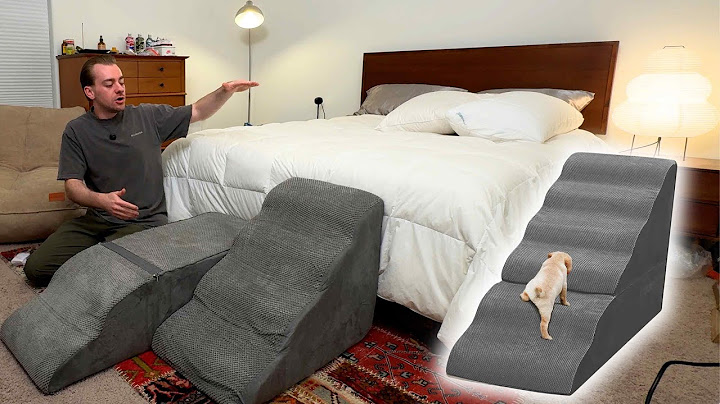
Next observe your dog walking and turning on level ground. Does the dog step carefully, hesitate at thresholds, have difficulty with turns or prefer broad surfaces? Compare those observations with the product's individual tread depth and width. The product's overall footprint is not a substitute for measuring the usable paw landing area. A dog should be able to approach and leave the steps without twisting around a bedside obstacle.
For an everyday shopping note, record the mattress height, available footprint, dog's current weight and approximate shoulder height. An accurately measured setup helps eliminate unsuitable products before you spend time comparing materials or aesthetics.
Understand step rise, tread depth and the top landing
Rise is the vertical distance between steps; tread depth is the horizontal room where a paw lands. More steps within the same total height may reduce individual rises, but usually increase the staircase length. A steep, compact product may fit an apartment corner while still feeling awkward to the dog. There is no single medically approved rise that suits every breed, age and condition.
Look closely at the final transition onto the bed. If the top step ends substantially below the mattress, the dog may still have to make the very jump you wanted to avoid. If it rises above the mattress or leaves an unstable gap, the landing can be awkward. Check whether bedding hangs down and hides the edge or catches claws. Consider the bed's movement if someone sits on it while the dog approaches.
An illustrative calculation: for a 24-inch mattress height and four equal vertical rises, the arithmetic average is six inches per rise. This is a geometry example, not a veterinary recommendation or an endorsement of four-step products. Real products differ in top-platform layout and dimensions, and the dog still needs to demonstrate comfortable movement.
Match the construction to your household
Foam steps can be light and easy to reposition, but the material compresses and may not provide enough lateral support for every dog. A rigid framed staircase may hold its shape more consistently, although its feet, joints and tread coverings still matter. Folding models save storage space but introduce hinges and latches that must remain fully engaged. Neither material category guarantees safety.
Read the manufacturer's published weight limit and instructions for intended indoor use. That rating is only one part of the decision: tread width, base size, contact with the flooring and resistance to tipping matter too. A product designed for a compact dog may feel cramped to a long-bodied or heavier pet even if the numerical weight rating looks sufficient.
If foam is your strongest candidate, see foam dog steps for compression and cover checks. If storage space is limited, compare folding dog stairs separately. For significantly elevated mattresses, the dedicated high-bed stair guide covers the top landing in greater detail.
Test traction and stability before use
Set the staircase on the actual surface where it will live: hardwood, tile, a rug or carpeting. Before inviting the dog, press gently on each tread and at the sides to look for shifting, rocking and twisting. Do not use an unsecured unit that slides when lightly pushed. A rubber-looking base is not proof of grip on every floor finish; verify the product's contact points and maintain a clean, dry surface.
Tread covers should be attached firmly, without loose fabric bunching at the front edge. A very soft cover may feel comfortable to a hand but still bunch under paws. If the stairs sit next to a wall or bed frame, check that their position does not conceal loose cords, create a pinch point or let the staircase rotate outward.
Repeat your checks after moving the steps, laundering the cover or changing flooring. Inspect screws, glue lines, seams, anti-slip feet and any loose tread pads. Replace damaged equipment instead of assuming that a repair will restore the original load capacity.
Teach use as a quiet, optional behavior
Let your dog explore the steps while they are placed securely on level flooring. Start with treats or a favorite toy near the bottom step; reward a voluntary approach, then one comfortable paw placement, then a gradual climb. Keep sessions brief and calm. A dog that freezes, backs away or launches off the side is providing useful feedback that the equipment or training pace needs reassessment.
Avoid pulling the dog by the collar or forcing the paws onto a step. Supervise the first sessions and every later use if the dog remains unsteady. If the dog learns to climb up but jumps down, work separately on a controlled descent; do not assume mastery of one direction means confidence in the other. Keep access to the bed blocked when supervision is needed.
A practical buying comparison worksheet
| Check | What to record | Why it matters |
| Bed fit | Mattress-top height and top-step height | Limits the final jump or awkward transition |
| Paw fit | Individual tread width and depth | Helps the dog place paws securely |
| Floor fit | Open footprint and base material | Determines space and resistance to sliding |
| Structure | Published load rating and construction | Screens out incompatible designs |
| Cleaning | Cover attachment and care instructions | Helps preserve tread grip after washing |
| Dog response | Calm ascent and descent when supervised | Confirms practical acceptance, not just advertised fit |
A good comparison uses specific measurements from the manufacturer's listing, not a generic "small/medium/large" label. Confirm return terms before buying because some dogs dislike a shape even when the measurements appear promising. Do not rely on a star rating without checking whether the review mentions the same bed height, floor type and dog size as yours.
When stairs may not be the right answer
Dogs with newly developed pain, knuckling, stumbling, rear-leg weakness, reluctance to move or an unusual hunched posture should be evaluated by a veterinarian. For conditions such as intervertebral disc disease, activity restrictions may be much more important than choosing furniture steps. A veterinarian may recommend a ramp, blocking furniture access, assisted lifting or a temporary restriction on climbing, depending on diagnosis and stage of recovery.
For some dogs a continuous canine ramp is easier to navigate than repeated risers; for others a ramp becomes too steep in the space available. A low resting bed on the floor can sometimes be the simpler setup. The correct choice is the one that fits the animal and the room, not the product that looks most ergonomic in an advertisement.
Common shopping mistakes to avoid
Do not buy by total step count alone: three generous treads and three narrow treads are very different. Do not infer that a product's maximum weight rating establishes how stable it will feel when a dog descends quickly. Avoid placing a staircase diagonally simply to squeeze it between furniture; a crooked approach can make the final turn harder. Also avoid making a new purchase a surprise on bedtime night, when everyone is tired and the dog feels rushed.
A realistic trial is to verify assembly, place the product securely, observe a calm approach, and check both the uphill and downhill transitions. If the fit fails at any stage, stop and reassess. A suitable item should make the route predictable rather than introduce a new obstacle beside the bed.
Frequently asked questions
Are pet steps better than a ramp for beds?
Not universally. Steps take less horizontal space in many rooms, while a ramp provides a continuous walking surface. Dog size, mobility, slope, tread design and veterinary restrictions determine which may work better. Compare both layouts in the exact room before deciding.
How tall should bed steps be?
Measure floor to mattress top and compare it with the manufacturer's top usable step height. The upper landing should enable a comfortable transition without a major additional leap. No single number fits every dog or bed.
Can I put dog stairs on hardwood floors?
Only if they remain reliably stable on that surface. Check anti-slip feet, cleanliness, side-to-side movement and the full base contact area; test again after moving or cleaning them.
Will my dog use steps immediately?
Some do, some need multiple calm practice sessions, and some may prefer a different layout. Encourage voluntary steps and never force a reluctant or painful dog to climb.
Do dog steps prevent spinal injuries?
They cannot guarantee prevention. Reducing repeated jumping may be a useful home modification for some dogs, but spinal symptoms and recovery restrictions require a veterinarian's guidance.