Cash Crops Explained: Examples, Farming Systems, and Tradeoffs
Cash Crops Explained. Define production for sale vs household consumption and illustrate crop.
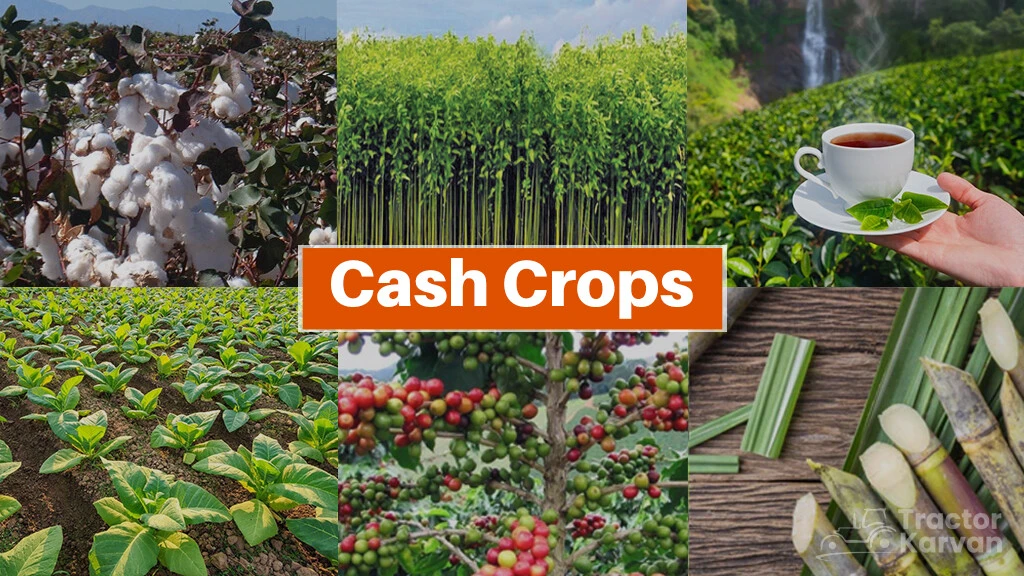
Cash Crops Explained: Examples, Farming Systems, and Tradeoffs
Cash crops are agricultural products produced primarily for market income rather than direct household consumption.
Crops grown mainly for sale
Cotton, coffee, cocoa, tobacco, and many commercial fruit and vegetable crops can be cash crops. A crop is not inherently a cash crop in every context: household-grown tomatoes can be food crops, while market-grown tomatoes are cash crops.
Why farmers choose them
Farmers may select crops based on climate, soil, irrigation, prices, storage, transportation, labor, and access to buyers. A profitable crop in one region can be a poor investment in another. Market contracts and quality standards may matter as much as yield per acre.
Economic and environmental tradeoffs
Specializing in one saleable crop can increase income opportunities while exposing farmers to price swings, disease outbreaks, or transport disruptions. Certain systems can strain water, soil, or biodiversity, while others integrate soil conservation and diversified rotations. Outcomes depend on how the crop is produced, not just its name.
Cash crops and food security
Selling crops can provide money to buy food and other essentials, yet income is not always stable or equally distributed. Mixed systems often combine crops for sale with crops for household use. A good comparison considers income, nutrition, land use, resilience, and local market access together.
Why the same crop can serve different goals
Corn, rice, or tomatoes may be grown for household consumption on one farm and mainly for sale on another. That distinction matters when evaluating market exposure and food security. A high-value crop can provide income while requiring purchased inputs, irrigation, or reliable buyers. A farmer deciding whether to expand a crop should consider costs, price volatility, storage losses, soil health, and household food needs instead of following a headline about profit per acre.
How to apply the definition
Ecological terms are useful only when the observation fits the definition. Record scale, location, substrate, season, and the process being studied. A soil label may describe origin rather than texture; a species label may describe ecological function rather than permanent identity. Compare multiple clues before generalizing from one example.
Evidence, location, and scale
A named ecological process can be real without occurring in the same way in every location. Researchers compare observations across seasons, habitats, and methods, then explain uncertainty. Garden soils, river deposits, natural forests, and farms each have histories that influence the patterns people see. For practical land-use choices, combine the general concept with local data such as soil surveys, climate records, and relevant conservation or agricultural guidance.
Frequently asked question
Can a food crop also be a cash crop?
Yes. The distinction depends on whether it is primarily produced for market income or direct household use.
Related guides
Subsistence Farming • Nonvascular Plants • Deciduous Forest Plants
