Why the US Still Changes Clocks Twice a Year
Understand the intended benefits, debated downsides, and policy tradeoffs behind continuing daylight saving time in the US.
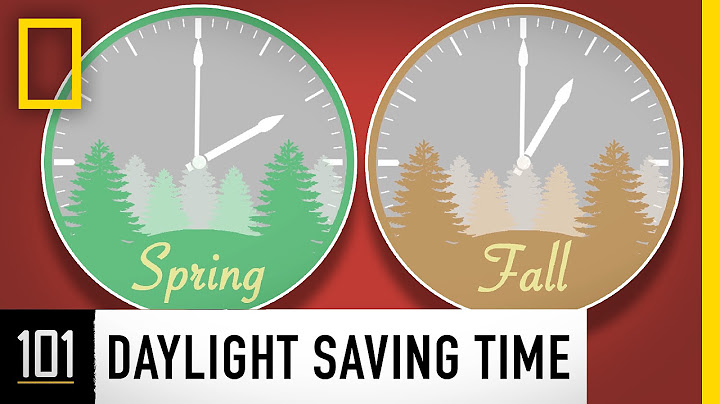
Daylight Saving Time (DST) remains a contentious policy in the United States, yet it persists largely because lawmakers believe it offers tangible benefits such as extended evening daylight for recreation and potential energy savings. The debate centers on whether these advantages outweigh the disruptions to sleep patterns, health, and economic activity that accompany the biannual clock shift.
Why policymakers wanted longer light in the evening
Policymakers in the early 20th century and during World War II argued that shifting clocks forward in spring would provide an extra hour of daylight after work, encouraging citizens to engage in outdoor activities and boosting retail sales. The idea was also linked to energy conservation: by reducing the need for artificial lighting in the evening, electricity usage could be lowered. Subsequent studies, such as those conducted by the U.S. Department of Energy in the 1970s, reported modest reductions in residential electricity consumption—often less than 1%—when DST was observed. Despite the limited energy impact, the perceived social benefit of longer evenings has remained a persuasive factor for legislators, who view DST as a low‑cost way to promote public well‑being and economic activity.
How morning sunlight shifts with seasonal clock changes
When clocks are set forward in the spring, sunrise occurs approximately 30 minutes later relative to the natural solar cycle. This shift means that many people experience a darker morning, especially in higher latitudes where daylight hours are already limited. Conversely, in the fall, setting clocks back restores earlier sunrise times, allowing more daylight in the morning but reducing evening light. The change in sunrise timing can affect circadian rhythms, with research indicating that delayed morning light exposure may lead to sleep disturbances and reduced alertness during the first few days after the spring shift. These physiological effects are often cited in public health discussions, highlighting the trade‑off between evening leisure time and morning sleep quality.
What research does and does not establish about energy use
The most frequently cited justification for daylight saving time (DST) is that shifting clocks forward reduces evening electricity consumption. Early studies from the 1970s and 1980s, conducted in a few U.S. states, suggested modest savings—often less than 1 % of total energy use—when daylight hours were extended. More recent, larger‑scale analyses that control for weather, economic activity, and population growth have found that the net effect on electricity demand is negligible or even slightly negative. For example, a 2014 review of data from 2000‑2013 in the United States concluded that the average reduction in residential electricity use was about 0.1 %, while commercial and industrial sectors saw no measurable benefit. In addition, the energy saved on lighting is largely offset by increased use of heating or cooling during the cooler morning hours that follow the spring transition. Thus, the empirical evidence does not support a substantial, consistent energy‑saving benefit from DST.
Sleep, health and scheduling concerns in the debate
The biannual clock changes disrupt circadian rhythms, leading to measurable sleep loss. A 2018 meta‑analysis of 30 studies found that the spring shift results in an average of 30 minutes of lost sleep per night for several days, while the fall shift can cause a temporary increase in sleep duration. Shorter sleep duration has been linked to higher rates of motor‑vehicle accidents, workplace errors, and cardiovascular events. Public health agencies have documented spikes in heart‑attack admissions and traffic fatalities within the first week after the spring transition. Conversely, the fall shift is associated with a modest reduction in sleep‑related accidents, suggesting that the negative health impacts are largely driven by the abrupt loss of daylight in the morning. Scheduling concerns also arise: the shift can misalign school start times, work schedules, and public‑transport timetables, creating logistical challenges that are not offset by the minimal energy savings.
Why permanent standard time and permanent DST differ
Permanent standard time keeps the clock at the same offset year‑round, matching the natural solar cycle. This means that sunrise and sunset times shift with the seasons, so in summer the sun rises earlier and sets later, while in winter the opposite occurs. The intent is to preserve the seasonal rhythm of daylight for activities such as agriculture, outdoor recreation, and sleep patterns. Permanent daylight‑saving time, by contrast, keeps the clock permanently one hour ahead of standard time. This keeps the sun higher in the sky during the evening hours throughout the year, extending daylight after work and school. The trade‑off is that in winter mornings are darker, which can affect visibility, safety, and the timing of daylight‑dependent businesses. The two systems therefore differ in how they balance evening light against morning light, and in the way they align with human circadian rhythms and economic activities.
What would have to change to stop switching clocks
Eliminating the biannual clock change would require a legislative decision at the federal or state level to adopt a single, permanent time zone for each jurisdiction. The U.S. Department of Transportation currently administers the Uniform Time Act, so any change would involve amending that act or passing new legislation that overrides it. States would need to coordinate with neighboring regions to avoid cross‑border time discrepancies that could disrupt commerce, transportation schedules, and broadcast programming. In addition, federal agencies that rely on precise timekeeping—such as the military, aviation, and financial markets—would need to adjust their systems and protocols to the new standard. Finally, public infrastructure, including school calendars, work schedules, and energy‑management systems, would have to be re‑engineered to align with the chosen permanent time. Without these coordinated legal, technical, and societal adjustments, the current practice of switching clocks would remain in place.
