The Pacific Ring of Fire: Volcanoes, Plates and Earthquakes
The Pacific Ring of Fire: Volcanoes, Plates and Earthquakes Explore evidence-based facts, context and common misconceptions.
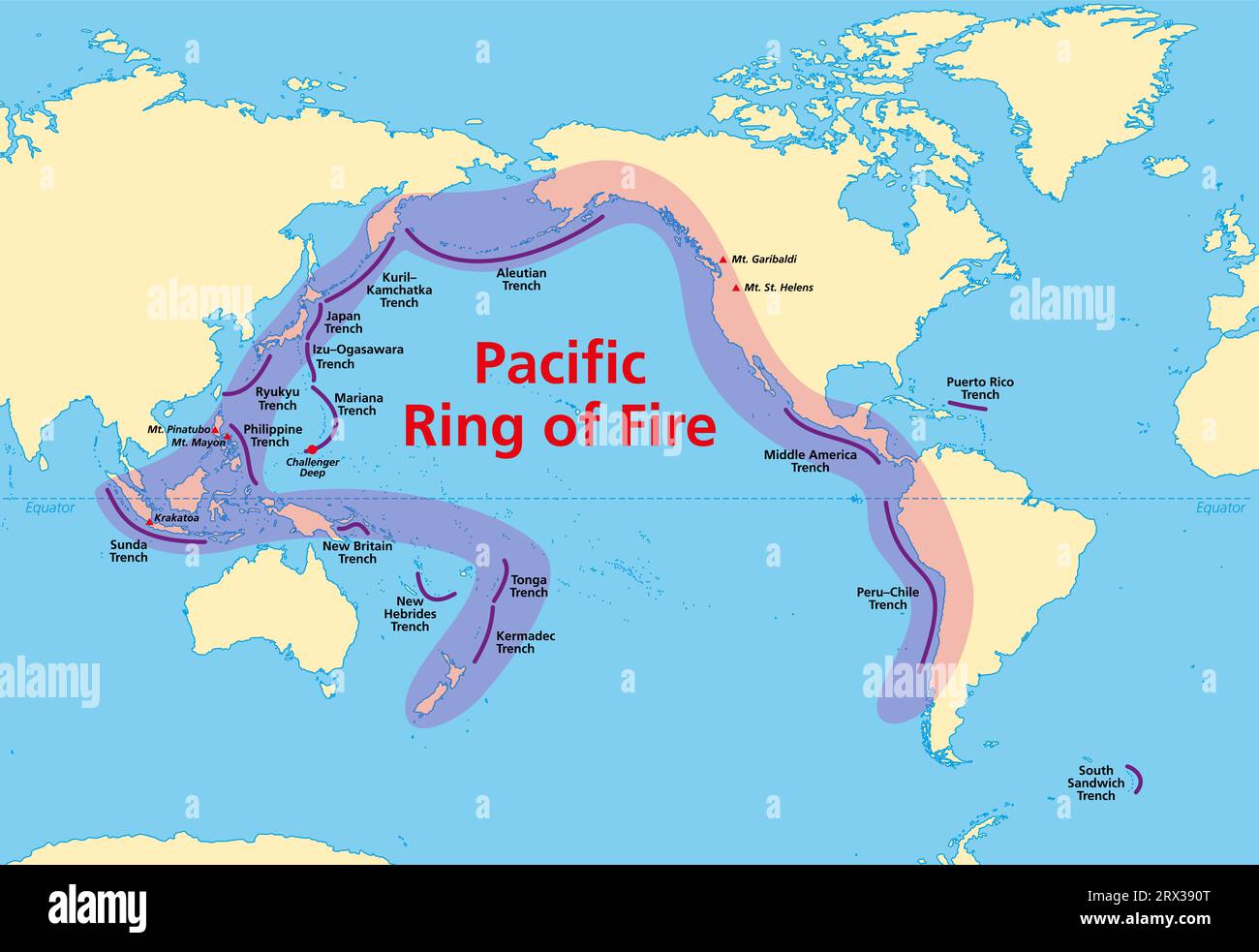
The Pacific Ring of Fire: Volcanoes, Plates and Earthquakes
The Pacific Ring of Fire is an informal name for the broad zone around much of the Pacific Ocean where many earthquakes and volcanoes occur. It follows several interacting plate boundaries rather than forming one perfectly continuous ring.
The essentials
Subduction zones are particularly important: one tectonic plate sinks beneath another, generating earthquakes and often magma that contributes to volcanoes. The western coasts of the Americas and parts of East Asia and Oceania are key regions.
What makes this subject distinctive
Not every part of the Pacific boundary has the same hazards, and not every volcano sits on the Ring of Fire. Hot-spot volcanoes such as those in Hawaii form by different processes.
A general explanation cannot predict the danger at a specific address. Exposure, building design, terrain, water depth, and current conditions change outcomes. Use local forecasts, hazard maps, and official emergency alerts for decisions that affect personal safety.
Common misconceptions and limits
Hazard maps are based on local geology and monitoring data. Living somewhere labeled Ring of Fire does not by itself specify an individual building’s risk.
Science explains processes; emergency authorities communicate immediate decisions. If a topic involves public safety, general educational prose must not override local earthquake guidance, weather warnings, evacuation maps, or coastal tsunami instructions.
Why local conditions matter
A general explanation cannot predict the danger at a specific address. Exposure, building design, terrain, water depth, and current conditions change outcomes. Use local forecasts, hazard maps, and official emergency alerts for decisions that affect personal safety.
Key points at a glance
The Pacific Ring of Fire is an informal name for the broad zone around much of the Pacific Ocean where many earthquakes and volcanoes occur.
Subduction zones are particularly important: one tectonic plate sinks beneath another, generating earthquakes and often magma that contributes to volcanoes.
Not every part of the Pacific boundary has the same hazards, and not every volcano sits on the Ring of Fire.
Frequently asked questions
What is the basic explanation?
The Pacific Ring of Fire is an informal name for the broad zone around much of the Pacific Ocean where many earthquakes and volcanoes occur.
Why can local conditions change the outcome?
Subduction zones are particularly important: one tectonic plate sinks beneath another, generating earthquakes and often magma that contributes to volcanoes.
When should official guidance take priority?
Hazard maps are based on local geology and monitoring data.
Explore related guides
Earth Science Explained: Oceans, Weather, Volcanoes and Natural Hazards
