Generalist Species vs Specialists: Traits and Real Examples
Generalist Species vs Specialists. Contrast ecological breadth, adaptability and conservation.
Generalist Species vs Specialists: Traits and Real Examples
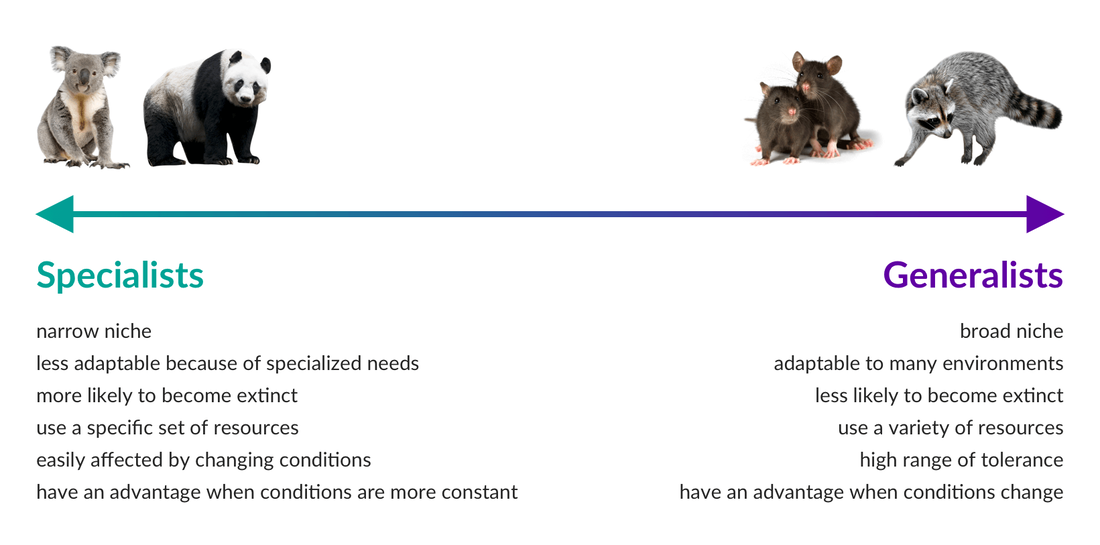
A generalist species uses a relatively broad range of foods, habitats, or environmental conditions compared with a specialist.
What makes a generalist
Raccoons, coyotes, and some urban birds are common examples in particular ecological contexts. “Generalist” is comparative, not a claim that an animal can live anywhere.
Specialists make different tradeoffs
A specialist may depend strongly on one food type, habitat, or ecological relationship. This can bring efficiency within a narrow niche but expose the species to disruption when that resource changes. Generalists may use alternatives, though they still have physiological and behavioral limits.
Context changes the classification
A species can be generalist in diet but specialist in nesting habitat. The same animal may use many food items in one region and fewer in another. Researchers therefore specify which niche axis they mean rather than assigning one permanent label to a species in all circumstances.
Conservation implications
Environmental change may favor flexible species in some places while reducing resources for specialists. However, invasive generalists can also damage native systems, and not every generalist thrives in cities. Practical assessment compares habitat requirements, local competitors, and measurable population responses.
Generalist in what sense?
A raccoon may eat many types of food, but that says little about whether it can nest in every habitat or tolerate every climate. Ecologists distinguish dietary breadth, habitat breadth, and other dimensions of a species’ niche. Different measurements can yield different descriptions of the same organism. Before calling a species “adaptable,” specify which resources it uses and compare it with the relevant specialist. This also avoids assuming that flexible feeders are automatically ecologically beneficial.
How to apply the definition
Ecological terms are useful only when the observation fits the definition. Record scale, location, substrate, season, and the process being studied. A soil label may describe origin rather than texture; a species label may describe ecological function rather than permanent identity. Compare multiple clues before generalizing from one example.
Evidence, location, and scale
A named ecological process can be real without occurring in the same way in every location. Researchers compare observations across seasons, habitats, and methods, then explain uncertainty. Garden soils, river deposits, natural forests, and farms each have histories that influence the patterns people see. For practical land-use choices, combine the general concept with local data such as soil surveys, climate records, and relevant conservation or agricultural guidance.
Frequently asked question
Does generalist mean invasive?
No. Generalism describes ecological breadth; native and invasive species can both have broad niches.
Related guides
Pioneer Species • Soil Layers Explained • Detritivores Explained
