Soil Layers Explained: O, A, E, B, and C Horizons
Soil Layers Explained. Explain actual horizons, variations between soil profiles and why color alone is.
Soil Layers Explained: O, A, E, B, and C Horizons
Soil horizons are layers shaped by organic matter inputs, movement of water, weathering, and biological activity.
A soil profile is more than dirt bands
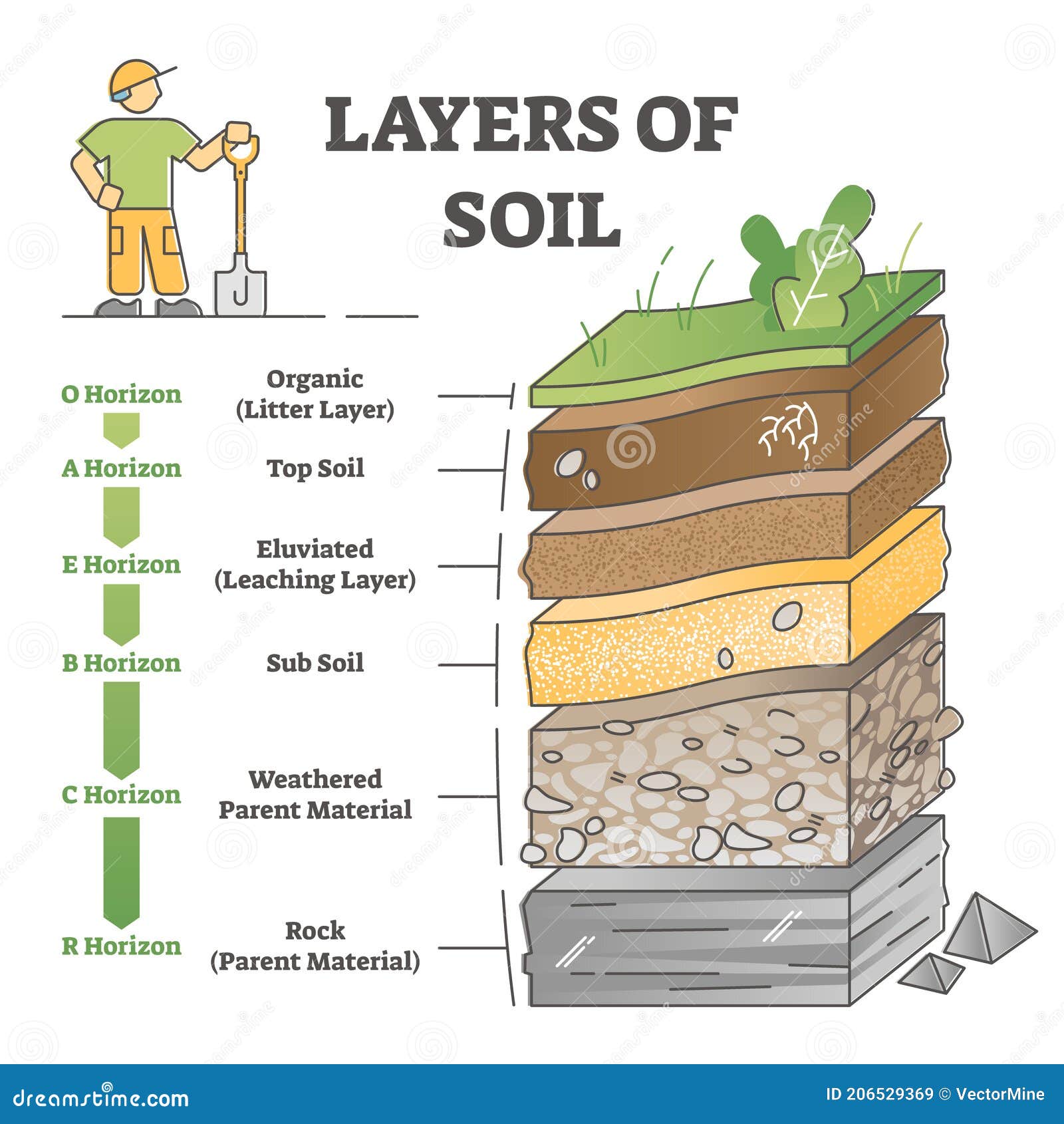
Standard master-horizon letters include O, A, E, B, and C, with R used for hard bedrock. A particular soil profile will not necessarily show every horizon.
Reading the upper horizons
O horizons are dominated by organic material such as leaf litter; A horizons are often mineral topsoil mixed with humus. E horizons are zones where some materials have been leached or moved out. Color can be useful, but a dark band does not automatically prove it is an A horizon.
Subsoil and parent material
B horizons commonly show accumulation or alteration of clay, iron, or other materials. C horizons contain relatively less-altered parent material, and hard rock below may be designated R. Thickness depends on landform, drainage, geology, climate, and time rather than a fixed universal number of inches.
How scientists study a profile
Soil scientists examine texture, structure, color, roots, boundaries, and chemical properties in a pit or exposed face. USDA NRCS guidance uses formal descriptive criteria. For gardeners, a simple hole can reveal drainage or compaction, but it does not replace a laboratory soil test.
Why the classic diagram is simplified
A textbook diagram showing O, A, E, B, and C horizons helps beginners, but a real soil pit may lack the O or E layer, contain multiple B subdivisions, or show abrupt changes in parent material. Soil horizons are identified from processes and properties, not solely from depth. An exposed roadside cut may also be disturbed or eroded. Use published NRCS soil descriptions and local surveys when soil structure affects building, drainage, or land-use decisions.
How to apply the definition
Ecological terms are useful only when the observation fits the definition. Record scale, location, substrate, season, and the process being studied. A soil label may describe origin rather than texture; a species label may describe ecological function rather than permanent identity. Compare multiple clues before generalizing from one example.
Evidence, location, and scale
A named ecological process can be real without occurring in the same way in every location. Researchers compare observations across seasons, habitats, and methods, then explain uncertainty. Garden soils, river deposits, natural forests, and farms each have histories that influence the patterns people see. For practical land-use choices, combine the general concept with local data such as soil surveys, climate records, and relevant conservation or agricultural guidance.
Frequently asked question
Does every soil have an E horizon?
No. Soil profiles vary, and many lack one or more master horizons.
Related guides
Generalist Species vs Specialists • Sandy Loam Soil • Pioneer Species
