Does Goat Milk Have Lactose? Comparing Goat and Cow Milk
Does Goat Milk Have Lactose? Comparing Goat and Cow Milk. Explain lactose presence and avoid unsupported claims for lactose.
Does Goat Milk Have Lactose? Comparing Goat and Cow Milk
Yes, goat milk contains lactose.
The short answer
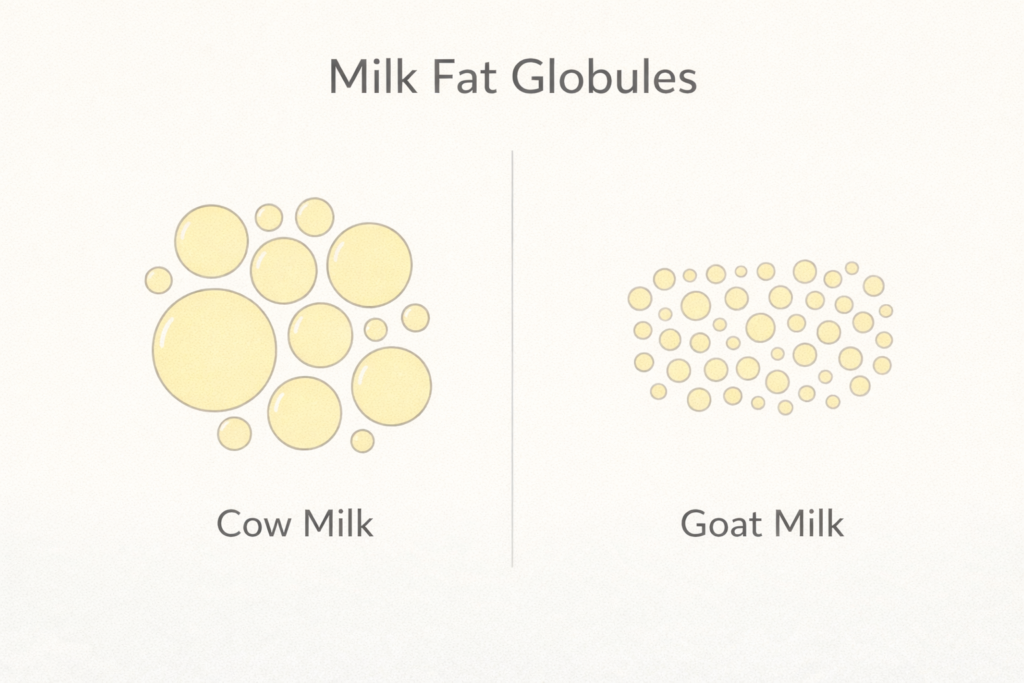
Lactose is the natural sugar in mammalian milk, including milk from goats, cows, and sheep. Goat milk may differ somewhat from cow milk in fat globules and protein composition, but that does not make it lactose-free.
Lactose and digestion
People with lactose intolerance have reduced ability to digest lactose in the small intestine. Symptoms can vary with the person and the amount consumed. Changing from cow milk to ordinary goat milk does not reliably eliminate lactose-related symptoms.
Why some people describe it as easier
Individual experiences may reflect serving size, other food eaten, digestive conditions, or differences in milk composition. Anecdotes cannot establish that goat milk treats allergies or lactose intolerance. A cow-milk protein allergy also requires separate clinical guidance because cross-reactivity can occur.
Choosing products safely
Check labels for lactose-free claims, pasteurization, and ingredients. Unpasteurized milk carries infection risks regardless of animal species. If milk triggers recurring symptoms, consult a healthcare professional rather than using goat milk as a self-diagnostic test.
The label is more useful than the rumor
A carton of ordinary goat milk should be treated as containing lactose, even if someone reports tolerating it better than cow milk. A person needing lactose avoidance should seek verified lactose-free products or advice tailored to their condition. Pasteurization is a separate issue from lactose content: it helps reduce infectious risks but does not remove the sugar. Milk allergy involves immune responses to proteins and cannot be assessed from anecdotal digestive comfort.
Reading breed and husbandry claims carefully
Breed names describe ancestry or selection history, not a promise about any individual animal. Climate, nutrition, breeding values, health, and handling influence outcomes. Where a practice affects animal health or reproductive welfare, consult a veterinarian or qualified extension specialist rather than using a general explainer as a protocol.
Separating biology from management decisions
A breed description, sex term, or production concept is not a substitute for a farm-specific plan. Genetics, age, body condition, feeding, climate, and welfare standards can alter outcomes. Measurements and records are more informative than dramatic photographs or an isolated claim about performance. Whenever a decision may involve surgery, reproductive intervention, milk handling, or a sick animal, seek a qualified veterinarian or extension professional and use current official guidance.
Frequently asked question
Is goat milk lactose-free?
No. Ordinary goat milk contains lactose and is not a reliable substitute for someone requiring lactose-free milk.
Related guides
What Is a Gelding? Meaning, Behavior, and Horse Care • What Is a Stallion? Male Horse Terminology and Behavior • What Is a Mule? Horse–Donkey Parentage, Traits, and Terminology
