Halloween Colors and What They Traditionally Represent
Understand traditional Halloween colors, from orange and black to purple and green, and what those associations mean.
Halloween Colors and What They Traditionally Represent
Orange and black are the familiar Halloween pairing, but the holiday has accumulated a much wider palette through harvest imagery, folklore and modern retail design. Looking at colors as symbols helps explain why some combinations feel traditional even when there is no one universally agreed meaning.
Classic Halloween Colors
Orange recalls pumpkins and the autumn harvest; black evokes darkness and nighttime. Purple and green frequently appear in modern playful or supernatural-themed designs, while white works for ghosts and skeletons. These associations are recognizable design habits, not official rules about what a person must wear or display.
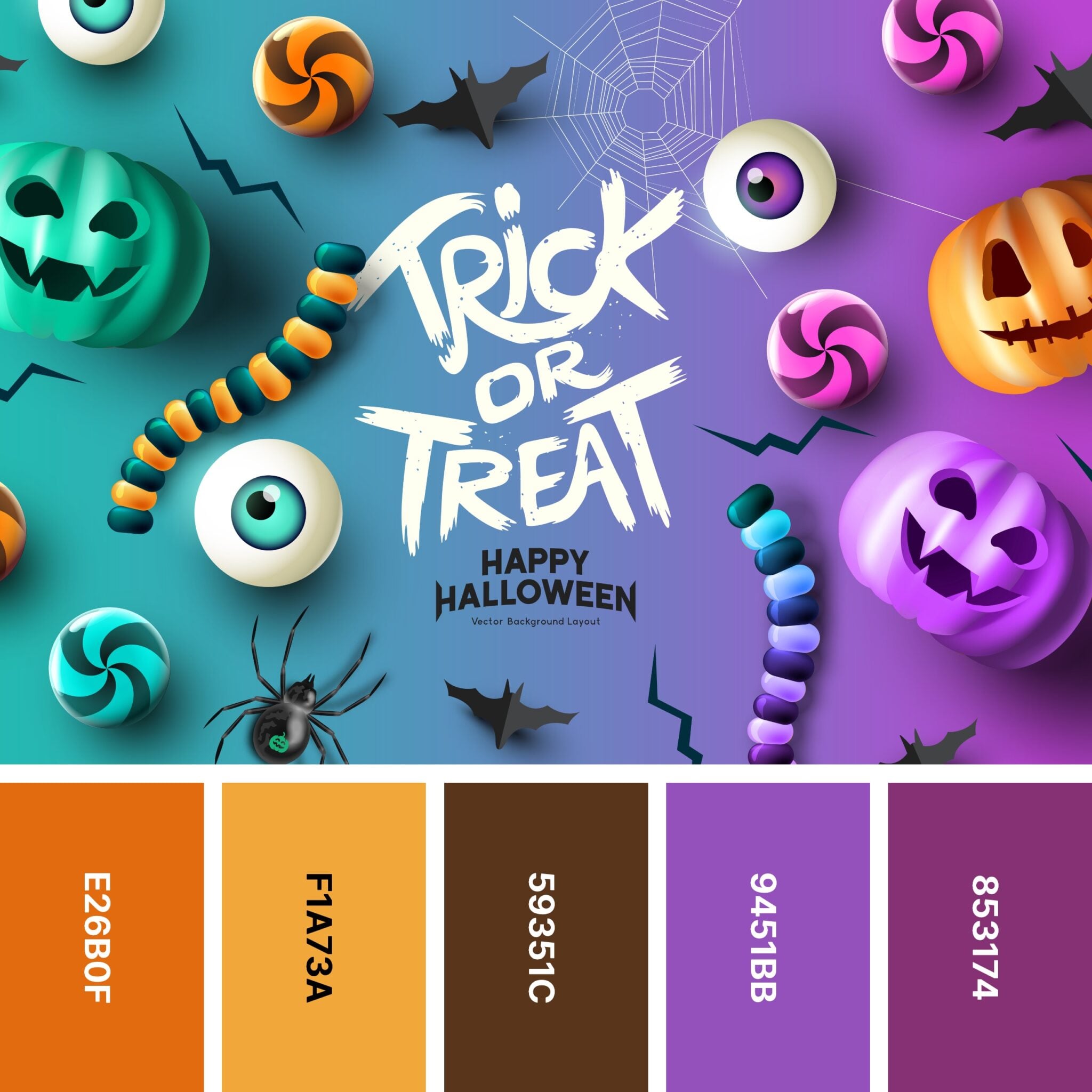
For a classroom demonstration, create four cards using the same pumpkin outline but different backgrounds: black, purple, cream and bright green. Ask students to describe the mood before explaining any associations. This shows that color combinations affect perception without making sweeping psychological claims. Bring the example back to real design choices: orange on black may be visually striking, but text placed on a similar dark orange could be difficult to read. The meanings of colors evolve with art, advertising and community practice. The most useful takeaway is that Halloween colors are a design language people recognize, not a universal historical code.
Historical and Cultural Associations
Older agricultural and seasonal imagery helps explain the prominence of warm harvest colors. Yet popular accounts often oversimplify the story, claiming every Halloween color descends unchanged from an ancient ritual. The present-day palette reflects commerce, popular media and evolving taste as well as inherited traditions.
Color Meaning Versus Modern Marketing
Color meaning depends on context. A black-and-orange table may feel classic, while cream and dusty rust may feel warm rather than frightening. Neon green next to purple can suggest cartoon monsters, but those associations have been shaped heavily by modern graphics and entertainment. Treat them as visual signals, not historical proofs.
Imagine comparing two identical paper pumpkins: one against a black sheet, another against a pale green sheet. The first feels traditionally spooky because of the strong dark contrast; the second may feel playful or modern. The pumpkin itself has not changed. This is a useful way to show children how cultural associations and neighboring colors influence the mood of a display.
Quick Questions
If you need exact combinations for printing, fabric or décor, move from color symbolism to a palette-building approach. That requires attention to contrast, color ratios and the existing room. A separate guide offers coordinated Halloween palettes and design applications instead of repeating a general history of orange and black.
Color symbolism is not standardized. An orange lantern can suggest warmth, harvest or fun depending on the surrounding objects and lighting. Black may represent mystery in a Halloween graphic, but that does not mean it has the same meaning in every society. The practical value of learning these associations is choosing a theme knowingly, not assigning universal psychological facts to each shade.
A useful way to apply these ideas
Make one small version first, then adjust it for your audience, space and resources. The following checks are specific to this topic; use them as a short planning pass instead of assuming every example fits every situation.
Practical takeaways
Use orange and black for instantly recognizable Halloween imagery.
Treat purple and green as common modern accents.
Avoid unprovable one-to-one historical meanings.
Choose actual color palettes for a specific room or design job.
Are orange and black the only Halloween colors? No. Purple, green, white, red and many muted autumn colors are also used.
Related Halloween guides
Halloween color palettes for decor, invitations and design