Hamster Tank: Choosing and Setting Up a Glass Enclosure
Compare hamster tanks by usable floor dimensions, mesh-lid airflow and bedding depth, including the limits of nominal gallon ratings.
Hamster Tank: Choosing and Setting Up a Glass Enclosure
A hamster tank is a glass aquarium-style enclosure repurposed for a terrestrial pet. Glass can hold deep burrowing bedding and make tunnels easier to observe, but the tank must have sufficient internal floor area, a safe mesh lid, appropriate wheel clearance, and ventilation. Do not choose by the gallon label alone: volume describes how much a tank holds, not how many uninterrupted square inches of floor a hamster can actually use. Measure interior length and width, and compare those measurements with welfare guidance before you buy or reuse an aquarium.
Can hamsters live in glass tanks?
Yes, an appropriately sized glass enclosure can work for a hamster when its lid and environment are designed for the animal. Blue Cross explicitly describes aquarium-style homes as useful because they allow deep bedding and reduce escape through wire bars, but the glass still needs a ventilated mesh lid. A solid aquarium hood intended for fish is not automatically suitable for a hamster. Tanks must never be sealed shut to prevent escape.
Glass has tradeoffs. It is heavy, may be awkward to clean, and can retain heat when placed in direct sun. It also hides no defects in housing design: a small glass box is still a small box, even if it looks tidy and has an elegant planted layout. Choose the enclosure for interior dimensions, safe airflow, and access to natural behaviors rather than appearance or the word 'premium.'
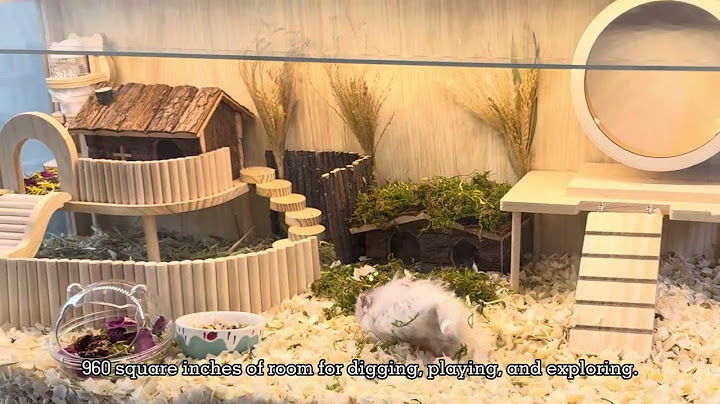
Measure usable footprint instead of trusting gallons
Use a tape measure to record the flat inside length and width of the floor. Multiply the two numbers for continuous floor area. For example, a hypothetical enclosure with an inside base of 100 cm by 50 cm provides 5,000 cm². This is a calculation example, not a claim about any specific tank model or a promise that the area suits every individual. Avoid adding upper shelves or pipe networks into the continuous floor-area figure.
PDSA references 100 × 50 cm as a minimum welfare benchmark and emphasizes larger homes. The inside dimensions matter; exterior measurements may exaggerate usable space because of wall thickness, molded frames, or curved corners. Also measure the height that remains after adding the desired bedding depth and a suitably sized wheel. A long but very shallow tank can create a different problem even when the floor footprint seems encouraging.
What about a 40-gallon breeder tank?
A 40-gallon breeder is often discussed as a familiar aquarium size, but gallon capacity alone tells you neither the interior footprint nor the available vertical clearance above bedding. Different aquarium formats distribute volume differently: one may be taller and narrower, while another has a wider base. Measure the actual specimen you intend to use, including any internal lips and bracing. Do not assume that a named capacity automatically meets current hamster-welfare floor benchmarks.
If you cannot verify the interior length and width before purchase, look for a listing with clear dimension drawings or choose an enclosure that can be measured in person. Compare the result against welfare sources, allow room for a full-height wheel and secure lid, and favor more space where feasible. Avoid buying a tank because a forum post says a particular number of gallons is always sufficient for every species.
Design a ventilated, secure mesh lid
Use a sturdy ventilated lid appropriate to the tank rim. Mesh openings must be small enough that the hamster cannot squeeze through or catch a foot, and the lid must latch securely without creating sharp points. Hardware should resist lifting and chewing. Never rely on a loose piece of fabric, plastic wrap, a weighted book, or a solid cover with a few incidental holes. Air exchange is a basic design requirement, especially when the bottom and sides are nonporous glass.
Check condensation, stale odor, and damp bedding as maintenance clues. A mesh top does not mean the room can be hot, humid, or poorly ventilated. Keep the habitat away from direct sunlight, radiators, and vibrating appliances. When you open the lid for cleaning, provide a secure temporary carrier and prevent unattended escape. Reinspect all fastening points after washing or moving the tank.
Plan bedding depth and wheel clearance together
PDSA recommends at least 25 cm of suitable bedding so hamsters can burrow, sleep, and store food. The entire tank does not have to be a flat landscape: a deeper burrowing zone can coexist with a secure supported area for the wheel and sand bath. But reducing all bedding to a thin layer simply to fit equipment defeats a major reason to use a tank. Use supports under heavy accessories instead of placing them on loose material that may be undermined.
A wheel must be big enough for the hamster to run with a straight back and must have a solid surface. Check the real vertical clearance from the supported wheel location to the lid, not just the empty tank's nominal height. Some hamsters need a larger wheel than a starter set provides. Remove overly tall decorative platforms that turn the tank into a climbing course or put the hamster close to the lid.
Glass safety, cleaning, and placement
Before use, check for chipped glass, failing silicone, loose seals, a sharp rim, and a stable level support rated for the filled enclosure's weight. A filled tank containing bedding, ceramics, and a lid may be difficult to move safely. Clean the enclosure without exposing the hamster to strong chemical fumes; thoroughly rinse and dry cleaned surfaces before reintroducing the animal. Spot-clean damp waste routinely instead of tearing down an entire familiar burrow network unnecessarily.
Place the tank in a quiet area away from direct sunlight, drafts, strong sound systems, and repeated vibration. Monitor room temperature rather than assuming glass keeps conditions stable. PDSA cautions against overheating and cold stress. Avoid placing the enclosure near household pets that can startle the hamster through glass, and make sure children cannot tip the lid or reach into the habitat without adult supervision.
Tank versus bin versus barred cage: weigh the actual tradeoffs
A glass tank can support deep substrate and visibility, with substantial weight and the need for an excellent mesh lid. A modified storage bin can be lighter and less expensive, but may be too small at its tapered base and requires careful ventilation, attachment design, and chewing inspection. A well-designed barred enclosure may provide good airflow and access, but bars can invite climbing and bedding may spill from a shallow base. None is automatically best or worst solely because of its material.
Instead, compare continuous floor area, bedding capacity, lid or door security, safe wheel clearance, cleaning access, and real maintenance. Your hamster's species and body size also matter. A strong habitat design preserves essential behaviors regardless of whether the wall is glass, plastic, or wire. Product star ratings and gallon labels are not substitutes for measuring these features.
A pre-purchase measurement and inspection workflow
Write down three measurements: inside base length, inside base width, and clearance from a planned wheel platform to the secured lid. Then sketch where deep bedding, an adequately sized wheel, hides, water, a sand bath, and supported heavy accessories will fit. A realistic plan leaves open routes between essentials and does not depend on precarious stacking. Confirm that the lid can be securely latched, opened for cleaning, and ventilated without exposed cut wire.
At home, inspect the tank once more after installing the substrate. Ensure no glass edge is exposed where chewing or climbing occurs and that heavy items cannot fall into burrows. Watch the first natural waking periods for comfortable wheel use, normal exploration, feeding, and any attempts to reach the lid. A new tank is a housing decision requiring ongoing observation, not a one-time purchase that automatically solves every behavior issue.
Habitat comparison for hamster keepers
| Enclosure style | Strength | Potential drawback |
| Glass tank | Allows deep bedding; easy to see burrows | Heavy; needs ventilated locked mesh lid |
| Modified plastic bin | Lightweight and customizable | Tapered base, DIY cut edges and airflow checks |
| Barred enclosure | Usually good airflow; doors may be convenient | Bar climbing and shallow bedding trays |
| Any enclosure sized by gallons only | Simple retail label | Does not reveal interior usable footprint |
Practical checklist before changing the setup
• Measure inside base length and width before buying.
• Plan sufficient deep bedding and clearance for a solid wheel.
• Fit a secured, properly ventilated mesh lid.
• Support heavy ceramic pieces away from unstable burrows.
• Keep glass out of direct sunlight and inspect condensation.
Frequently asked questions
Is a fish tank safe for a hamster?
It can be suitable when the interior is spacious, the lid is securely ventilated, and all edges, bedding depth, wheel clearance, and room conditions are checked.
Is a 40-gallon tank always big enough?
No. Capacity alone does not specify usable floor area or lid clearance. Measure the exact interior dimensions and compare them with welfare recommendations.
Do hamster tanks need ventilation?
Yes. A secure appropriately sized mesh lid is essential. Do not seal a hamster inside a covered aquarium.
Can I put the hamster wheel on top of deep bedding?
A heavy wheel should be supported so it cannot topple or collapse a burrow. Check that the hamster can run without bending its back and that the lid still clears it safely.
Are glass tanks better than cages with bars?
Either design can succeed or fail depending on dimensions, substrate depth, security, ventilation, and enrichment. Compare the measured setup, not the material alone.
The bottom line
Measure first and shop second. A hamster tank is only a good choice when its internal footprint, secure airflow, deep substrate capacity, and wheel clearance work together. Ignore gallon shortcuts, keep glass away from sun and heat, and inspect the lid and supports routinely.
Related hamster guides
Hamster Cage · Hamster Bin Cage · Syrian Hamster Cage · Hamster Bedding