How Much Does Florida Pay for Iguanas in 2026?
Does Florida pay an iguana bounty? Separate public programs from contractor payments and private removal fees, with sources to verify current claims.
How Much Does Florida Pay for Iguanas in 2026?
FLORIDA WILDLIFE GUIDE • Editorial review: November 2, 2026 • US English
The short answer is that there is no verified, universal Florida state bounty that pays every resident a fixed amount per green iguana. Search results sometimes combine private removal contracts, commercial arrangements, invasive-species news and special FWC events into a single misleading “price per iguana.” Those arrangements operate differently. To judge a claim, first identify who would pay, what work is being purchased and whether the person collecting animals is authorized to do it. A headline with a dollar figure is not evidence that the state will pay a walk-in resident.
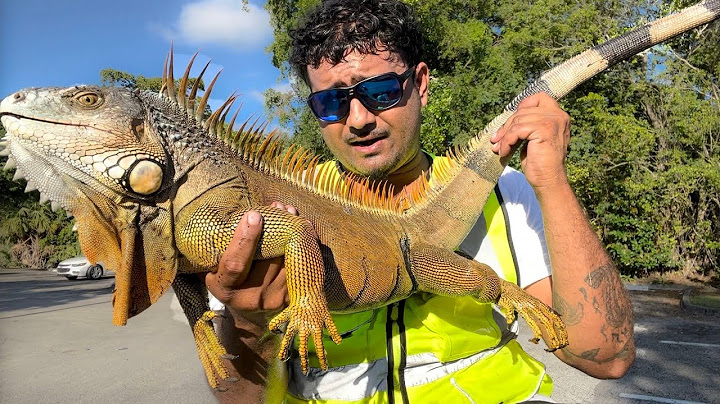
Is there a statewide cash reward?
The Florida Fish and Wildlife Conservation Commission (FWC) describes green iguana removal options and regulated commercial permit pathways, but its standard green iguana guidance does not establish an automatic statewide per-animal payment for the general public. News stories about contractors being paid should not be converted into a public bounty rate. A government agency can buy services from a contracted provider without offering an identical payment to every homeowner. Before publishing or trusting a dollar amount, locate a current, official program page stating eligibility, geographic scope, rate, claims procedure and dates.
Private removal contracts work differently
A homeowners association, business or landowner may hire a wildlife-control company to address an iguana problem. In that arrangement the property owner commonly pays for a service, not the state paying the homeowner for each animal. Pricing can reflect site inspections, difficult access, repeated visits, safety controls, damage prevention and follow-up. A quoted total and a per-animal unit cost are not interchangeable. Ask whether the price covers monitoring, permits, travel, exclusion work and post-service documentation before comparing bids.
Can commercial collectors be paid?
Yes, in narrowly defined commercial arrangements. FWC's 2025 rule changes permit certain authorized collectors to transfer live wild-caught green iguanas to qualified permit holders who may sell them out of state; the agency notes collectors may receive payment from the commercial permittee. Those payments are negotiated transactions within a regulated system, not a standing promise that Florida's treasury pays every capture. Live possession, transport, biosecurity and recordkeeping requirements apply. The commercial pathway also must not be confused with authorization to release an animal somewhere else.
What about the cold-stunned iguana news of February 2026?
During an unusual cold period, FWC's Executive Order 26-03 allowed temporary public delivery of cold-stunned iguanas to designated FWC locations on February 1–2, 2026. The official announcement describes a time-limited collection opportunity, not an open-ended bounty. On February 4 FWC reported that 5,195 iguanas had been removed and that the order was closed. A social media post advertising a current 2026 payment based only on that episode lacks the crucial date context. Do not carry live reptiles to FWC offices based on obsolete event information.
Questions that expose misleading bounty claims
Check who issued the announcement: FWC, a municipality, a private contractor or an anonymous social account. Look for a current dated program notice, a government contact, eligibility rules and the exact payment conditions. Then check whether participants must have permits, whether an approved contractor already holds the work and whether the work applies to a particular county or property. If none of this is documented, do not publish a figure such as '$10 per iguana' as a statewide fact. Avoid any scheme requiring unpermitted live transport or trespassing.
Why online numbers may differ wildly
An article might report a contractor's cost to a city, a quoted homeowner service price, an hourly worker wage, a permitted commercial purchase rate or a historic incentive from another invasive-species program. Each uses different units and pays different parties. Some figures are bids rather than completed payments. To make a comparison useful, label its payer, recipient, year, species and location. A reader searching “How much does Florida pay?” needs a transparent explanation of these categories more than a striking but unsupported number.
The practical path for a Florida resident
If you want an iguana removed from your property, focus on lawful, humane risk management rather than expected bounty income. Identify the animal, confirm landowner permission and compare professional service options. If someone offers to pay you to collect live reptiles, ask for the specific permit structure and current FWC authority before handling wildlife. For broader legal context, read the Florida iguana capture-rules page. For quotes and contractor qualifications, use the removal-services guide instead of assuming that a removal company is a state bounty office.
Frequently Asked Questions
Will FWC pay me for one iguana caught in my yard?
No automatic public payment is established by the general FWC guidance. Verify any advertised incentive directly with the named program operator.
Do commercial collectors ever earn money?
Some authorized transactions may involve payment from a commercial permit holder, subject to the relevant FWC rules. That is not a general state bounty.
Did Florida pay for the February 2026 cold-stunned collection?
Official descriptions present it as a temporary collection program. Do not infer a public bounty rate without a separate verified announcement.
Is an HOA removal contract the same thing as a bounty?
No. A property owner may pay a contractor for wildlife management; that is a service fee arrangement.
Where should I verify new offers?
Begin with FWC's current green-iguana regulation and the named municipality or contractor. Check dates, eligibility and permit requirements before acting.
Related Reading
Florida Iguana Capture Rules: What Changed in 2026?