Scarlet Tanager: Male and Female Appearance, Habitat and Migration
Scarlet Tanager: Male and Female Appearance, Habitat and Migration Explore evidence-based facts, context and common misconceptions.
Scarlet Tanager: Male and Female Appearance, Habitat and Migration
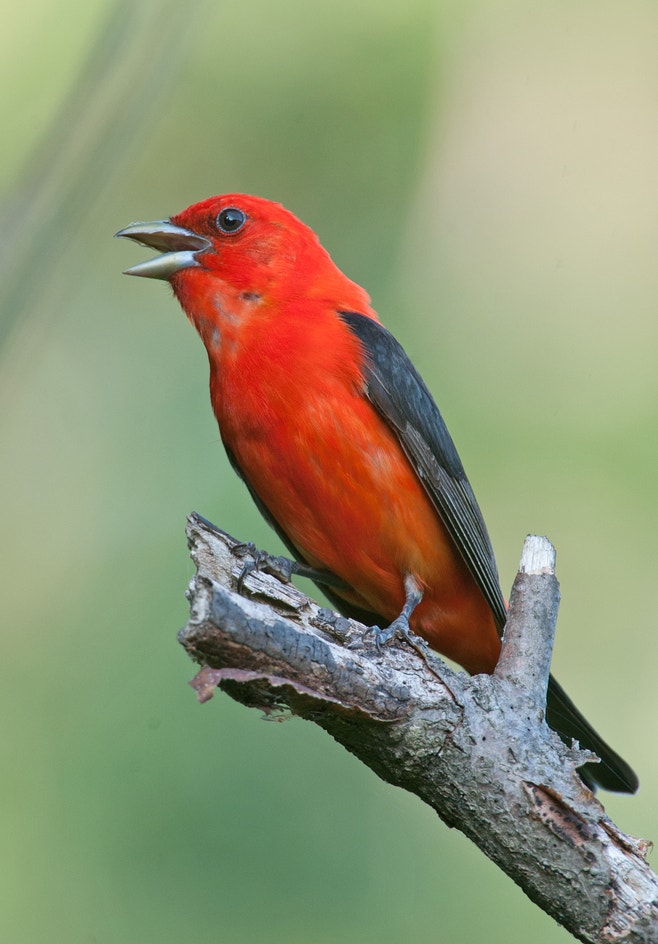
The Scarlet Tanager breeds in eastern North American deciduous forests. Breeding males are brilliant red with black wings and tails, while females and nonbreeding males are predominantly yellow-green.
The essentials
The birds often remain high in the canopy, feeding largely on insects and occasionally fruit. Because they can be hard to spot, sound, habitat, and seasonal timing matter as much as striking color.
What makes this subject distinctive
A male does not remain bright red all year. Molting changes his appearance outside breeding season, and females lack the famous scarlet plumage. This is a common reason photographs and field observations seem to show different birds.
Food sources, safe nesting places, and movement between habitats influence where birds appear. A forest bird may visit a campsite, and a grassland bird may cross a suburb, but a brief encounter cannot establish its preferred year-round habitat. Regional field guides and dated sightings give important context.
Common misconceptions and limits
Forest fragmentation and migration conditions influence the species across its yearly cycle. A bird encountered during migration should not automatically be assumed to breed at that location.
Wild birds should be described as part of an ecosystem, not as pets whose behavior can be controlled. Habitat, season, and the age or sex of the animal can change the observations available to a field researcher. Good sources include regional bird atlases and field observations with dates.
Where observation matters
Field marks change with lighting, molt, age, and the season. Good bird identification combines shape, behavior, voice, and geographic range rather than treating one colorful photograph as the definitive answer. It is also important to distinguish a bird seen during migration from evidence that it breeds locally.
Key points at a glance
The Scarlet Tanager breeds in eastern North American deciduous forests.
The birds often remain high in the canopy, feeding largely on insects and occasionally fruit.
A male does not remain bright red all year.
Frequently asked questions
What is a useful first identification clue?
The Scarlet Tanager breeds in eastern North American deciduous forests.
Does appearance or behavior vary?
The birds often remain high in the canopy, feeding largely on insects and occasionally fruit.
What should be checked before making a broad claim?
Forest fragmentation and migration conditions influence the species across its yearly cycle.
Explore related guides
A Field Guide to Wild Birds: Identification, Habitats, Behavior and Conservation
