Automatic Wet Food Cat Feeders: How to Choose Safely
Compare tray and cooling systems for wet cat food, including cleaning, temperature control and safe unattended feeding.
Automatic Wet Food Cat Feeders: How to Choose Safely
Automatic wet food feeders need a different safety assessment from kibble dispensers. Opened canned or pouched cat food is moist and perishable; a bowl left uncovered for hours can become a hygiene problem even if the device opens on time. Wet-food owners should look first at temperature control, tray cleaning and the length of time each serving will sit inside the feeder. Scheduling convenience comes second.
Why wet food needs different handling than kibble
Wet food contains considerably more water than kibble and is handled differently after a can or pouch is opened. The US Food and Drug Administration advises promptly refrigerating or discarding unused canned and pouched pet food, with refrigerators set at 40°F or below. That is a storage recommendation, not proof that a countertop feeder will hold opened food safely for a particular number of hours. A timer controls exposure; it does not make perishable food shelf-stable. Check with your veterinarian if your cat has a condition that makes consistent nutrition especially important, and use fresh food instead of experimenting with long unattended intervals.
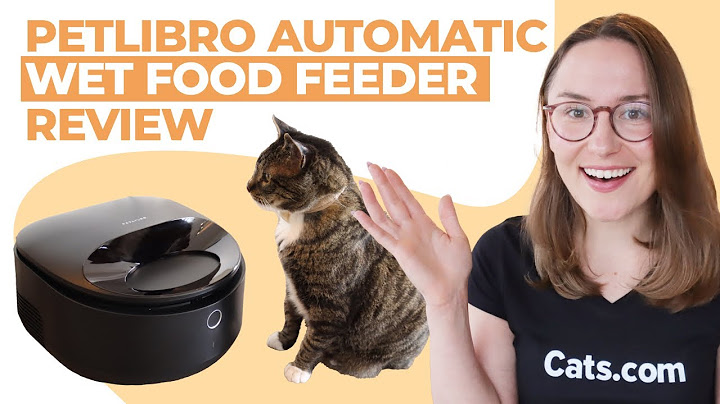
Rotating tray, ice-pack and refrigeration approaches
A rotating tray typically holds several prepared servings and reveals each compartment on a schedule. It can be useful for short meal intervals, but the exposed food and the food waiting inside are separate hygiene concerns. Some trays include frozen ice packs; those slow warming but are not the same as an actively monitored refrigerator. A genuinely refrigerated design may have different operating requirements, power demands and failure modes. Compare the actual cooling mechanism, how much food fits in each compartment, how thoroughly the tray can be washed and whether scheduled rotation still works after an outage. The term 'automatic' does not tell you which approach a product uses.
Food temperature, time and room heat caveats
Room temperature matters. A feeder near a sunny window, heater or hot kitchen may warm much faster than one in a cool space. The starting temperature of the meal, the mass of the serving, the ice pack's condition and the time until feeding all affect results. Do not convert a seller's 'keeps fresh for X hours' message into a universal guarantee without independent temperature testing and food-specific instructions. If you cannot verify that food will stay at a safe temperature, serve it freshly or have a caregiver replace it. Discard leftovers rather than topping up an old serving, and be especially cautious in summer or warm homes.
How to verify brand claims and user manuals
Read the exact model's instruction manual, not just a marketplace headline. Look for directions about freezing the packs, maximum intervals, cleaning removable parts and troubleshooting a tray that fails to rotate. Confirm whether the manufacturer says the device is suitable for wet food at all. Check the date of the current manual because similarly named products sometimes have different tray layouts or control options. Test the system at home with your cat present, using a normal small serving, before depending on it during work or travel. Observe whether the cat can access the dish and whether a lid closes safely.
Cleaning and replacing leftovers
Wash the removable tray and feeding surface after each use as directed, and dry parts before reassembly. Residual food in seams, under seals or next to a rotating axle can harbor odors. Replace the opened food rather than shifting an old portion into another compartment. Clean the work surface where you fill the tray, wash your hands after handling pet food and follow label instructions for covering refrigerated leftovers. If the feeder develops cracks, a damaged seal or unreliable rotation, stop using it until the issue is resolved. Food safety is a daily process, not a one-time product specification.
Backup plans for missed meals
Have a backup for every missed meal: someone who can visit, a fresh-food alternative appropriate for the cat, and a way to verify whether the feeder completed a rotation. Remote notifications are helpful but are not equivalent to inspecting the bowl and the cat. For pets on medical feeding schedules, coordinate timing and portion size with the veterinarian. If no responsible person can check the device during a long absence, it is safer not to treat a wet-food feeder as a substitute for care. A reliable simple routine may be better than a technically ambitious setup with unverified cooling.
Frequently asked questions
Can wet cat food sit in an automatic feeder all day?
Do not assume that it can. The safe interval depends on temperature, the food and the actual cooling system; refrigerate or discard leftovers promptly.
Are ice packs the same as refrigeration?
No. An ice pack can slow warming but does not prove food stays at a controlled refrigerator temperature.
Can a dry-food hopper dispense canned food?
Generally not. Use only foods explicitly approved for that model.
How do I clean a wet food feeder?
Remove leftovers, wash food-contact parts as instructed, clean seams and dry thoroughly before the next loading.
Related guides
Read: Automatic Cat Feeders: A Practical Buying and Setup Guide
Read: Cat Feeding Schedule: Planning Meals Without Overfeeding