Building a Catio Step by Step
Follow a practical catio construction sequence from foundations and framing to mesh, access doors and final safety inspections.
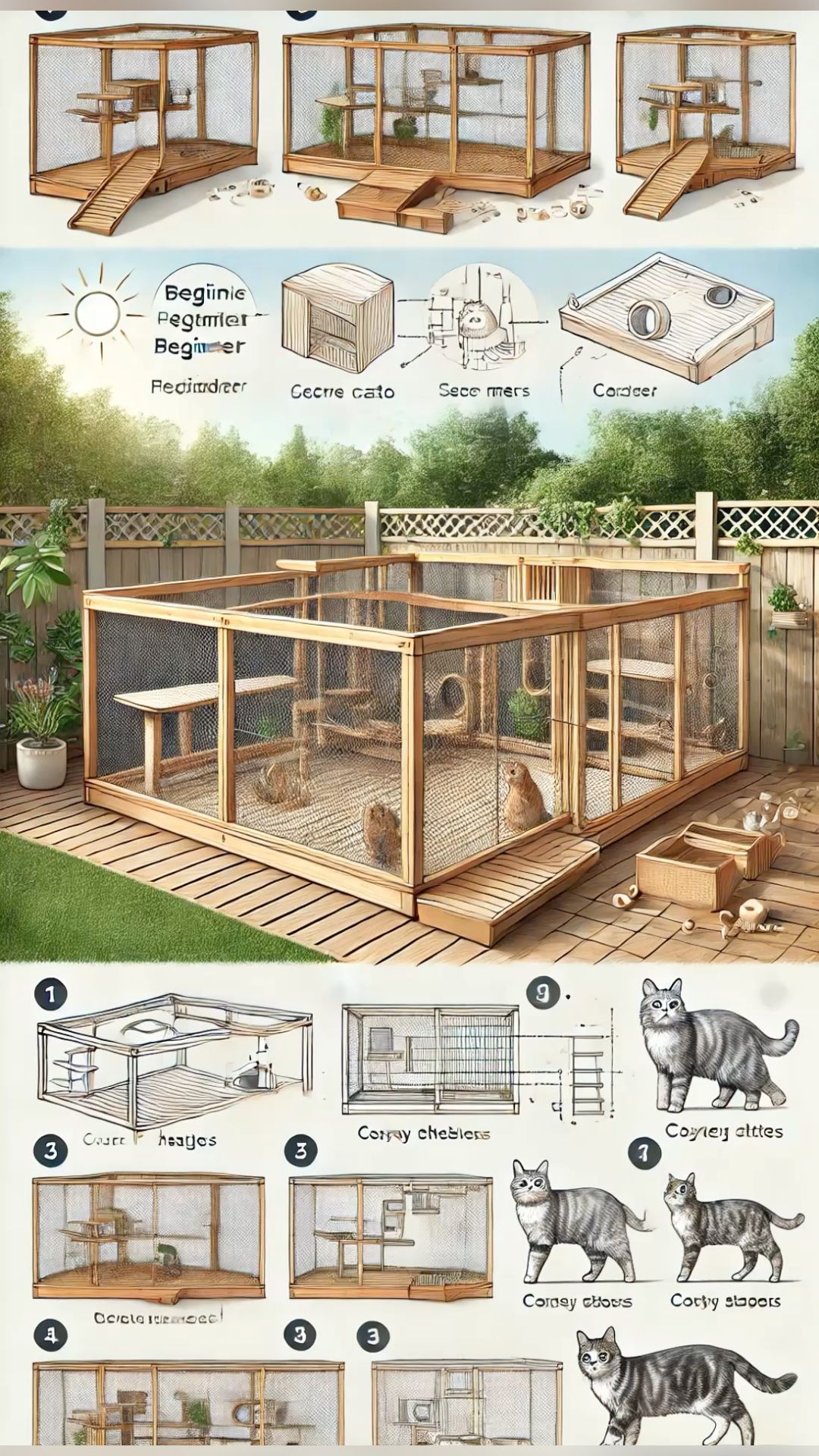
Building a catio requires an enclosure that stays secure after it has been exposed to wind, rain, movement, and repeated door use. The sequence below is a practical construction framework, not an engineered structural specification. Roof spans, foundations, connections to buildings, and local permits require site-appropriate judgment. Complete a measured design first; then build methodically and test each boundary before inviting a cat inside.
Prepare tools, materials, and a controlled workspace Start with an approved layout, marked dimensions, and a complete materials list. Typical work includes measuring, drilling, fastening frame members, attaching suitable containment mesh, building a door, and installing weather protection. Use eye and hand protection when cutting wire or wood. Keep cats indoors and away from open doors, sharp offcuts, adhesives, and loose fasteners.
Lay out parts in the order of assembly and check all pieces against the plan. If an attachment would interfere with siding, a deck, wiring, or drainage, stop and resolve that issue before driving fasteners. A catio should not require sacrificing the building's water resistance.
Establish a secure base and anchors Mark the perimeter and confirm that the site is level enough for accurate framing. Address drainage so water does not accumulate under platforms or flow toward the house. A freestanding unit requires a safe, appropriate strategy to resist shifting, tipping, and gaps at ground level. An attached unit requires wall connections designed for the existing structure, not just screws chosen because they are available.
Before continuing, inspect the base for spots where an animal could dig underneath or a cat could squeeze through. Close those gaps by design rather than relying on rocks or landscaping that may shift over time.
Assemble the frame and roof supports Build the frame square and stable, then check it for racking before adding mesh. Door openings need consistent clearance, and shelves need proper support. A roof must protect the enclosure from escape and weather while supporting site-specific loading. Do not guess at beam sizes or snow capacity from a casual online example.
Where local wind, snow, or an elevated deck creates structural uncertainty, ask a qualified contractor or engineer to review the design. Ensure gutters, downspouts, and required access around the house remain functional after assembly.
Attach mesh and finish the gate Choose strong, appropriately sized containment mesh and secure it to the frame with suitable exterior-grade fasteners. Work from one section to the next, checking tension and all corner seams. Smooth or cover sharp edges and exposed cut ends. Screen intended for insects alone is not a reliable substitute for secure animal containment.
Hang the door so it swings freely without bottom gaps or binding. Fit a dependable latch and check whether a cat can manipulate it. If the layout allows an entry vestibule, use it to reduce the risk of escape when a person enters. Pay special attention to roof joints and the connection between the catio and any house opening.
Install enrichment without compromising safety Add stable shelves, scratching features, shaded resting spots, and water. A cat should be able to travel among platforms without a forced leap or a narrow dead end. Avoid toxic finishes, exposed cords, strangulation hazards, and unsecured hanging objects. Leave enough space for cleaning, ventilation, and safe human retrieval.
Run a hand and visual inspection along every reachable edge. Shake-test shelves gently, operate all doors repeatedly, and inspect fasteners for looseness. Verify that the roof is secure, the perimeter is closed, and rain cannot enter the house through the new connection.
Introduce the cat gradually and keep checking Begin with a short supervised session and let the cat choose whether to explore. Watch for overheating, fear, attempts to climb weak points, or difficulty returning indoors. Maintenance is part of the build: after storms, inspect joints, roof, doors, and any ground movement. For the design stage, refer to [[link:catio-plans|measured catio plans]]; for a broader safety checklist, see [[link:catio-for-cats|how to choose a catio]].
A finished catio is safe only when its parts work together and remain serviceable over time. Make routine inspections a habit rather than treating the project as complete forever.