Catio Design Ideas for Different Spaces
Find practical catio layouts for windows, patios and compact backyards, plus shade, perches and cat-safe enrichment.
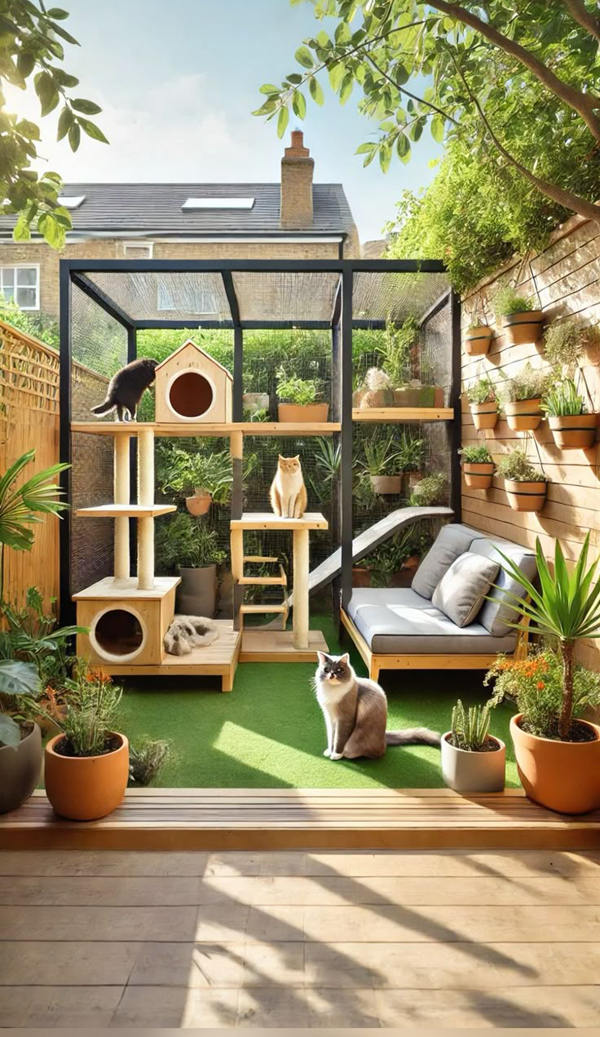
Good catio ideas begin with an overlooked patch of usable space: a window that faces a garden, the narrow side of a house, a sheltered corner of a patio, or a section of deck. Instead of copying a large enclosure into a small footprint, decide what the cat should actually do there. A compact design can offer a viewing perch, a sheltered resting area, and a short climbing route without becoming crowded.
Window boxes for observation and naps A window catio can turn a familiar indoor lookout into an outdoor viewing platform. Prioritize a stable floor, a strong fully enclosed roof, and a door or access panel the cat cannot push open. The connection around the window must be sealed against rain and inspected for gaps. Leave enough room for the cat to turn around comfortably instead of designing the box only to fit one cushion.
A window box is best for a cat that likes surveying a garden or watching birds at a distance. It is less suitable for sustained running and jumping. Install a shaded surface or position the unit so it avoids harsh afternoon heat. Make sure the window remains accessible to an adult for cleaning and emergency retrieval.
Narrow side-yard runs with vertical routes A long, narrow strip can work if shelves alternate sides and never create a bottleneck. Imagine a cat traveling along a gradual route: low platform, mid-level shelf, high resting deck, and a safe path back down. Steps should fit the cat's mobility; impressive height is pointless if the animal cannot descend confidently.
Think about the ground as carefully as the walls. Muddy soil can make cleaning difficult; a well-drained, cat-safe surface is easier to maintain. Keep plants at a distance if their safety or the use of pesticides is uncertain. Build around downspouts and maintenance access rather than blocking them.
Corners, patios, and shared walk-in spaces A corner design can use two existing protected boundaries, but do not assume a fence or building wall is automatically escape-proof. Look for gaps at eaves, gates, or junctions. A walk-in patio catio gives a person room to spend time with the cat, clean surfaces, and replace water. Place seating without creating a leap route to the roof or a weak screen panel.
For a balcony or raised deck, structural capacity, fall protection, and property permissions deserve professional scrutiny. A rental-friendly concept still needs safe anchoring; a loosely weighted enclosure is not necessarily secure in high winds. An attractive idea is only viable when it works under real conditions.
Turn the enclosure into an interesting habitat Use several visual layers rather than filling every inch. One raised platform for watching, one partially screened hiding space, a sturdy scratcher, and a different-textured walking surface can create variety. Make hiding spots accessible for inspections. Keep food and water where they will not bake in direct sun or get contaminated by falling debris.
If you have two cats, provide different routes and lookouts so one does not monopolize the best spot. Some cats like birdwatching; others prefer a private enclosed nook. An enclosure can be stimulating without toys hanging from every beam. Remove frayed strings and check outdoor toys regularly.
Sketch the idea before committing Measure the actual usable width, door swing, window clearance, and the space an adult needs for maintenance. Photograph the site at different times to understand sunlight. Note whether pipes, vents, outdoor outlets, or drainage paths would become inaccessible. A modest layout with safe access is better than a visually ambitious design that cannot be inspected.
When it is time to translate a concept into material quantities and drawings, use catio planning and measurement guidance. To choose the appropriate general configuration first, read the catio selection guide. Creative design should always preserve the same baseline: secure boundaries, escape-free access, shade, and easy care.