Choosing an Outdoor Cat Enclosure Beyond a Catio
Compare attached catios, portable runs, freestanding pens and secure outdoor enclosures by use, access and supervision needs.
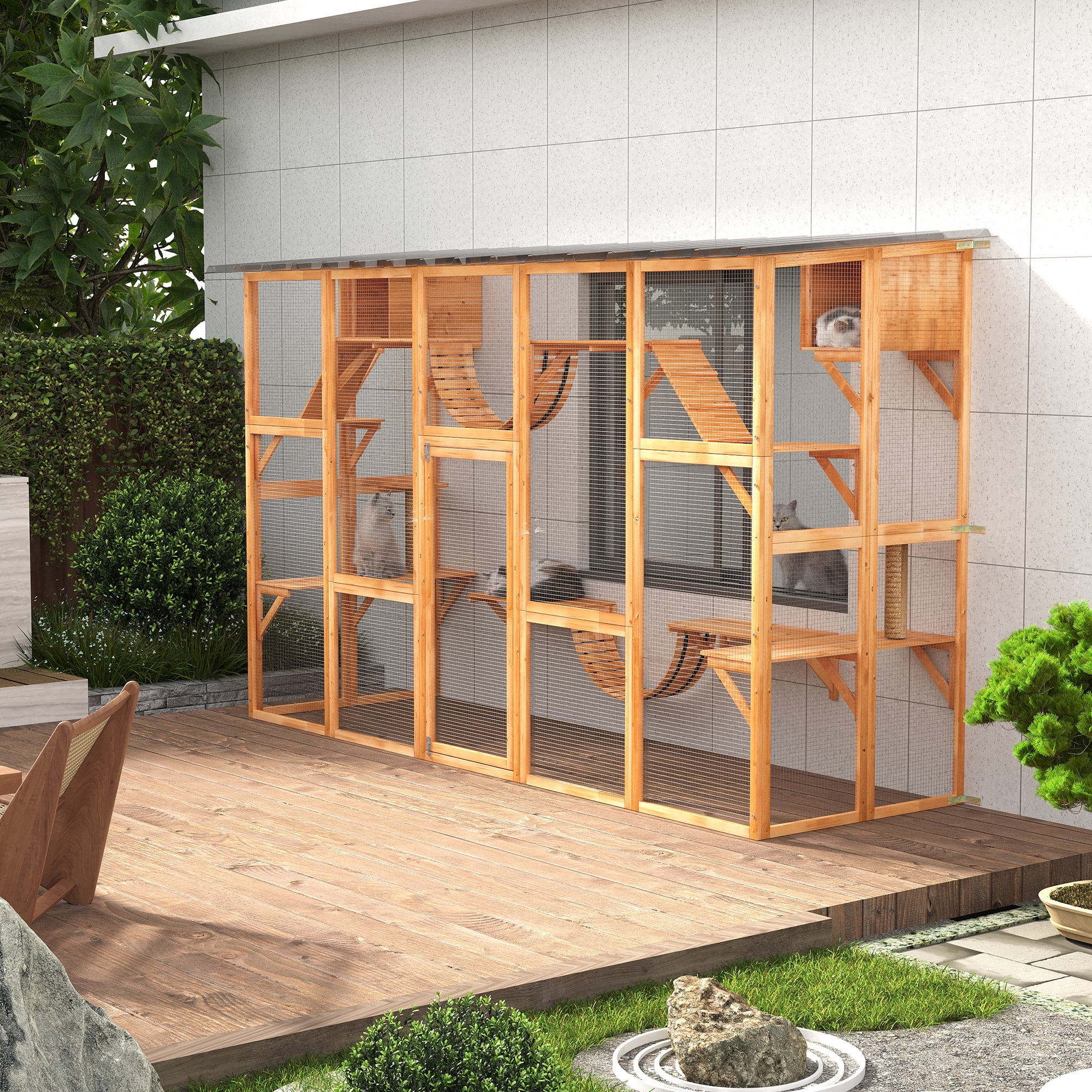
Outdoor cat enclosures include permanent catios, freestanding pens, temporary supervised play runs, and secured yard systems. These products and structures should not be treated as interchangeable. The key questions are whether a cat can escape through the top or bottom, whether predators can enter, whether the enclosure stands up to the weather, and whether the cat can retreat to a comfortable indoor environment. A larger footprint does not automatically solve these problems.
Attached catios provide a controlled indoor connection An attached catio is built against a house or patio, often with a window or cat-flap entry. Its main advantage is that a cat may be able to enter voluntarily and return indoors. The challenge is creating a continuous secure boundary around the building connection: siding seams, roof joints, and door frames can conceal escape points.
If a catio attaches to a deck, elevated structure, or building wall, confirm how the extra loads and waterproofing are handled. A structure that damages siding or blocks a household exit is not a safe upgrade. For deciding among specific attached styles, see choosing a catio for your cat.
Freestanding pens offer flexibility with trade-offs A freestanding outdoor enclosure does not necessarily require changes to the house. It can work for a garden without an accessible window, but movement between the home and pen must be managed carefully. Some setups need a fully enclosed tunnel; others require a cat to be carried in securely. A separate pen cannot be assumed to have the same weather protection or unattended safety as an attached permanent catio.
Inspect its roof and ground border. A fence-style run with no secure top may be vulnerable to climbing escapes and other animals. A lightweight enclosure should not be left in exposed weather just because it is easy to relocate.
Portable runs should be evaluated as temporary spaces Soft-sided pop-up pens, mesh tents, and collapsible outdoor cages can be useful for closely supervised, short sessions in favorable conditions. They are not automatically appropriate for unsupervised daily access, especially where predators, strong winds, hot sun, or rain are possible. Check zippers, fabric seams, stakes, and potential claw damage. A cat that panics and claws a seam may escape rapidly.
Do not assume a leash or harness makes an enclosure secure. Harnesses should not be tethered to an unattended structure because entanglement and injury are possible. Choose an appropriate containment approach for the specific animal and environment.
Compare roof, mesh, base, and access together An enclosure is only as effective as its weakest edge. Mesh must resist pushing and chewing by animals likely to reach it. Gates should close positively, with latches that remain secure. Roof material should not trap dangerous heat, and it must tolerate local wind and precipitation. At ground level, look for gaps created by uneven soil, drainage routes, or digging.
Provide shade, a dry place to sit, water, and a usable way to retrieve the cat. An outdoor run with plenty of toys but no covered retreat is not an adequate all-weather environment. Inspections after storms are essential.
Know when a shelter is a different product A winter shelter is primarily a small protected place for an outdoor or community cat to rest, not a large exercise enclosure. Comparing these two as if they served the same purpose can lead to poor choices. Review [[link:insulated-cat-shelter|insulated outdoor cat shelter considerations]] for cold-weather resting needs.
For each proposed enclosure, decide who will supervise use, how cats will get in and out, and what happens when weather changes suddenly. That operational plan is just as important as choosing the walls and roof. An excellent outdoor space expands a cat's options without reducing daily comfort or safety.