How to Choose a Catio for Your Cat
Compare catio types, access points, escape prevention, shade and daily care before choosing an outdoor space for your cat.
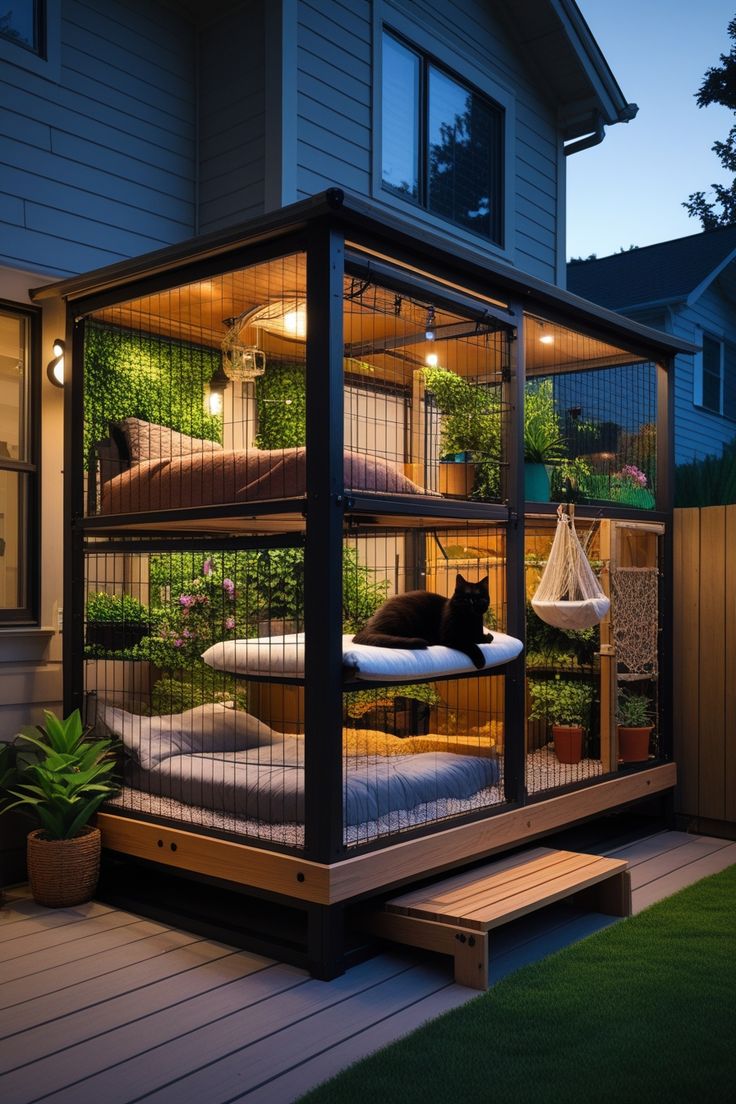
A catio is an enclosed outdoor space designed to let a cat experience fresh air, changing scents, sunshine, and the activity outside without roaming freely. The most useful catio is not necessarily the largest. It is one that fits your home, gives your cat a choice about using it, and prevents escapes through the roof, doors, walls, and ground-level edges. Before choosing a style, think about how your cat will enter, where you can provide shade, and who will check the enclosure after storms.
Start with the cat, not the floor plan An energetic climber may benefit from platforms at several heights, while an older cat may prefer broad shelves with short, easy steps. Cats who startle at dogs or street noise need retreat spots and a clear route back indoors. A nervous cat may need short, supervised introductions rather than being carried outside and shut in. Watch how your cat uses indoor window perches: those habits can help you plan the first outdoor resting place.
Multiple cats require more than a bigger footprint. Provide separate resting choices, avoid narrow routes that let one cat block another, and consider whether each animal can return inside without being cornered. A catio is enrichment, not a substitute for ordinary indoor care, litter access, play, or veterinary attention. Cats should not be forced to remain outside when uncomfortable.
Compare attached, window, and freestanding options An attached catio can connect through an existing door or a properly secured cat flap. That makes voluntary indoor access easier, but the house connection must be weatherproof and must not compromise windows, siding, or emergency exits. A small window box is often enough for observation and lounging, but it is not a walk-in play space. Freestanding enclosures work when the house has no suitable opening; they may require a fully protected transfer route and closer supervision.
For site-specific layouts rather than choosing between general types, explore catio ideas for windows, patios, and compact yards. If you are deciding whether a portable pen, enclosed run, or permanent catio fits your situation, see different outdoor cat enclosure formats.
Check every possible escape route Choose durable, non-toxic framing materials and secure mesh with openings small enough for your particular cat. A screen intended to keep insects out is not automatically strong enough to contain a determined cat or exclude wildlife. Inspect the roof, mesh-to-frame connections, gates, and the point where walls meet the ground. Digging animals and uneven soil can expose openings beneath a freestanding structure.
Doors need dependable latches, and a walk-in catio benefits from a way to avoid leaving a direct path from the outside to the cat's living space. Inspect fasteners for sharp ends or exposed wire. If your area has significant wind, snow, or a heavy roof covering, have the structural loads assessed rather than trusting a generic sketch.
Plan comfort for changing weather Offer at least one shaded place, dry perches, and fresh water, then observe how conditions change throughout the day. An enclosure can overheat in direct sun despite being outdoors. Wet platforms, slippery ramps, and a roof that pools water become hazards. Keep strings, toxic plants, and unstable decorations out of reach. Check surfaces after unusually hot, cold, or windy weather and bring cats inside when conditions are unsuitable.
Add scratching surfaces and stable shelves before adding lots of toys. The cat needs usable movement paths and resting positions more than decorative clutter. Inspect climbing features for wobbling and loose screws on a regular schedule.
Choose the right route to completion A [[link:catio-for-sale|ready-made catio]] may be convenient if its dimensions and weather resistance suit the site. [[link:catio-kits|Modular catio kits]] are a middle ground for someone comfortable assembling panels. A custom project may start with [[link:catio-plans|measured catio plans]] before moving to [[link:how-to-build-a-catio|hands-on construction]]. If the structure connects to a house or needs engineering judgment, ask about professional installation.
Whichever route you choose, test all doors and boundaries before allowing a cat inside. Make the first sessions calm and supervised. A well-used catio should be easy for a person to clean and maintain, not just attractive in photographs.