Can You Safely Drink Collected Rainwater?
Learn why rainwater can contain germs and chemicals, and what public-health guidance says about testing and safer drinking-water choices.
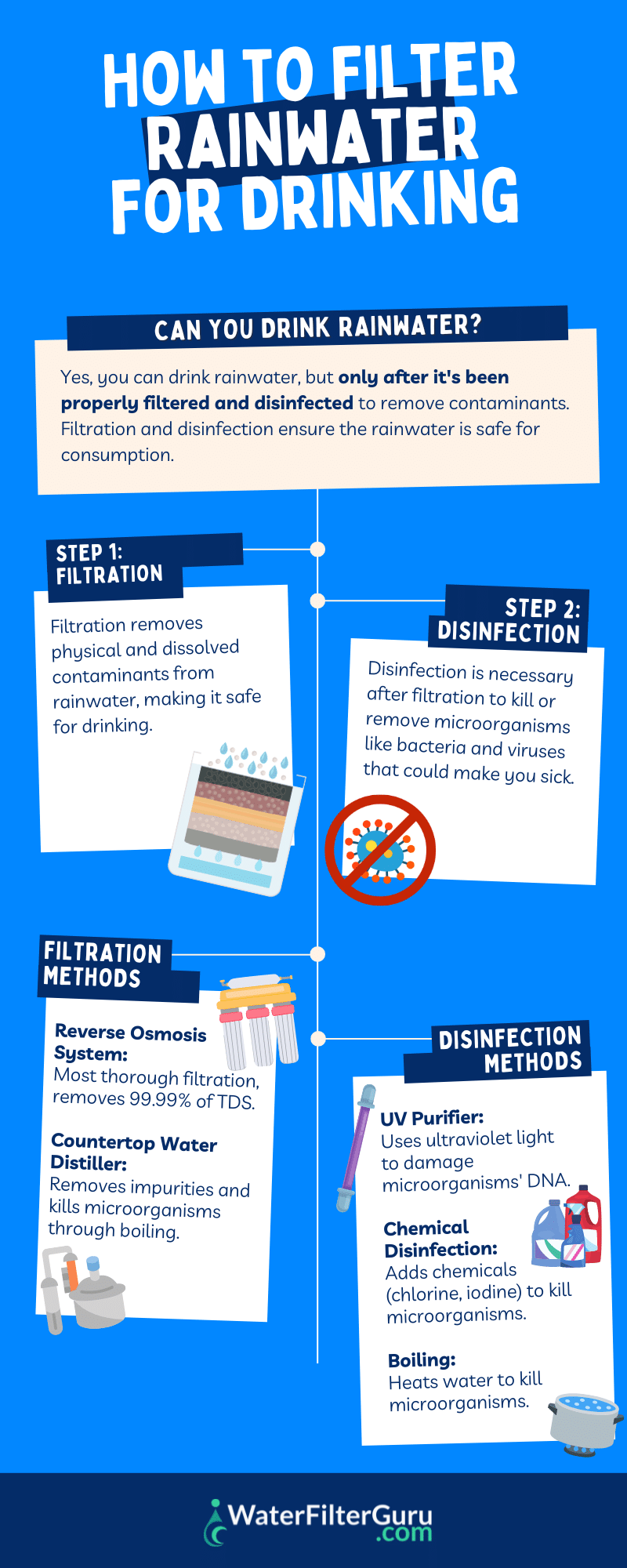
Rainwater can look clean and still be unsafe to drink. As it falls and enters a collection system, it may pick up germs, chemicals, and particles from the air, roofs, gutters, tanks, and other surfaces. The US Centers for Disease Control and Prevention (CDC) advises that collected rainwater is not necessarily safe for drinking without appropriate evaluation and treatment. Where properly treated public tap water or bottled water is available, those are generally simpler drinking choices. The safety of a specific collection system cannot be established from appearance, smell, or a generic home-filter advertisement.
Why a clear glass of rainwater is not proof of safety
Rain can carry dust, smoke, and other airborne materials before it reaches a container. When it runs across a roof, it can contact bird droppings, dirt, building materials, and metal fixtures. Water may look transparent even when it contains microorganisms or chemicals that cannot be detected by taste. Conditions also change over the year: a clean tank in one month does not guarantee safe water after a storm or maintenance problem. Treating rainwater as automatically pure because it came from the sky ignores the collection surfaces and storage conditions that can affect its quality.
How roofs, gutters, and tanks change the risk
The CDC identifies collection and storage materials as possible sources of contamination. Roofing, gutters, and piping can introduce substances that a simple sediment screen will not necessarily remove. Standing water can attract insects, while an uncovered tank or damaged lid may allow debris and animals to enter. A first-flush diverter sends the first runoff away from storage and can reduce some debris, but it does not establish drinking-water safety by itself. Inspection, cleaning, covers, screens, and proper separation from household drinking-water plumbing are sensible system precautions, not substitutes for suitable testing.
What the CDC recommends for drinking and cooking
If possible, use water from a properly managed public system or commercially bottled water for drinking, cooking, toothbrushing, and washing foods that will be eaten. If rainwater is used for activities where it could be swallowed, ask a local health department what tests and treatment are appropriate. The same source notes that rainwater collection systems require maintenance and may be subject to local rules. Mixing untreated rainwater with otherwise safe tap water can contaminate the treated supply; do not connect systems in a way that allows backflow into drinking-water lines.
Testing needs depend on your system
There is no universal test strip that rules out every microbial and chemical hazard. A local health department or qualified water laboratory can help identify contaminants relevant to your roof, tank, neighborhood, and intended use. Testing may need to address bacteria and chemical concerns separately. If a particular problem is found, treatment must be selected to address that specific contaminant. A filter rated for taste, odor, or sediment should not be assumed to remove pathogens or dissolved metals. Re-testing and maintenance may be necessary because water quality can change.
Why boiling or an ordinary filter may be insufficient
Boiling can address many biological hazards when applied correctly, but it does not reliably remove all chemical contamination and may concentrate some dissolved substances as water evaporates. Likewise, a countertop pitcher is not automatically a comprehensive purification system. Treatment claims depend on the device, its certifications, the contaminants present, and whether it has been properly maintained. Never promise that an improvised method makes polluted roof runoff safe. In an emergency, use the locally recommended water-safety advice and follow advisories from health authorities rather than guessing with household supplies.
Safer non-drinking uses and next steps
Collected rainwater may be useful for some non-potable activities, such as watering ornamental plants or other tasks that minimize swallowing, where local rules permit. Keep nonpotable containers clearly distinguished from drinking-water storage, and consider the risk of children accessing them. If you are planning a home system for drinking, discuss testing, compatible treatment, and safe plumbing design with qualified local professionals before relying on it. The bottom line is that safe use is based on measured water quality and appropriate controls, not on whether rainwater is "natural."
Quick checklist
Clean-looking rainwater can contain germs or chemicals.
Ask local health authorities about appropriate testing and treatment.
Do not assume boiling, first-flush devices, or basic filters solve every hazard.
Continue exploring
For a related question, see types of beverages.