How Did Napoleon Die? Evidence and Historical Theories
How Did Napoleon Die? Evidence and Historical Theories Explore evidence-based facts, context and common misconceptions.
How Did Napoleon Die? Evidence and Historical Theories
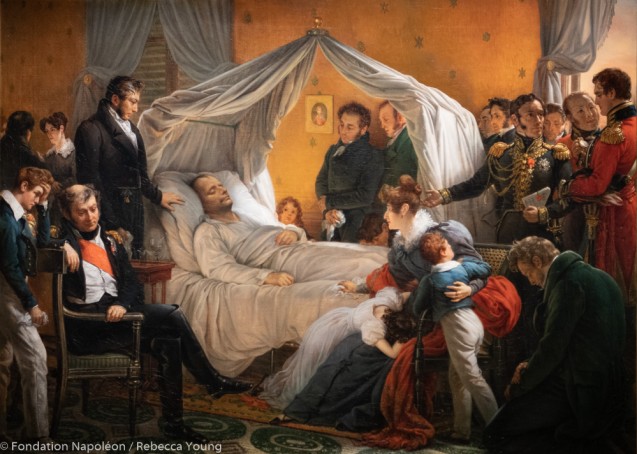
Napoleon Bonaparte died on May 5, 1821, while in exile on Saint Helena in the South Atlantic. Stomach disease, likely gastric cancer, is widely regarded as the leading explanation based on historical medical accounts.
The essentials
His symptoms and postmortem descriptions are central evidence, but nineteenth-century medicine lacked many modern diagnostic methods. Later analyses have considered arsenic exposure, among other possibilities.
What makes this subject distinctive
The claim that Napoleon was conclusively murdered by arsenic is not established by the available evidence. Arsenic found in historical hair samples does not by itself prove intentional poisoning or identify a killer.
An event rarely has just one cause or consequence. Politics, institutions, available technology, and individual decisions interacted over time. A timeline keeps these layers visible and prevents a famous person from becoming the sole explanation for a complicated change.
Common misconceptions and limits
Historical diagnosis combines contemporary witnesses, autopsy descriptions, pathology research, and caution about the limits of retrospective certainty.
An attractive story is not necessarily a documented fact. A credible historical argument distinguishes contemporary accounts, material evidence, and later retellings, and avoids giving exact diagnoses or motives when the surviving sources cannot support them.
Avoiding familiar myths
Memorable stories tend to grow simpler with repetition. Check whether a quotation survives in contemporary records, whether a claim emerged much later, and whether an invention or achievement had predecessors and collaborators. It is better to explain uncertainty than to repeat an unsupported legend.
Key points at a glance
Napoleon Bonaparte died on May 5, 1821, while in exile on Saint Helena in the South Atlantic.
His symptoms and postmortem descriptions are central evidence, but nineteenth-century medicine lacked many modern diagnostic methods.
The claim that Napoleon was conclusively murdered by arsenic is not established by the available evidence.
Frequently asked questions
What do the records establish?
Napoleon Bonaparte died on May 5, 1821, while in exile on Saint Helena in the South Atlantic.
What wider context matters?
His symptoms and postmortem descriptions are central evidence, but nineteenth-century medicine lacked many modern diagnostic methods.
Which popular interpretation needs caution?
Historical diagnosis combines contemporary witnesses, autopsy descriptions, pathology research, and caution about the limits of retrospective certainty.
Explore related guides
History Explained: People, Inventions and Events That Changed the World
