History Explained: People, Inventions and Events That Changed the World
A practical, source-led guide to history and major historical figures, with accurate explanations and links to detailed topics.
History Explained: People, Inventions and Events That Changed the World
History is constructed from sources, not simply remembered as a string of famous dates. This guide connects people, empires, inventions, and major events while showing why chronology, context, and uncertainty matter.
History is more than a list of famous names
A historical event emerges from institutions, social pressures, technologies, and individual choices. A useful overview gives readers chronological bearings and explains why evidence matters. The same rule applies when studying a medieval trial, an ancient empire, a nineteenth-century invention, or a Cold War operation.
In practical reading, this distinction helps prevent a narrow example from becoming an unsupported general rule. Ask which place, species, time period, instrument, or source the claim concerns. That context often changes the meaning of an otherwise simple fact.
Individuals and the records they leave
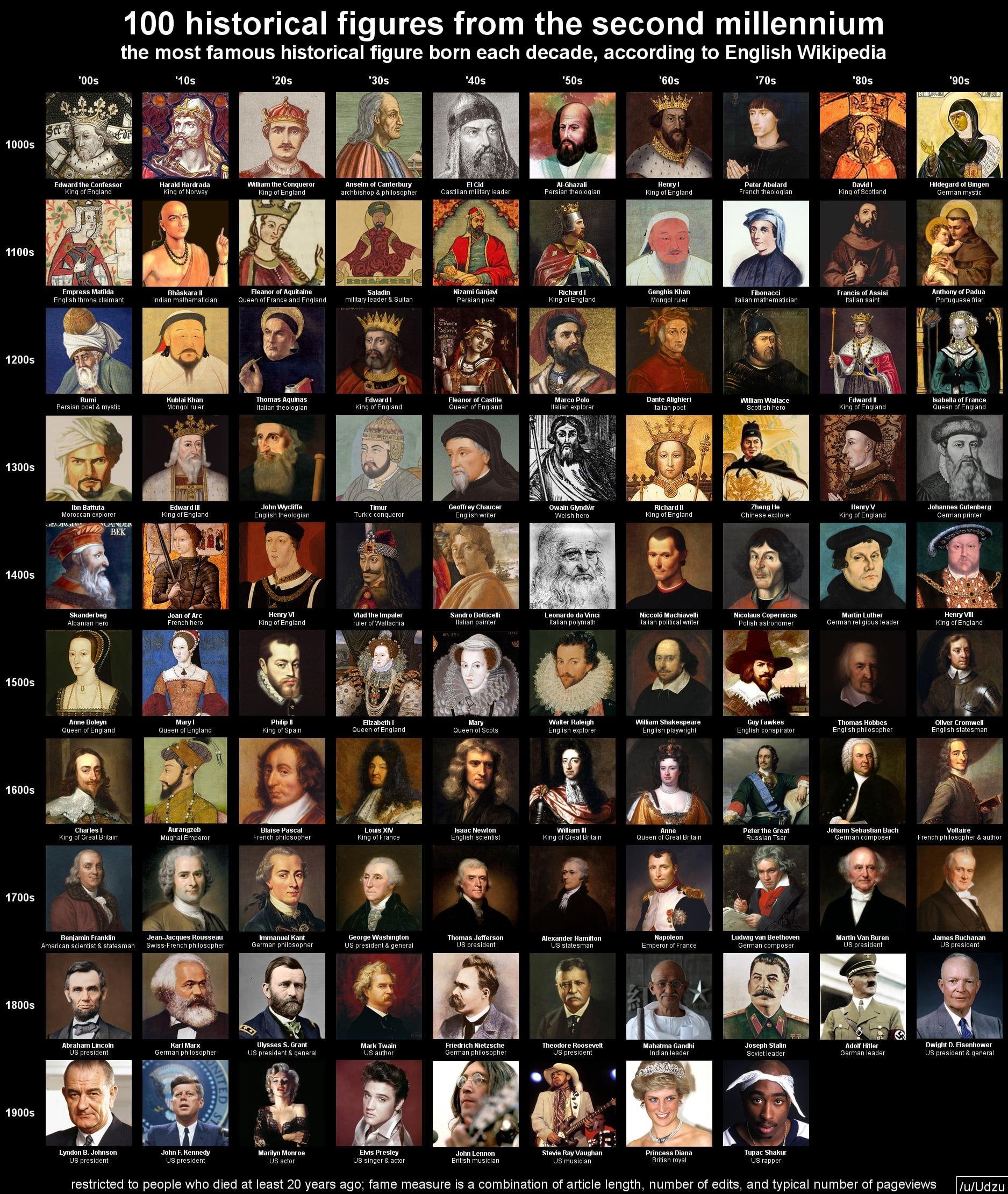
Joan of Arc, Nellie Bly, and Hedy Lamarr became famous in radically different settings. Their lives are illuminated by court documents, journalism, patents, and later scholarship. The surviving record gives historians a basis for analysis but is never a complete recording of a person’s thoughts.
In practical reading, this distinction helps prevent a narrow example from becoming an unsupported general rule. Ask which place, species, time period, instrument, or source the claim concerns. That context often changes the meaning of an otherwise simple fact.
Empires, conflict, and change
The Babylonian and Hittite states depended on administration, diplomacy, and military power. The Vikings traveled across far-reaching trade and settlement networks. More recent events, including the Bay of Pigs invasion, show how planning errors and political pressures can change international relations.
In practical reading, this distinction helps prevent a narrow example from becoming an unsupported general rule. Ask which place, species, time period, instrument, or source the claim concerns. That context often changes the meaning of an otherwise simple fact.
Inventions have long timelines
The light bulb became useful through many contributors working on filaments, electrical systems, and manufacture. Frequency-hopping research also arose through collaboration. A patent, a prototype, and the later widespread adoption of a technology are distinct historical milestones.
In practical reading, this distinction helps prevent a narrow example from becoming an unsupported general rule. Ask which place, species, time period, instrument, or source the claim concerns. That context often changes the meaning of an otherwise simple fact.
Separate evidence from legend
The cause of a famous death may remain uncertain even when the death date is well documented. Claims about Napoleon, Poe, or the dancing plague require especially careful handling. An honest article does not turn competing theories into established historical fact.
In practical reading, this distinction helps prevent a narrow example from becoming an unsupported general rule. Ask which place, species, time period, instrument, or source the claim concerns. That context often changes the meaning of an otherwise simple fact.
Checking the evidence
An attractive story is not necessarily a documented fact. A credible historical argument distinguishes contemporary accounts, material evidence, and later retellings, and avoids giving exact diagnoses or motives when the surviving sources cannot support them.
Historians compare primary records, archaeological findings, material objects, and later interpretations. Sources can disagree because they were produced at different times and for different audiences. A credible explanation distinguishes well-documented events from popular stories.
Frequently asked questions
Why do historians disagree?
Sources may be incomplete, biased, or interpreted differently, and new evidence may alter the accepted explanation.
Did one inventor create the light bulb?
No. Practical electric lighting grew through many experiments and engineering developments.
Can modern experts diagnose historical deaths with certainty?
Sometimes evidence supports a strong conclusion, but incomplete records often leave uncertainty.
Explore related guides
Use these focused articles when you need a species profile, a historical timeline, a specific measurement, or a closer look at one physical process. Each guide has a narrower purpose than this overview.
Joan of Arc: Life, Trial and Historical Legacy
Bay of Pigs Invasion: Causes, Timeline and Outcome
Nebuchadnezzar II: Babylon, Empire and Archaeology
Nellie Bly: Investigative Journalism and Her Legacy
Black Inventors and Scientists: Contributions and Historical Context
How Did Napoleon Die? Evidence and Historical Theories
